

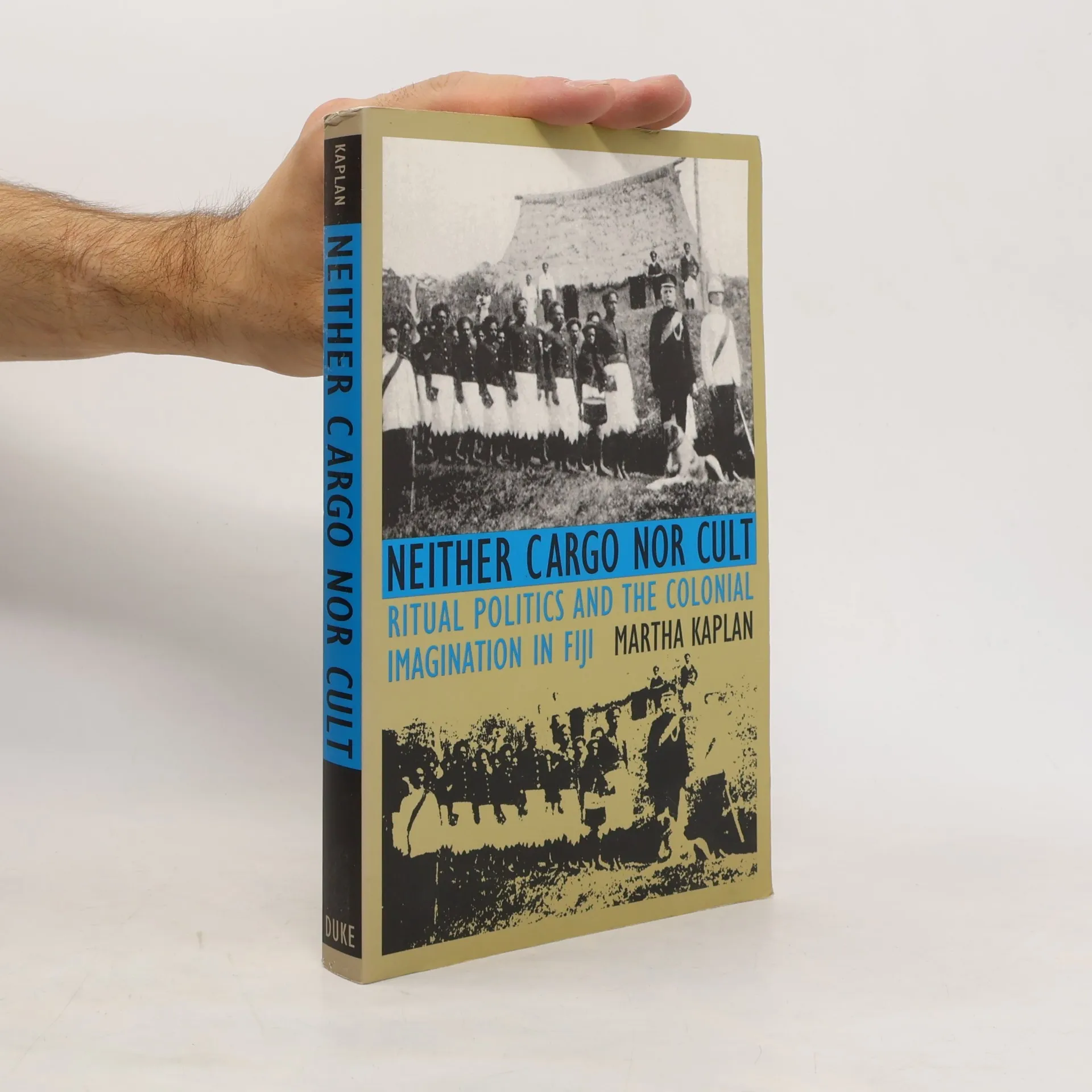


Neither Cargo nor Cult
Ritual Politics and the Colonial Imagination in Fiji
Authors
Parameters
- 248 pages
- 9 hours of reading
More about the book
In the 1880s, oracle priest Navosavakadua rallied Fijians against the encroachment of both local chiefs and British colonizers. British officials labeled the movement the Tuka cult, viewing it as a dangerous superstition that needed suppression. As a result, Navosavakadua and his followers were exiled, and scholars later characterized Tuka as a classic example of a Pacific cargo cult, interpreting it as a millenarian effort by dispossessed islanders to acquire Western goods through magical means. This study of colonial and postcolonial Fiji by Martha Kaplan delves into the impact of these narratives and uncovers a complex history that did not originate as a quest for cargo or as a cult. By engaging with Fijian oral histories and colonial records, Kaplan repositions Tuka within the context of indigenous Fijian history-making and reevaluates the archives to provide an ethnographic perspective on British colonial power. She argues against the notions of static indigenous culture and the inevitable dominance of colonial forces, instead highlighting the dynamic interplay between diverse and evolving expressions of both Fijian and colonial cultures. This ethnographic exploration of power and meaning addresses significant questions in anthropological theory and will resonate with those interested in colonial and postcolonial studies, ritual movements, and the Pacific Islands.
Book purchase
Neither Cargo nor Cult, Martha Kaplan
- Language

- Released
- 1995
- Binding
- (Paperback),
- Book condition
- Damaged
- Price
- €14.49
Payment methods
No one has rated yet.
- Title
- Neither Cargo nor Cult
- Subtitle
- Ritual Politics and the Colonial Imagination in Fiji
- Language
- English
- Authors
- Martha Kaplan
- Publisher
- Duke University Press
- Released
- 1995
- Format
- Paperback
- Pages
- 248
- ISBN10
- 0822315939
- ISBN13
- 9780822315933
- Series
- Categories
- Description
- In the 1880s, oracle priest Navosavakadua rallied Fijians against the encroachment of both local chiefs and British colonizers. British officials labeled the movement the Tuka cult, viewing it as a dangerous superstition that needed suppression. As a result, Navosavakadua and his followers were exiled, and scholars later characterized Tuka as a classic example of a Pacific cargo cult, interpreting it as a millenarian effort by dispossessed islanders to acquire Western goods through magical means. This study of colonial and postcolonial Fiji by Martha Kaplan delves into the impact of these narratives and uncovers a complex history that did not originate as a quest for cargo or as a cult. By engaging with Fijian oral histories and colonial records, Kaplan repositions Tuka within the context of indigenous Fijian history-making and reevaluates the archives to provide an ethnographic perspective on British colonial power. She argues against the notions of static indigenous culture and the inevitable dominance of colonial forces, instead highlighting the dynamic interplay between diverse and evolving expressions of both Fijian and colonial cultures. This ethnographic exploration of power and meaning addresses significant questions in anthropological theory and will resonate with those interested in colonial and postcolonial studies, ritual movements, and the Pacific Islands.