

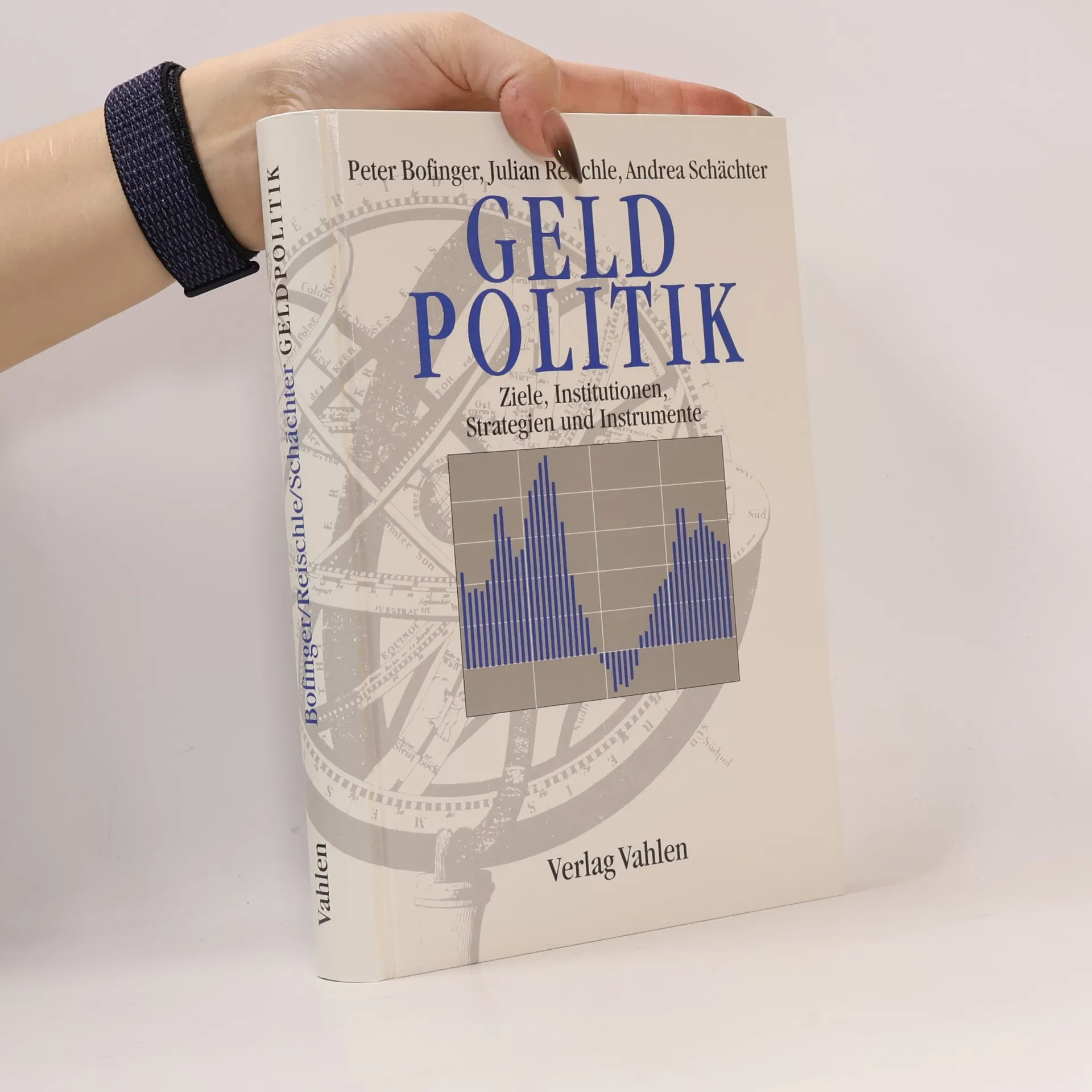



Geldpolitik
Ziele, Institutionen, Strategien und Instrumente
More about the book
This book provides an in-depth description and analysis of monetary policy in Europe and the United States. Unusually for a volume in the field, it focuses on actual monetary policy - targets, institutions, strategies, and instruments - but traditional and contemporary theoretical approaches to monetary policy form the basis for each chapter. Concentrating specifically on the European Central Bank, "Monetary Policy" offers one of the first comprehensive guides to understanding the targets, strategy, and instruments of the ECB. In the past, many books have presented mere descriptions of the institutional framework without providing a theoretical framework, while others have dealt mainly with theoretical aspects, thus neglecting the policy implications of their analysis. By combining a theoretical with a policy-oriented approach, Peter Bofinger succeeds in closing this gap in the monetary policy literature. As a result, his book will appeal to a broad readership, including investment bankers and other professional investors, central bankers, and scholars working in the field.
Book purchase
Geldpolitik, Peter Bofinger, Julian Reischle, Andrea Schächter
- Language

- Released
- 1996
- Binding
- (Hardcover),
- Book condition
- Very Good
- Price
- €6.89
Payment methods
No one has rated yet.
- Title
- Geldpolitik
- Subtitle
- Ziele, Institutionen, Strategien und Instrumente
- Language
- German
- Publisher
- Vahlen
- Released
- 1996
- Format
- Hardcover
- Pages
- 350
- ISBN10
- 3800620170
- ISBN13
- 9783800620173
- Series
- Tags
- Monetary Policy
- Description
- This book provides an in-depth description and analysis of monetary policy in Europe and the United States. Unusually for a volume in the field, it focuses on actual monetary policy - targets, institutions, strategies, and instruments - but traditional and contemporary theoretical approaches to monetary policy form the basis for each chapter. Concentrating specifically on the European Central Bank, "Monetary Policy" offers one of the first comprehensive guides to understanding the targets, strategy, and instruments of the ECB. In the past, many books have presented mere descriptions of the institutional framework without providing a theoretical framework, while others have dealt mainly with theoretical aspects, thus neglecting the policy implications of their analysis. By combining a theoretical with a policy-oriented approach, Peter Bofinger succeeds in closing this gap in the monetary policy literature. As a result, his book will appeal to a broad readership, including investment bankers and other professional investors, central bankers, and scholars working in the field.