

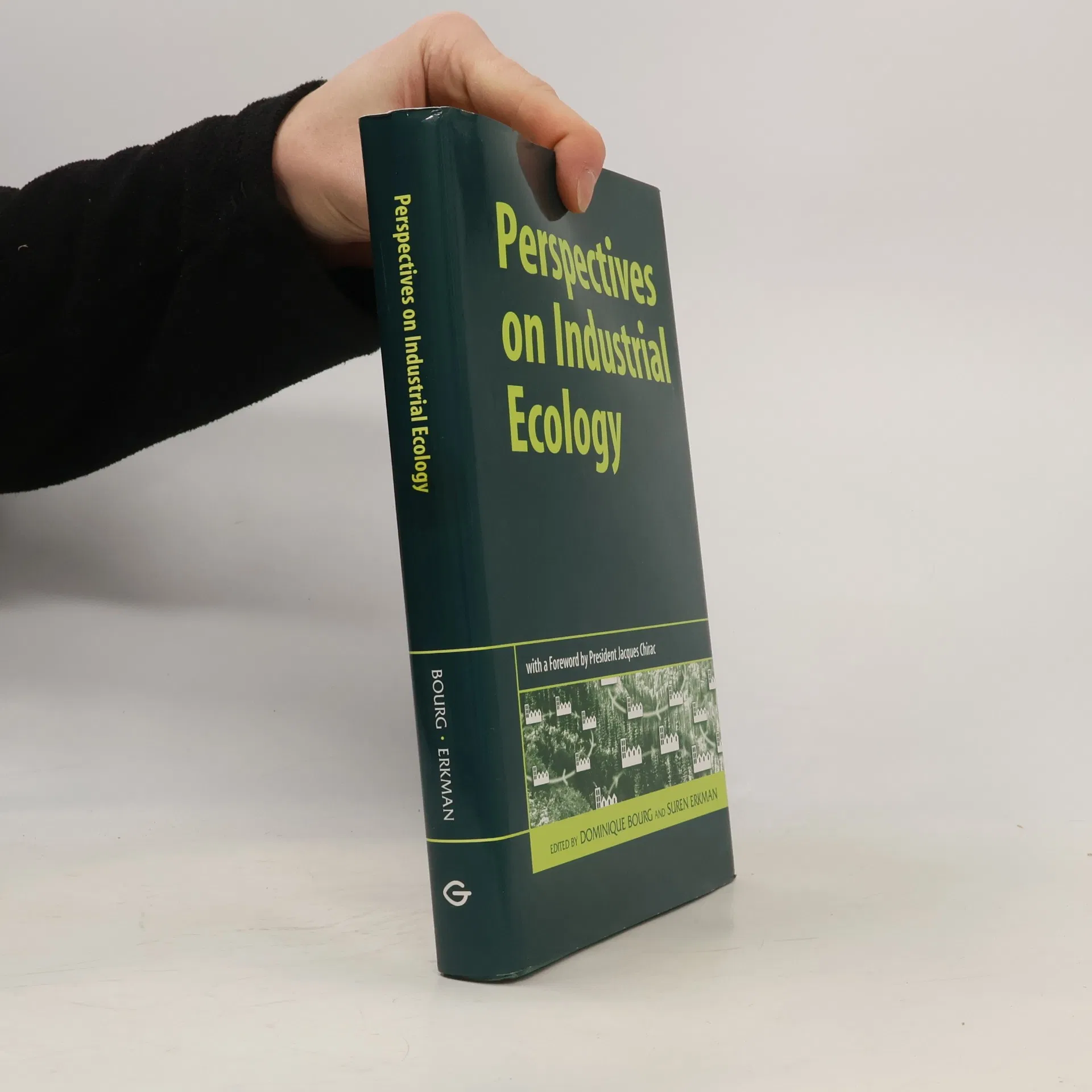


Perspectives on Industrial Ecology
More about the book
Business-as-usual regarding industrial and technological development, even amid concerns about pollution and resource shortages, cannot achieve sustainable development. The emerging field of industrial ecology (IE), which suggests that industrial systems should emulate the cyclical functions of natural ecosystems, offers a promising approach to tackling both immediate environmental issues and the long-term evolution of industrial systems. Achieving this requires restructuring our manufacturing and consumer society to mitigate material and energy flows, particularly as globalization accelerates. This book explores theoretical considerations for future research and practical implementation options for industry. Key topics include the systematic recovery of industrial wastes, minimizing losses, dematerializing the economy, reducing reliance on hydrocarbon fuels, and fostering inter-industry collaboration. The book is organized into four sections: it begins with definitions of IE, distinguishing it from industrial metabolism; it assesses various sectors like glass and petroleum in relation to IE; it discusses overcoming obstacles to closing material cycles; and it concludes with implications for the future. Contributions come from leading thinkers at the intersection of engineering, ecology, bio-economics, geography, social sciences, and law.
Book purchase
Perspectives on Industrial Ecology, Jacques Chirac, Suren Erkman, Dominique Bourg
- Language

- Released
- 2003
- Binding
- (Hardcover),
- Book condition
- Damaged
- Price
- €9.39
Payment methods
No one has rated yet.
- Title
- Perspectives on Industrial Ecology
- Language
- English
- Authors
- Jacques Chirac, Suren Erkman, Dominique Bourg
- Publisher
- Routledge
- Released
- 2003
- Format
- Hardcover
- Pages
- 384
- ISBN10
- 1874719462
- ISBN13
- 9781874719465
- Series
- Description
- Business-as-usual regarding industrial and technological development, even amid concerns about pollution and resource shortages, cannot achieve sustainable development. The emerging field of industrial ecology (IE), which suggests that industrial systems should emulate the cyclical functions of natural ecosystems, offers a promising approach to tackling both immediate environmental issues and the long-term evolution of industrial systems. Achieving this requires restructuring our manufacturing and consumer society to mitigate material and energy flows, particularly as globalization accelerates. This book explores theoretical considerations for future research and practical implementation options for industry. Key topics include the systematic recovery of industrial wastes, minimizing losses, dematerializing the economy, reducing reliance on hydrocarbon fuels, and fostering inter-industry collaboration. The book is organized into four sections: it begins with definitions of IE, distinguishing it from industrial metabolism; it assesses various sectors like glass and petroleum in relation to IE; it discusses overcoming obstacles to closing material cycles; and it concludes with implications for the future. Contributions come from leading thinkers at the intersection of engineering, ecology, bio-economics, geography, social sciences, and law.