

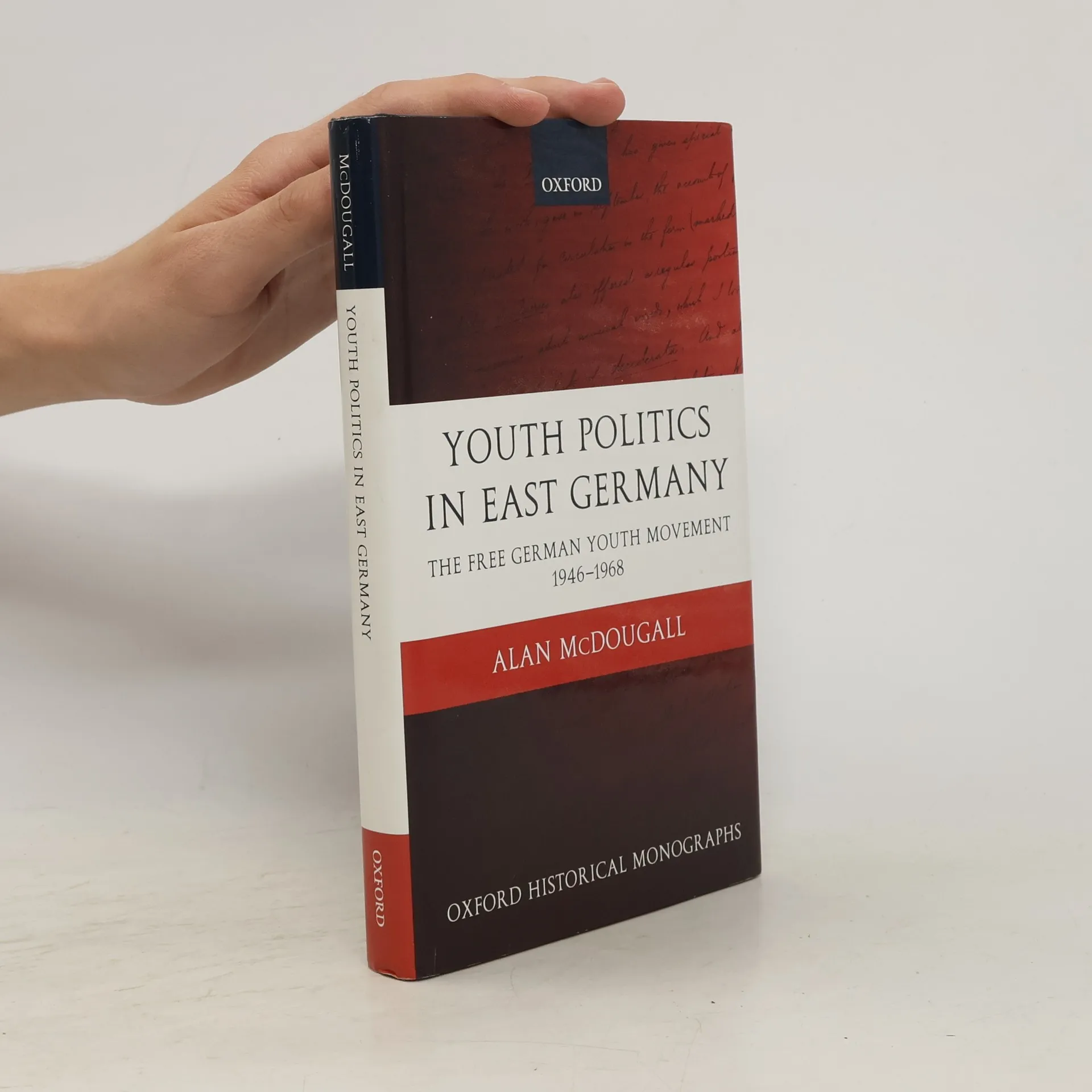
Youth politics in East Germany
Authors
More about the book
In communist East Germany, young people were seen as the hope of the regime, yet they often disappointed the authorities. The author conducts a pioneering study of the Free German Youth (FDJ) and the youth it aimed to engage and control. Using diverse primary sources, the focus is on East German youth during five 'crisis points' from the June 1953 uprising to the 1968 Prague Spring. This exploration offers a political and social history of youth beyond organized life. Key events in youth politics are examined, along with the influence of Western youth culture, particularly the impact of 'hot' music like The Beatles during the 1960s. The study challenges the totalitarian theory's narrow view, which emphasizes repression and Soviet power, arguing instead that the relationship between rulers and the ruled involved both coercion and consent. This dual approach explains the nature of youth dissent, which, despite an expanding secret police, was more widespread than previously believed. Although much of this dissent was limited, it contributed to the GDR's instability, evidenced by the role of former FDJ members in the regime's collapse in 1989. By integrating social and political dimensions, the author provides a valuable insight into the East German regime.
Book purchase
Youth politics in East Germany, Alan McDougall
- Language

- Released
- 2004
- Binding
- (Hardcover)
Payment methods
No one has rated yet.
- Title
- Youth politics in East Germany
- Language
- English
- Authors
- Alan McDougall
- Publisher
- Clarendon Press
- Released
- 2004
- Format
- Hardcover
- Pages
- 280
- ISBN10
- 0199276277
- ISBN13
- 9780199276271
- Series
- Categories
- Description
- In communist East Germany, young people were seen as the hope of the regime, yet they often disappointed the authorities. The author conducts a pioneering study of the Free German Youth (FDJ) and the youth it aimed to engage and control. Using diverse primary sources, the focus is on East German youth during five 'crisis points' from the June 1953 uprising to the 1968 Prague Spring. This exploration offers a political and social history of youth beyond organized life. Key events in youth politics are examined, along with the influence of Western youth culture, particularly the impact of 'hot' music like The Beatles during the 1960s. The study challenges the totalitarian theory's narrow view, which emphasizes repression and Soviet power, arguing instead that the relationship between rulers and the ruled involved both coercion and consent. This dual approach explains the nature of youth dissent, which, despite an expanding secret police, was more widespread than previously believed. Although much of this dissent was limited, it contributed to the GDR's instability, evidenced by the role of former FDJ members in the regime's collapse in 1989. By integrating social and political dimensions, the author provides a valuable insight into the East German regime.