

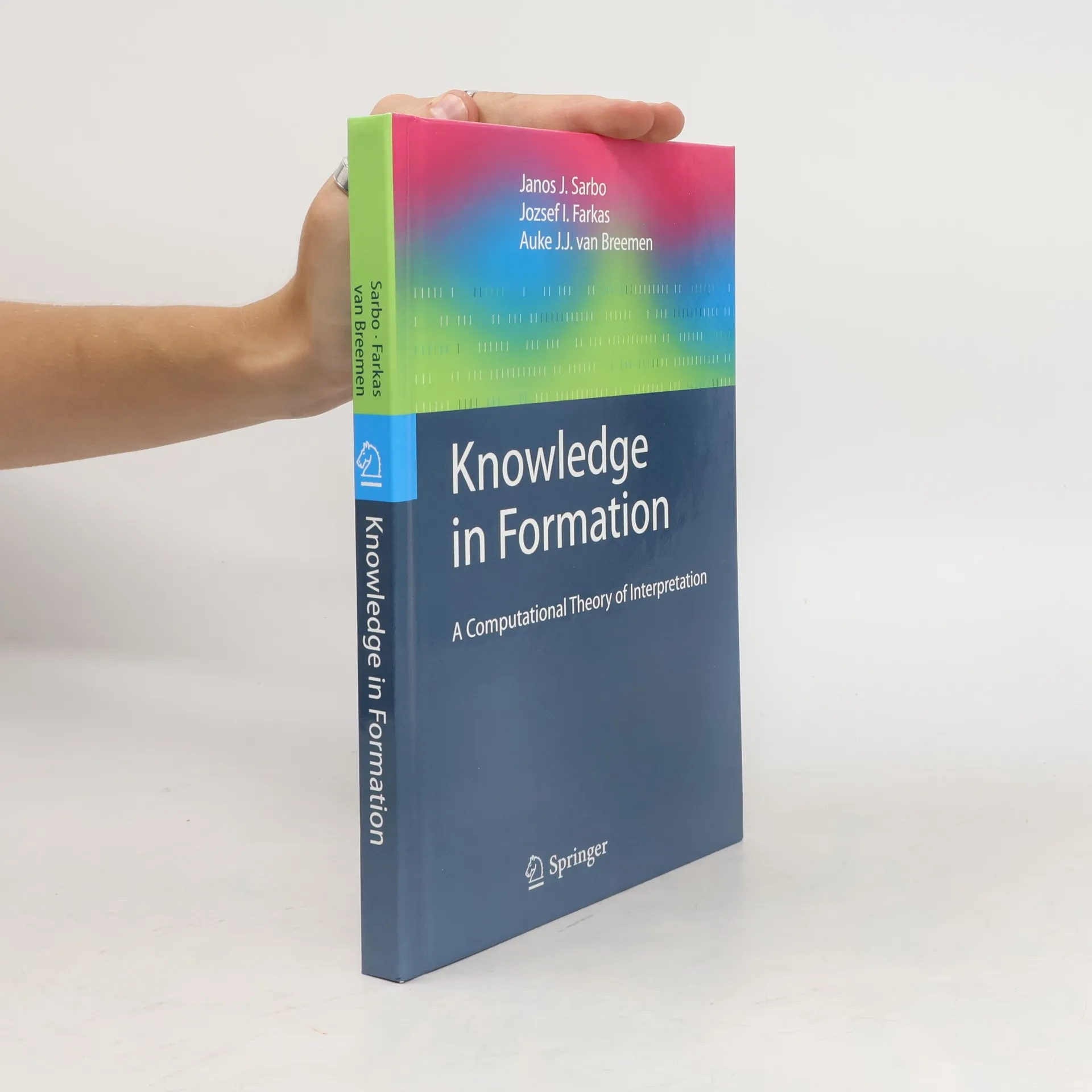
Knowledge in formation
A Computational Theory of Interpretation
Authors
More about the book
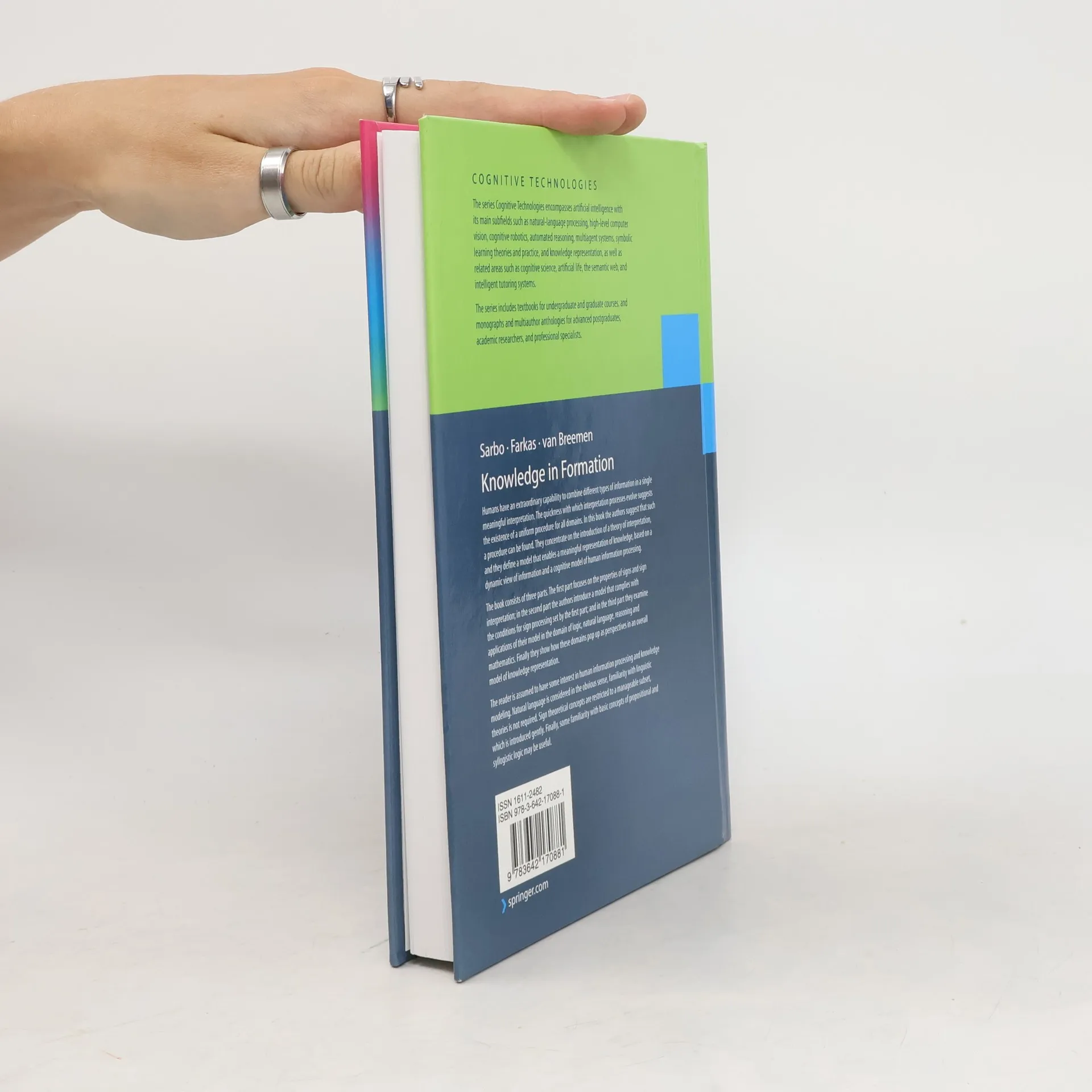
Humans have an extraordinary capability to combine different types of information in a single meaningful interpretation. The quickness with which interpretation processes evolve suggests the existence of a uniform procedure for all domains. In this book the authors suggest that such a procedure can be found. They concentrate on the introduction of a theory of interpretation, and they define a model that enables a meaningful representation of knowledge, based on a dynamic view of information and a cognitive model of human information processing. The book consists of three parts. The first part focuses on the properties of signs and sign interpretation; in the second part the authors introduce a model that complies with the conditions for sign processing set by the first part; and in the third part they examine applications of their model in the domain of logic, natural language, reasoning and mathematics. Finally they show how these domains pop up as perspectives in an overall model of knowledge representation. The reader is assumed to have some interest in human information processing and knowledge modeling. Natural language is considered in the obvious sense, familiarity with linguistic theories is not required. Sign theoretical concepts are restricted to a manageable subset, which is introduced gently. Finally, some familiarity with basic concepts of propositional and syllogistic logic may be useful.
Book purchase
Knowledge in formation, Janos J. Sarbo
- Language

- Released
- 2011
- Binding
- (Hardcover)
Payment methods
No one has rated yet.
- Title
- Knowledge in formation
- Subtitle
- A Computational Theory of Interpretation
- Language
- English
- Authors
- Janos J. Sarbo
- Publisher
- Springer
- Released
- 2011
- Format
- Hardcover
- Pages
- 217
- ISBN10
- 3642170889
- ISBN13
- 9783642170881
- Series
- Tags
- Description
- Humans have an extraordinary capability to combine different types of information in a single meaningful interpretation. The quickness with which interpretation processes evolve suggests the existence of a uniform procedure for all domains. In this book the authors suggest that such a procedure can be found. They concentrate on the introduction of a theory of interpretation, and they define a model that enables a meaningful representation of knowledge, based on a dynamic view of information and a cognitive model of human information processing. The book consists of three parts. The first part focuses on the properties of signs and sign interpretation; in the second part the authors introduce a model that complies with the conditions for sign processing set by the first part; and in the third part they examine applications of their model in the domain of logic, natural language, reasoning and mathematics. Finally they show how these domains pop up as perspectives in an overall model of knowledge representation. The reader is assumed to have some interest in human information processing and knowledge modeling. Natural language is considered in the obvious sense, familiarity with linguistic theories is not required. Sign theoretical concepts are restricted to a manageable subset, which is introduced gently. Finally, some familiarity with basic concepts of propositional and syllogistic logic may be useful.