


More about the book
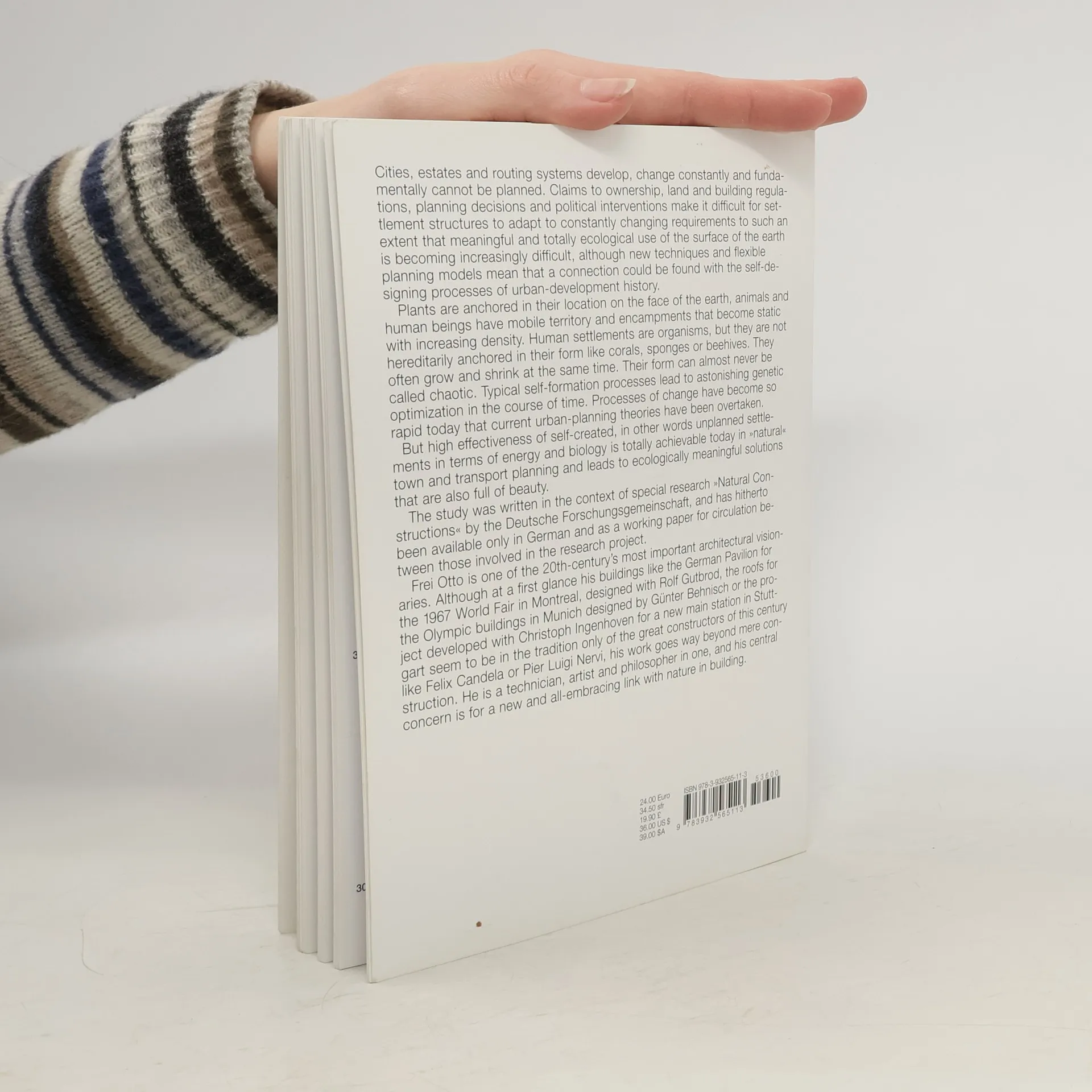
Cities, estates, and routing systems are in constant flux, making them difficult to plan effectively. Ownership claims, land regulations, and political decisions hinder the adaptability of settlement structures to evolving needs, complicating the ecological use of land. Despite this, new techniques and flexible planning models could connect with the organic processes of urban development. While plants are rooted in place, animals and humans occupy mobile territories that become static as density increases. Human settlements resemble organisms but lack the hereditary form of natural structures like corals or beehives, often growing and shrinking simultaneously. Their forms are rarely chaotic, as typical self-formation processes lead to remarkable optimization over time. However, the rapid pace of change has outstripped current urban planning theories. Effective, self-created, unplanned settlements can achieve energy and biological efficiency, resulting in ecologically sound and aesthetically pleasing solutions. This study, part of research into "natural constructions" by the Deutsche Forschungsgemeinschaft, was previously available only in German. Frei Otto, a key architectural visionary of the 20th century, transcends traditional construction, blending technical skill, artistry, and philosophy, with a focus on harmonizing building practices with nature.
Book purchase
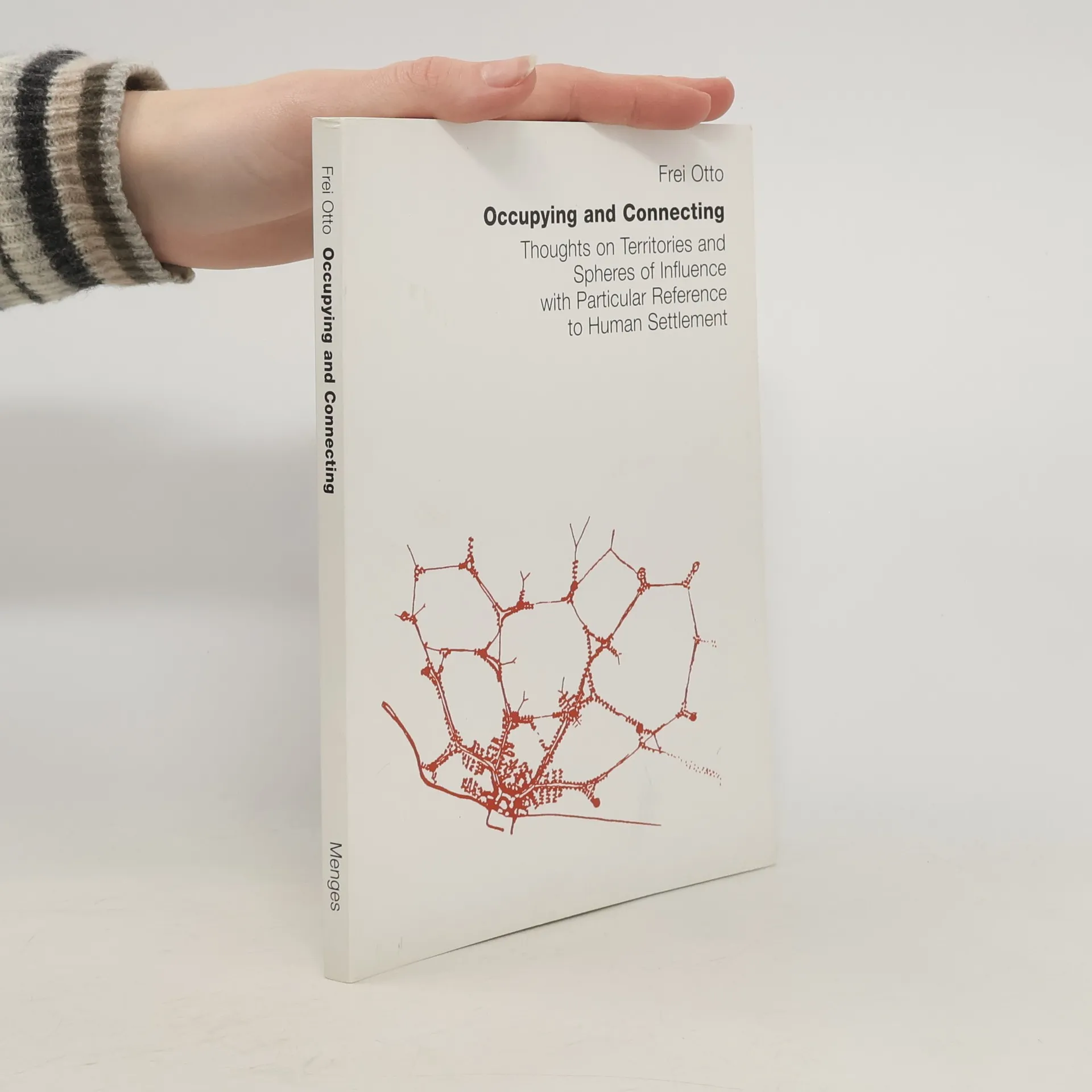
Occupying and connecting, Frei Otto
- Language

- Released
- 2011
- Binding
- (Paperback)
Payment methods
We’re missing your review here.
- Title
- Occupying and connecting
- Language
- English
- Authors
- Frei Otto
- Publisher
- Ed. Menges
- Released
- 2011
- Format
- Paperback
- Pages
- 112
- ISBN10
- 3932565118
- ISBN13
- 9783932565113
- Series
- Tags
- Architecture
- Rating
- 4.75 out of 5
- Description
- Cities, estates, and routing systems are in constant flux, making them difficult to plan effectively. Ownership claims, land regulations, and political decisions hinder the adaptability of settlement structures to evolving needs, complicating the ecological use of land. Despite this, new techniques and flexible planning models could connect with the organic processes of urban development. While plants are rooted in place, animals and humans occupy mobile territories that become static as density increases. Human settlements resemble organisms but lack the hereditary form of natural structures like corals or beehives, often growing and shrinking simultaneously. Their forms are rarely chaotic, as typical self-formation processes lead to remarkable optimization over time. However, the rapid pace of change has outstripped current urban planning theories. Effective, self-created, unplanned settlements can achieve energy and biological efficiency, resulting in ecologically sound and aesthetically pleasing solutions. This study, part of research into "natural constructions" by the Deutsche Forschungsgemeinschaft, was previously available only in German. Frei Otto, a key architectural visionary of the 20th century, transcends traditional construction, blending technical skill, artistry, and philosophy, with a focus on harmonizing building practices with nature.