

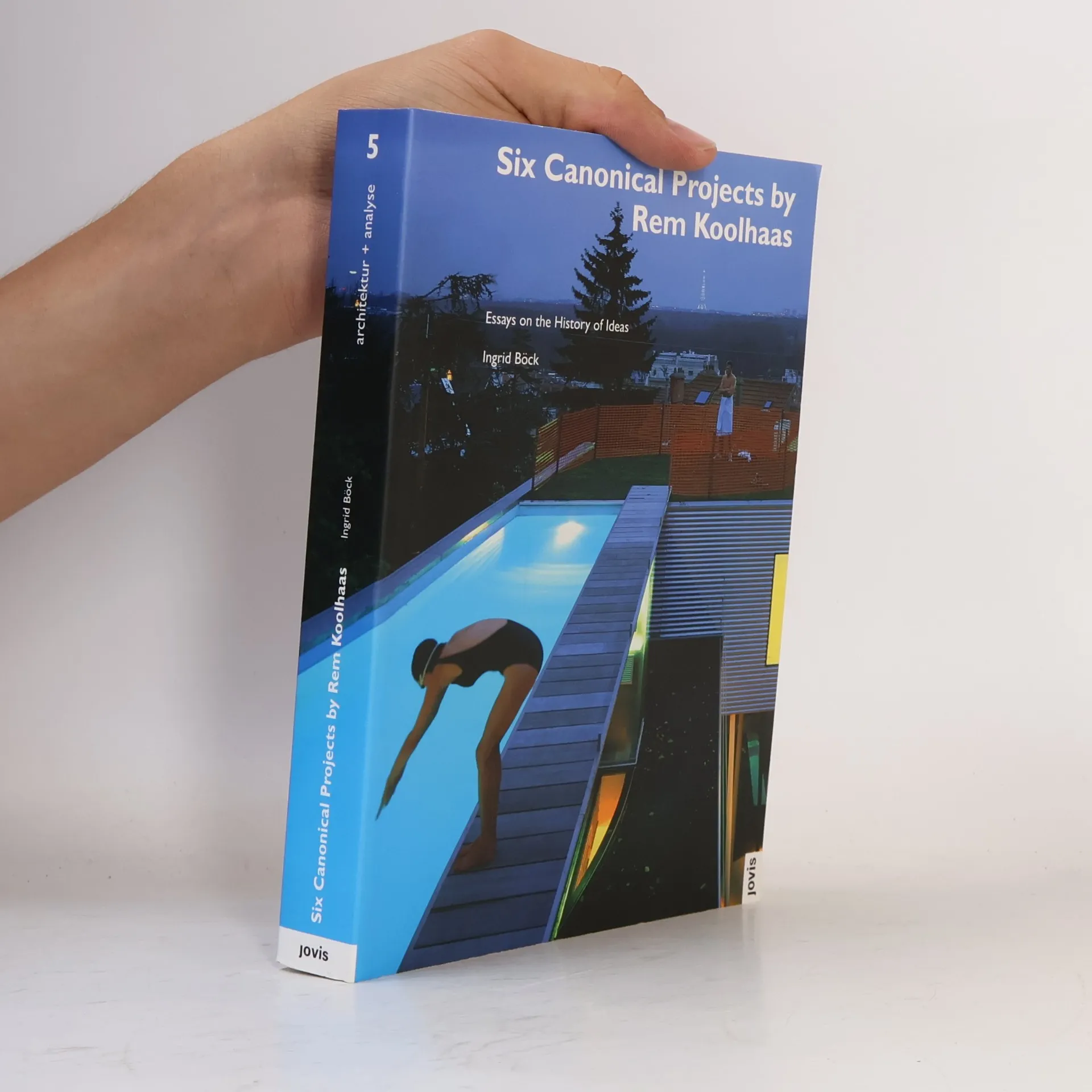


Six canonical projects by Rem Koolhaas
Essays on the History of Ideas
Authors
Book rating
More about the book
Rem Koolhaas has been part of the international avant-garde since the nineteen-seventies and has been named the Pritzker Architecture Prize for the year 2000. This book, which builds on six canonical Koolhaas projects, traces the discursive practice behind the design methods used by Koolhaas and his office OMA. It uncovers recurring key themes—such as wall, void, montage, trajectory, infrastructure, and shape—that have structured this design discourse over the span of Koolhaas's oeuvre. The book moves beyond the six core pieces, as well: It explores how these identified thematic design principles manifest in other works by Koolhaas as both practical re-applications and further elaborations. In addition to Koolhaas's individual genius, these textual and material layers are accounted for shaping the very context of his work's relevance. By comparing the design principles with relevant concepts from the architectural Zeitgeist in which Koolhaas has operated, the study moves beyond its specific subject—Rem Koolhaas—and provides novel insight into the broader history of architectural ideas.
Book purchase
Six canonical projects by Rem Koolhaas, Ingrid Böck
- Language

- Released
- 2015
- Binding
- (Paperback)
Payment methods
We’re missing your review here.
- Title
- Six canonical projects by Rem Koolhaas
- Subtitle
- Essays on the History of Ideas
- Language
- English
- Authors
- Ingrid Böck
- Publisher
- jovis
- Released
- 2015
- Format
- Paperback
- Pages
- 370
- ISBN10
- 3868592199
- ISBN13
- 9783868592191
- Series
- Tags
- Architecture
- Rating
- 4.5 out of 5
- Description
- Rem Koolhaas has been part of the international avant-garde since the nineteen-seventies and has been named the Pritzker Architecture Prize for the year 2000. This book, which builds on six canonical Koolhaas projects, traces the discursive practice behind the design methods used by Koolhaas and his office OMA. It uncovers recurring key themes—such as wall, void, montage, trajectory, infrastructure, and shape—that have structured this design discourse over the span of Koolhaas's oeuvre. The book moves beyond the six core pieces, as well: It explores how these identified thematic design principles manifest in other works by Koolhaas as both practical re-applications and further elaborations. In addition to Koolhaas's individual genius, these textual and material layers are accounted for shaping the very context of his work's relevance. By comparing the design principles with relevant concepts from the architectural Zeitgeist in which Koolhaas has operated, the study moves beyond its specific subject—Rem Koolhaas—and provides novel insight into the broader history of architectural ideas.