


More about the book
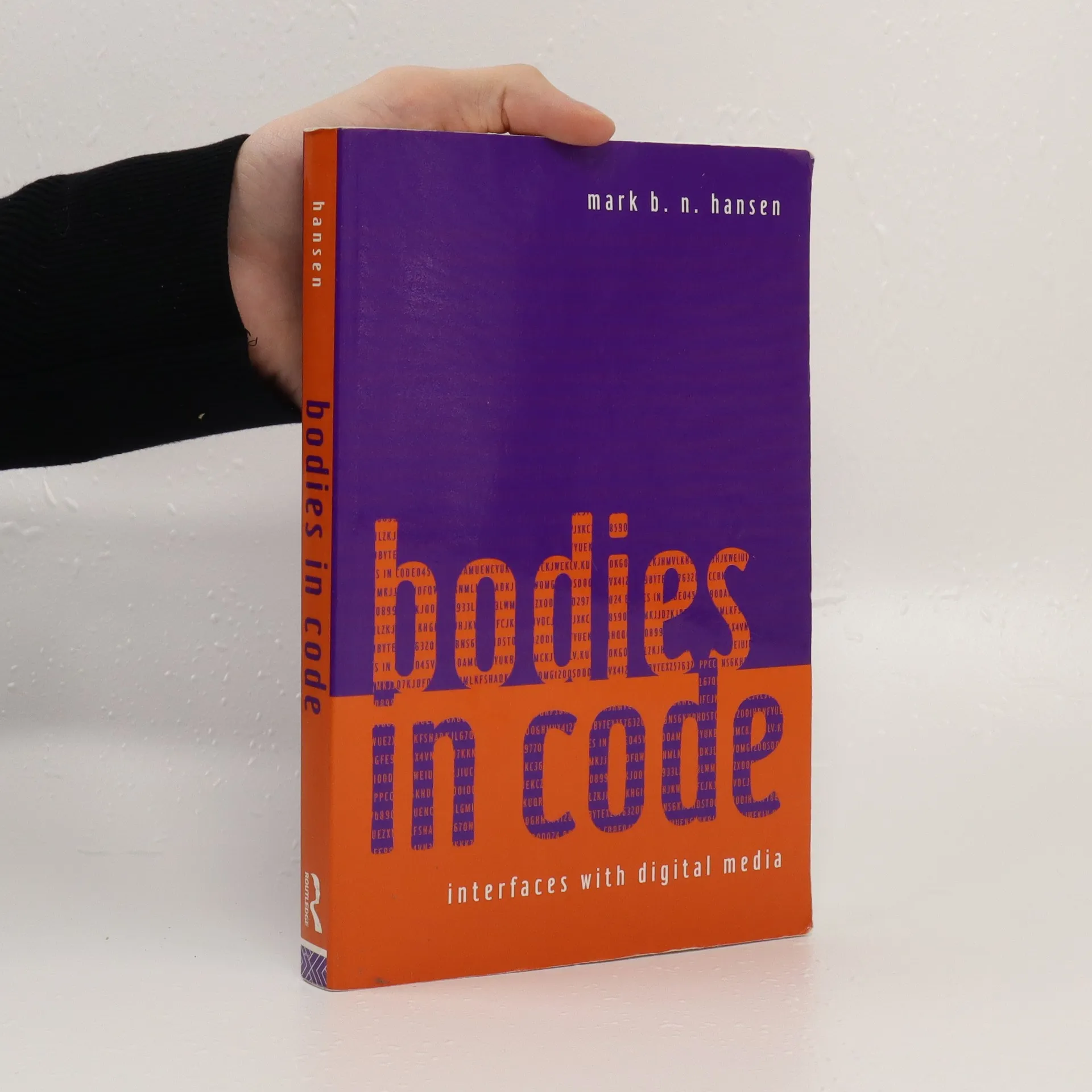
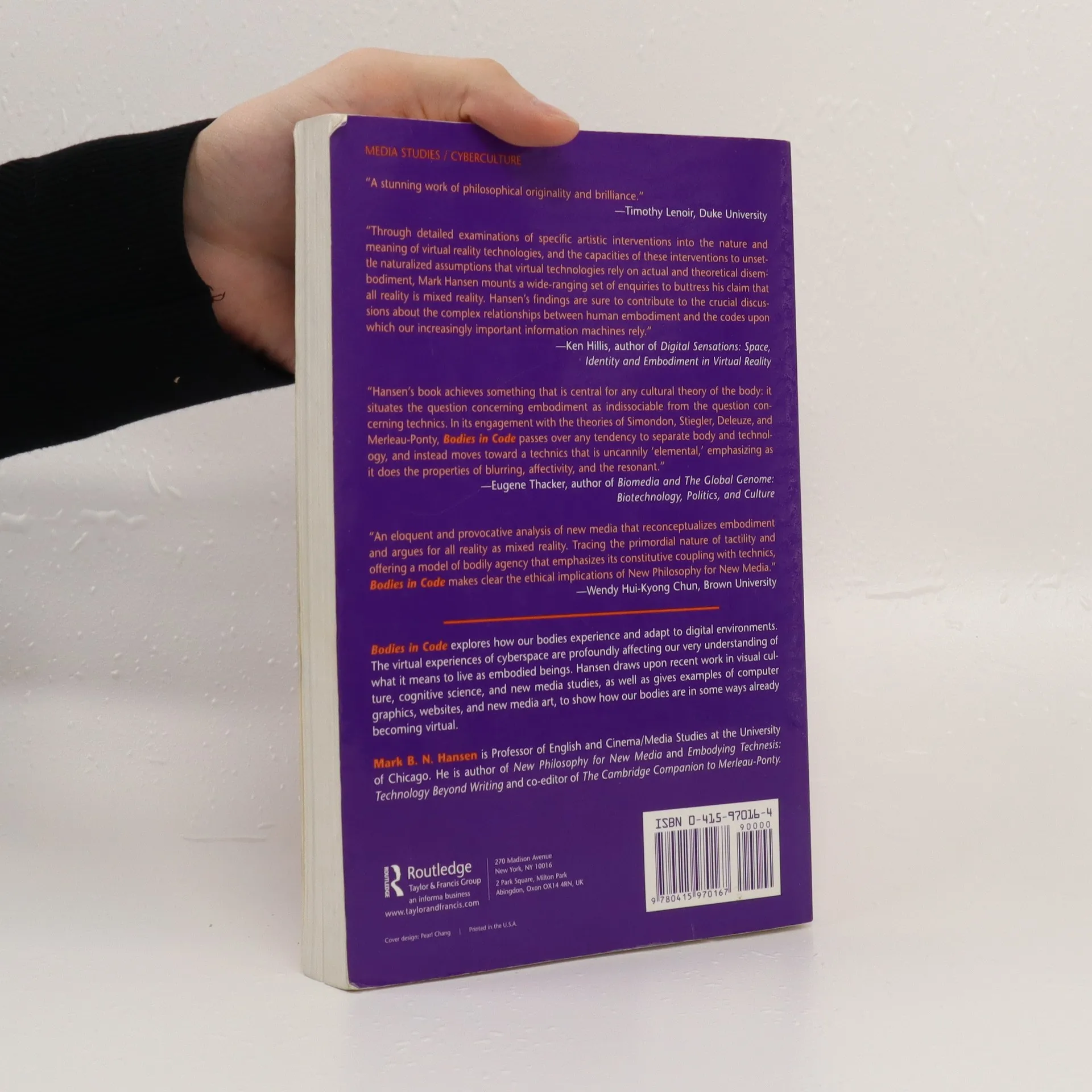
Bodies in Code explores how our bodies experience and adapt to digital environments. Cyberculture theorists have tended to overlook biological reality when talking about virtual reality, and Mark B. N. Hansen's book shows what they've been missing. Cyberspace is anchored in the body, he argues, and it's the body--not high-tech computer graphics--that allows a person to feel like they are really "moving" through virtual reality. Of course these virtual experiences are also profoundly affecting our very understanding of what it means to live as embodied beings. Hansen draws upon recent work in visual culture, cognitive science, and new media studies, as well as examples of computer graphics, websites, and new media art, to show how our bodies are in some ways already becoming virtual.
Book purchase
Bodies in code interfaces with digital media, Mark B. N. Hansen
- Language

- Released
- 2006
- Binding
- (Paperback)
Payment methods
We’re missing your review here.
- Title
- Bodies in code interfaces with digital media
- Language
- English
- Authors
- Mark B. N. Hansen
- Publisher
- Routledge
- Released
- 2006
- Format
- Paperback
- Pages
- 336
- ISBN10
- 0415970164
- ISBN13
- 9780415970167
- Series
- Categories
- Rating
- 3.45 out of 5
- Description
- Bodies in Code explores how our bodies experience and adapt to digital environments. Cyberculture theorists have tended to overlook biological reality when talking about virtual reality, and Mark B. N. Hansen's book shows what they've been missing. Cyberspace is anchored in the body, he argues, and it's the body--not high-tech computer graphics--that allows a person to feel like they are really "moving" through virtual reality. Of course these virtual experiences are also profoundly affecting our very understanding of what it means to live as embodied beings. Hansen draws upon recent work in visual culture, cognitive science, and new media studies, as well as examples of computer graphics, websites, and new media art, to show how our bodies are in some ways already becoming virtual.