

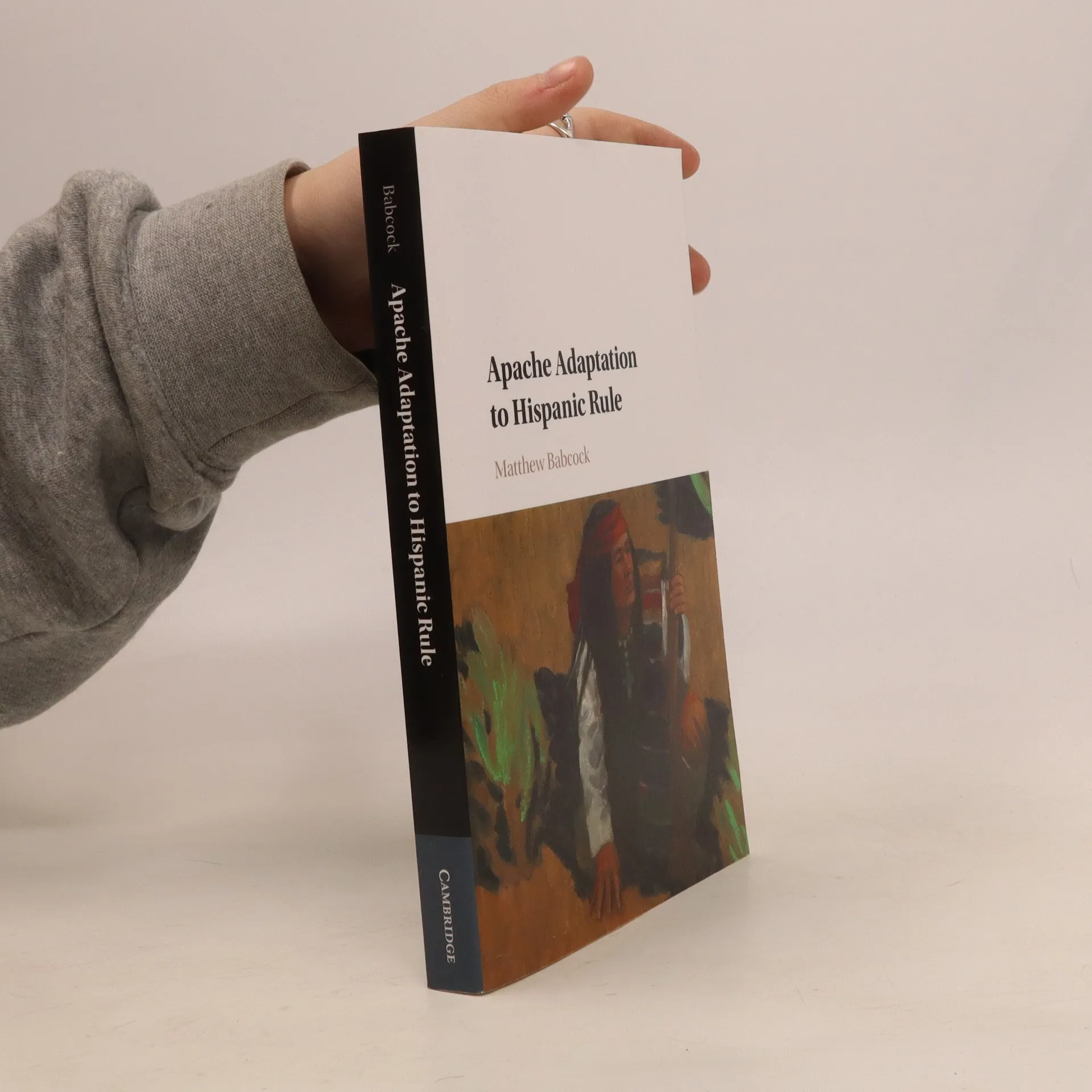


More about the book
As a definitive study of the poorly understood Apaches de paz, this book explains how war-weary, mutually suspicious Apaches and Spaniards negotiated an ambivalent compromise after 1786 that produced over four decades of uneasy peace across the region. In response to drought and military pressure, thousands of Apaches settled near Spanish presidios in a system of reservation-like establecimientos, or settlements, stretching from Laredo to Tucson. Far more significant than previously assumed, the establecimientos constituted the earliest and most extensive set of military-run reservations in the Americas and served as an important precedent for Indian reservations in the United States. As a case study of indigenous adaptation to imperial power on colonial frontiers and borderlands, this book reveals the importance of Apache-Hispanic diplomacy in reducing cross-cultural violence and the limits of indigenous acculturation and assimilation into empires and states.
Book purchase
Apache Adaptation to Hispanic Rule, Matthew Babcock
- Language

- Released
- 2018
- Binding
- (Paperback)
Payment methods
No one has rated yet.
- Title
- Apache Adaptation to Hispanic Rule
- Language
- English
- Authors
- Matthew Babcock
- Publisher
- Cambridge University Press
- Released
- 2018
- Format
- Paperback
- Pages
- 317
- ISBN10
- 1107547326
- ISBN13
- 9781107547322
- Categories
- Description
- As a definitive study of the poorly understood Apaches de paz, this book explains how war-weary, mutually suspicious Apaches and Spaniards negotiated an ambivalent compromise after 1786 that produced over four decades of uneasy peace across the region. In response to drought and military pressure, thousands of Apaches settled near Spanish presidios in a system of reservation-like establecimientos, or settlements, stretching from Laredo to Tucson. Far more significant than previously assumed, the establecimientos constituted the earliest and most extensive set of military-run reservations in the Americas and served as an important precedent for Indian reservations in the United States. As a case study of indigenous adaptation to imperial power on colonial frontiers and borderlands, this book reveals the importance of Apache-Hispanic diplomacy in reducing cross-cultural violence and the limits of indigenous acculturation and assimilation into empires and states.