

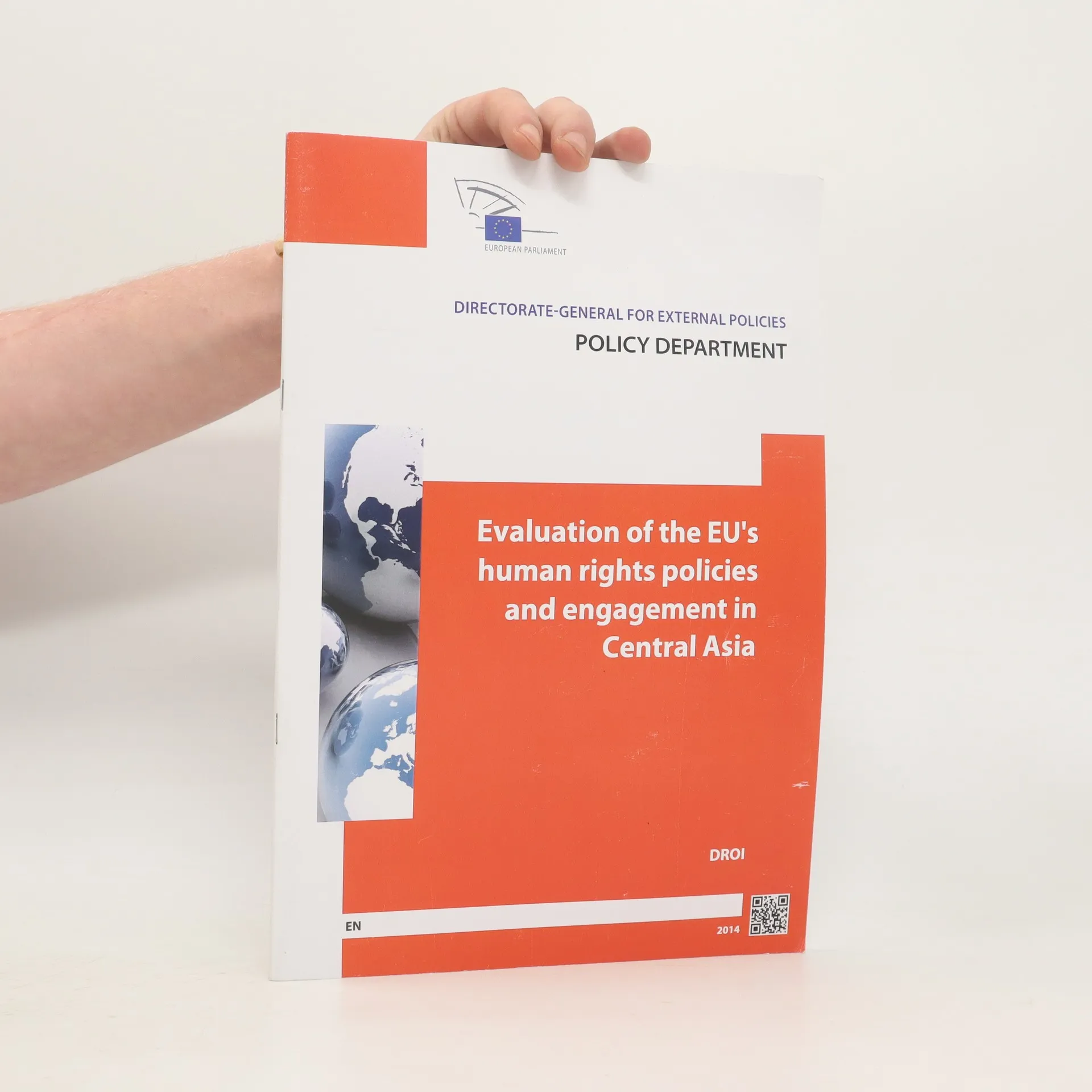
Evaluation of the EU's Human Rights Policies and Engagement in Central Asia
More about the book
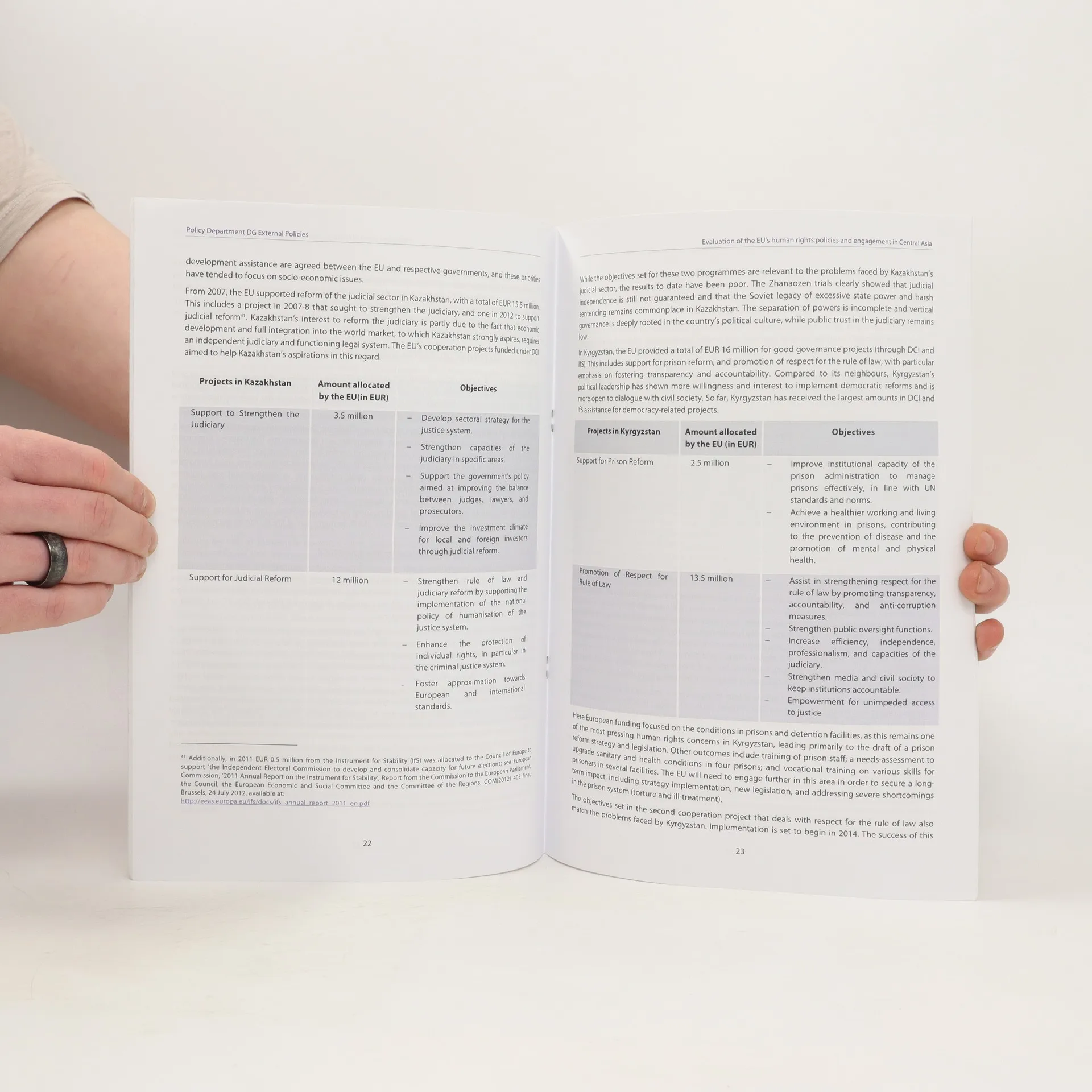
EU relations with the five Central Asian countries were upgraded in 2007 through the establishment of the {OCLCbr#D0}‘EU and Central Asia : Strategy for New Partnership{OCLCbr#D0}’. This brought about hope for a meaningful and coherent EU engagement in the region. One of the EU{OCLCbr#D0}’s main priorities in Central Asia is to advance and promote human rights, good governance, the rule of law, and democratisation. This objective has been supported by various policy and financial instruments. While the overall financial assistance, and in particular funding for democracy- and human rights-related projects, remains limited, the existing support has mostly sought to tackle technical problems in the judicial sector, including prison reform, leaving deeper shortcomings in the promotion and protection of human rights untouched. So far, the EU has had little impact on Central Asia{OCLCbr#D0}’s human rights record, due to the region{OCLCbr#D0}’s deeply embedded authoritarian rule, as well as the EU{OCLCbr#D0}’s limited leverage and its own inconsistencies and inadequate follow-up in implementing values-related policies and projects.
Book purchase
Evaluation of the EU's Human Rights Policies and Engagement in Central Asia, Vera Axyonova, Tika Tsertsvadze, Jos Boonstra
- Language

- Released
- 2014
- Binding
- (Saddle stitch)
Payment methods
No one has rated yet.
- Title
- Evaluation of the EU's Human Rights Policies and Engagement in Central Asia
- Language
- English
- Authors
- Vera Axyonova, Tika Tsertsvadze, Jos Boonstra
- Publisher
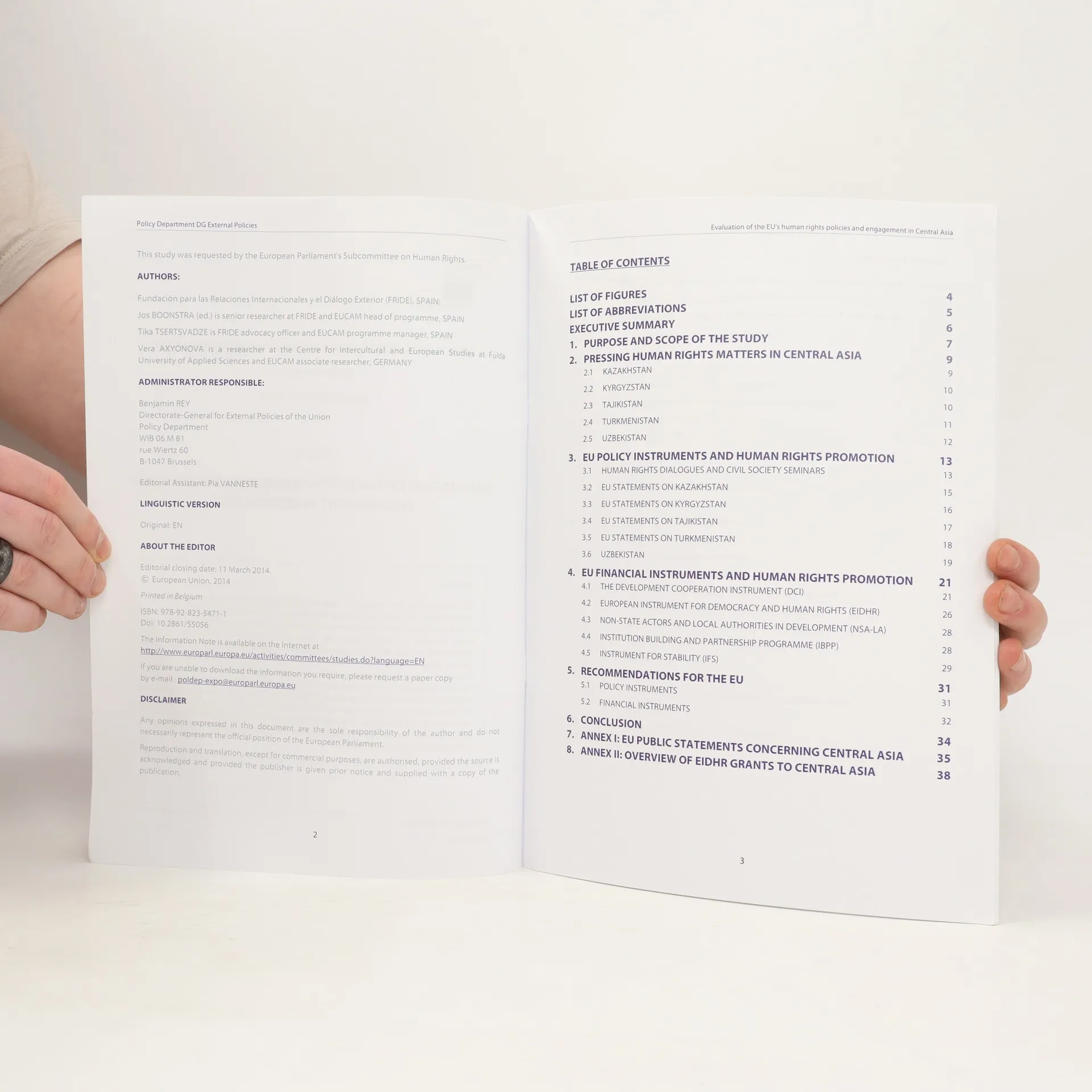
- EU Publications Office
- Released
- 2014
- Format
- Saddle stitch
- Pages
- 41
- ISBN10
- 9282354717
- ISBN13
- 9789282354711
- Series
- Tags
- Description
- EU relations with the five Central Asian countries were upgraded in 2007 through the establishment of the {OCLCbr#D0}‘EU and Central Asia : Strategy for New Partnership{OCLCbr#D0}’. This brought about hope for a meaningful and coherent EU engagement in the region. One of the EU{OCLCbr#D0}’s main priorities in Central Asia is to advance and promote human rights, good governance, the rule of law, and democratisation. This objective has been supported by various policy and financial instruments. While the overall financial assistance, and in particular funding for democracy- and human rights-related projects, remains limited, the existing support has mostly sought to tackle technical problems in the judicial sector, including prison reform, leaving deeper shortcomings in the promotion and protection of human rights untouched. So far, the EU has had little impact on Central Asia{OCLCbr#D0}’s human rights record, due to the region{OCLCbr#D0}’s deeply embedded authoritarian rule, as well as the EU{OCLCbr#D0}’s limited leverage and its own inconsistencies and inadequate follow-up in implementing values-related policies and projects.