

More about the book
In biological systems, the normal processes of oxidation (plus a minor contribution from ionising radiation) produce highly reactive free radicals. These can readily react with and damage other molecules. In some cases the body uses free radicals to destroy foreign or unwanted objects, such as in an infection. However, in the wrong place, the body's own cells may become damaged. Should the damage occur to DNA, the result could be cancer. Antioxidants decrease the damage done to cells by reducing oxidants before they can damage the cell. Virtually all studies of mammals have concluded that a restricted calorie diet extends the life span of mammals by as much as 100%. This remarkable finding suggests that food is actually more damaging than smoking. As food produces free radicals (oxidants) when metabolised, antioxidant-rich diets are thought to stave off the effects of ageing significantly better than diets lacking in antioxidants. The reduced levels of free radicals, resulting from a reduction in their production by metabolism, is thought to be a major cause of the success of caloric restriction in increasing life span. Antioxidants consist of a group of vitamins including vitamin C, vitamin E, selenium and carotenoids, (such as beta-carotene, lycopene, and lutein). This new book brings together the latest research in this dynamic field.
Book purchase
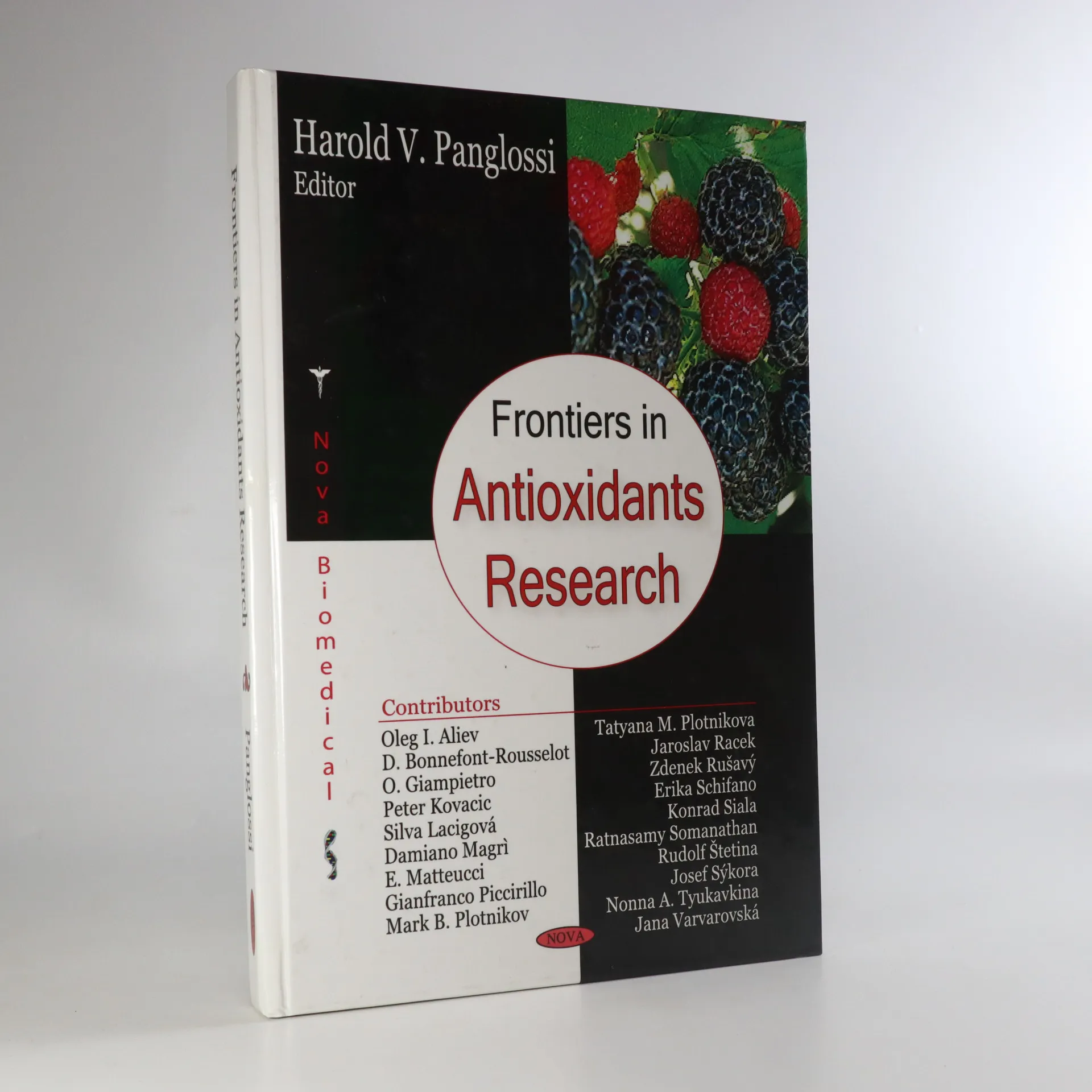
Frontiers in Antioxidants Research, Harold V. Panglossi
- Language

- Released
- 2006
- Binding
- (Hardcover)
Payment methods
No one has rated yet.
- Title
- Frontiers in Antioxidants Research
- Language
- English
- Authors
- Harold V. Panglossi
- Publisher
- Nova Publishers
- Released
- 2006
- Format
- Hardcover
- Pages
- 216
- ISBN10
- 1600212735
- ISBN13
- 9781600212734
- Series
- Tags
- Natural sciences
- Description
- In biological systems, the normal processes of oxidation (plus a minor contribution from ionising radiation) produce highly reactive free radicals. These can readily react with and damage other molecules. In some cases the body uses free radicals to destroy foreign or unwanted objects, such as in an infection. However, in the wrong place, the body's own cells may become damaged. Should the damage occur to DNA, the result could be cancer. Antioxidants decrease the damage done to cells by reducing oxidants before they can damage the cell. Virtually all studies of mammals have concluded that a restricted calorie diet extends the life span of mammals by as much as 100%. This remarkable finding suggests that food is actually more damaging than smoking. As food produces free radicals (oxidants) when metabolised, antioxidant-rich diets are thought to stave off the effects of ageing significantly better than diets lacking in antioxidants. The reduced levels of free radicals, resulting from a reduction in their production by metabolism, is thought to be a major cause of the success of caloric restriction in increasing life span. Antioxidants consist of a group of vitamins including vitamin C, vitamin E, selenium and carotenoids, (such as beta-carotene, lycopene, and lutein). This new book brings together the latest research in this dynamic field.