

More about the book
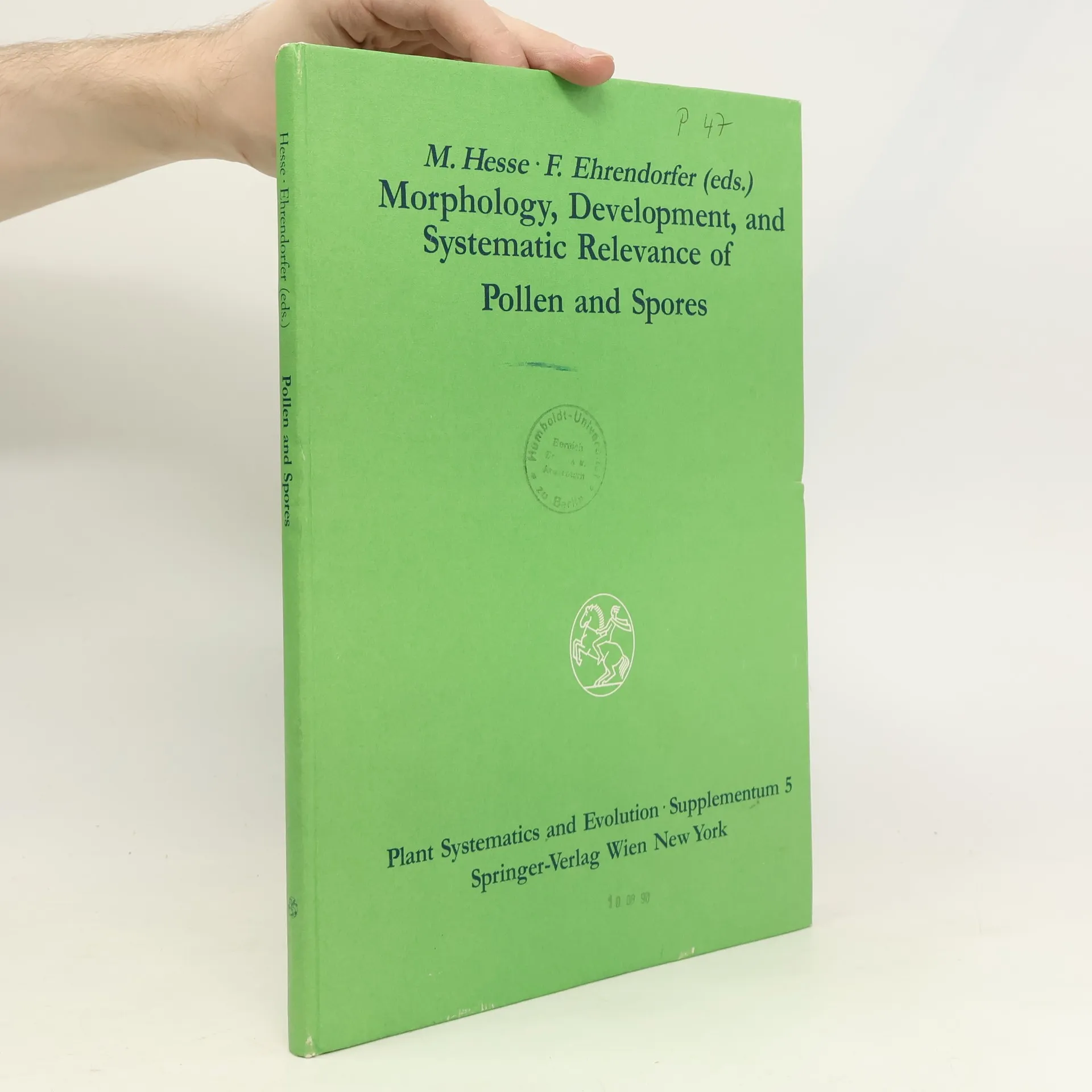
Palynology, the science of fossil and recent spores/pollen grains, is of high importance, both in many pure and applied fields of the natural sciences (e.g. in botany, geology, climatology, archeology and medicine). It is not only an auxiliary science, but can certainly stand for itself. The "classical" palynology subjects, pollen morphology and systematics, are at present influenced by many modern approaches, e.g. from cell biology, analytical electron microscopy, morphometry, up to com- puter-aided-design of threedimensional reconstruction. In recent years fascinating informations have come to light, and new insights have given rise to changing scientific concepts. During the XIV International Botanical Congress, held in Berlin in 1987, a symposium was devoted to important topics of (actuo)palynology. Nine of its innovative, major contributions are presented in this volume. They cover the comparative morphology and the systematic/evolutionary significance of pollen/spores in critical taxa, aspects of pollen development (cytoskeleton), the substructure of sporopollenin, homologies between wall strata of ferns, gymnosperms and angiosperms, and important (but so far underrated) physical aspects of harmomegathy and pollen transport (fluid versus solid mechanics).
Book purchase
Morphology, Development, and Systematic Relevance of Pollen and Spores, M. Hesse, Friedrich Ehrendorfer
- Language

- Released
- 1990
- Binding
- (Hardcover)
Payment methods
No one has rated yet.
- Title
- Morphology, Development, and Systematic Relevance of Pollen and Spores
- Language
- English
- Authors
- M. Hesse, Friedrich Ehrendorfer
- Publisher
- Springer
- Released
- 1990
- Format
- Hardcover
- ISBN10
- 0387821821
- ISBN13
- 9780387821825
- Series
- Categories
- Tags
- Natural sciences, Plants
- Description
- Palynology, the science of fossil and recent spores/pollen grains, is of high importance, both in many pure and applied fields of the natural sciences (e.g. in botany, geology, climatology, archeology and medicine). It is not only an auxiliary science, but can certainly stand for itself. The "classical" palynology subjects, pollen morphology and systematics, are at present influenced by many modern approaches, e.g. from cell biology, analytical electron microscopy, morphometry, up to com- puter-aided-design of threedimensional reconstruction. In recent years fascinating informations have come to light, and new insights have given rise to changing scientific concepts. During the XIV International Botanical Congress, held in Berlin in 1987, a symposium was devoted to important topics of (actuo)palynology. Nine of its innovative, major contributions are presented in this volume. They cover the comparative morphology and the systematic/evolutionary significance of pollen/spores in critical taxa, aspects of pollen development (cytoskeleton), the substructure of sporopollenin, homologies between wall strata of ferns, gymnosperms and angiosperms, and important (but so far underrated) physical aspects of harmomegathy and pollen transport (fluid versus solid mechanics).