

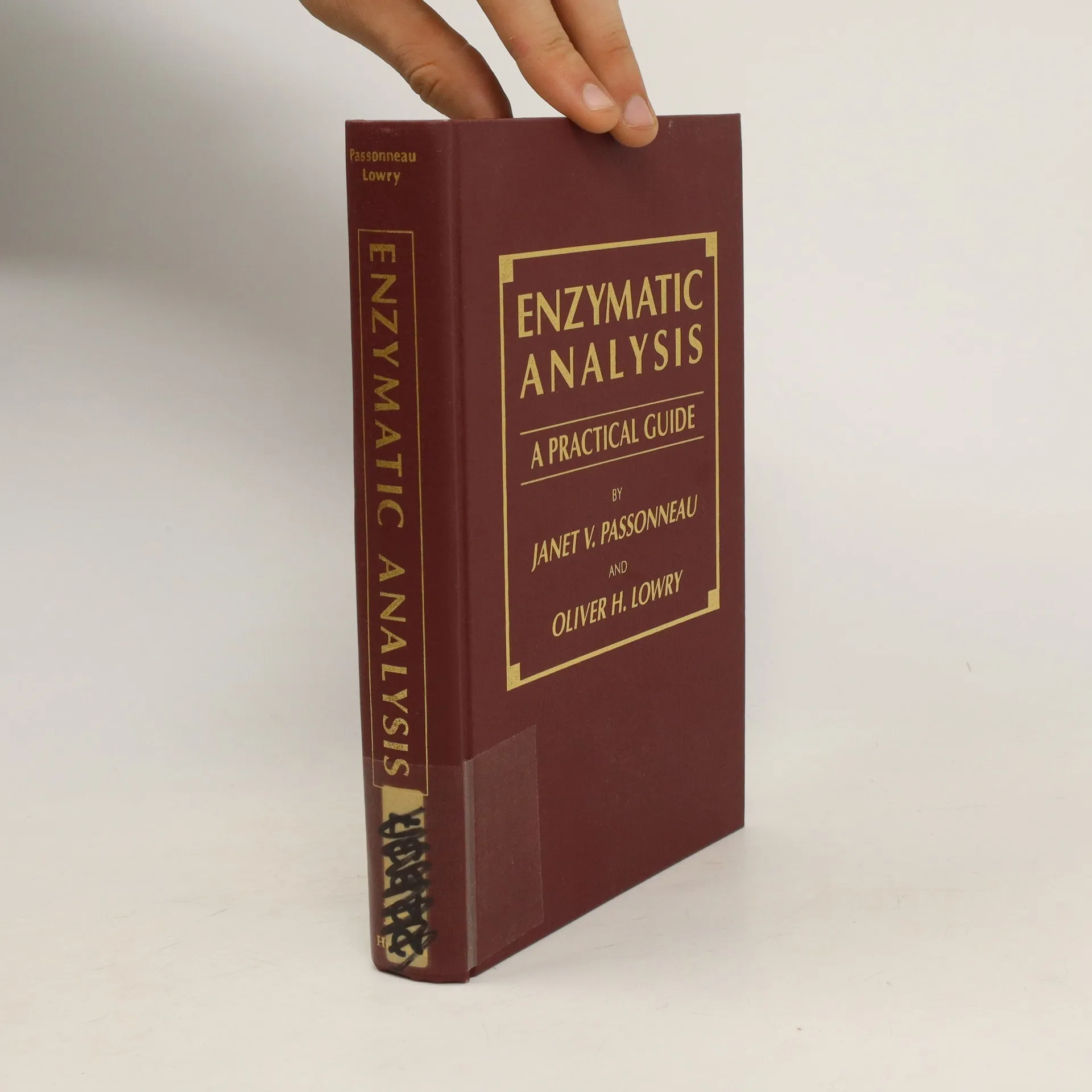


Enzymatic Analysis
Authors
Parameters
More about the book
Enzymatic A Practical Guide is a multipurpose manual of laboratory methods. It offers a systematic scheme for the analysis of biological materials from the level of the whole organ down to the single cell and beyond. It is intended as a guide to the development of new methods, to the refinement of old ones, and to the adaptation in general of methods to almost any scale of sensitivity. As some may realize, the book is a sequel to A Flexible System of Enzymatic Analysis, originally published in 1972. The major changes, other than an appropriate interchange of authors, consist of a wholly new chapter of methods and protocols for measuring enzymes, the addition of 13 new entries in the metabolite chapter, and a much superior chapter on enzymatic cycling. With considerable nostalgia, we have switched from DPN and TPN to NAD and NADP nomenclature, which no doubt will make Otto Warburg turn over in his grave. The incentives for the methodology in this book came from the rigorous demands of quantitative histochemistry and cytochemistry. These demands are specificity, simplicity, flexibility, and, of course, sensitivity―all likewise desirable attributes of methods for other purposes. The specificity is provided by the use of enzyme methods. Simplicity is achieved by leading all reactions to a final pyridine nucleotide step.
Book purchase
Enzymatic Analysis, Janet V. Passonneau
- Language

- Released
- 1993
- Binding
- (Hardcover)
Payment methods
No one has rated yet.
- Title
- Enzymatic Analysis
- Language
- English
- Authors
- Janet V. Passonneau
- Publisher
- Humana Press
- Released
- 1993
- Format
- Hardcover
- ISBN10
- 0896032388
- ISBN13
- 9780896032385
- Series
- Categories
- Description
- Enzymatic A Practical Guide is a multipurpose manual of laboratory methods. It offers a systematic scheme for the analysis of biological materials from the level of the whole organ down to the single cell and beyond. It is intended as a guide to the development of new methods, to the refinement of old ones, and to the adaptation in general of methods to almost any scale of sensitivity. As some may realize, the book is a sequel to A Flexible System of Enzymatic Analysis, originally published in 1972. The major changes, other than an appropriate interchange of authors, consist of a wholly new chapter of methods and protocols for measuring enzymes, the addition of 13 new entries in the metabolite chapter, and a much superior chapter on enzymatic cycling. With considerable nostalgia, we have switched from DPN and TPN to NAD and NADP nomenclature, which no doubt will make Otto Warburg turn over in his grave. The incentives for the methodology in this book came from the rigorous demands of quantitative histochemistry and cytochemistry. These demands are specificity, simplicity, flexibility, and, of course, sensitivity―all likewise desirable attributes of methods for other purposes. The specificity is provided by the use of enzyme methods. Simplicity is achieved by leading all reactions to a final pyridine nucleotide step.