


More about the book
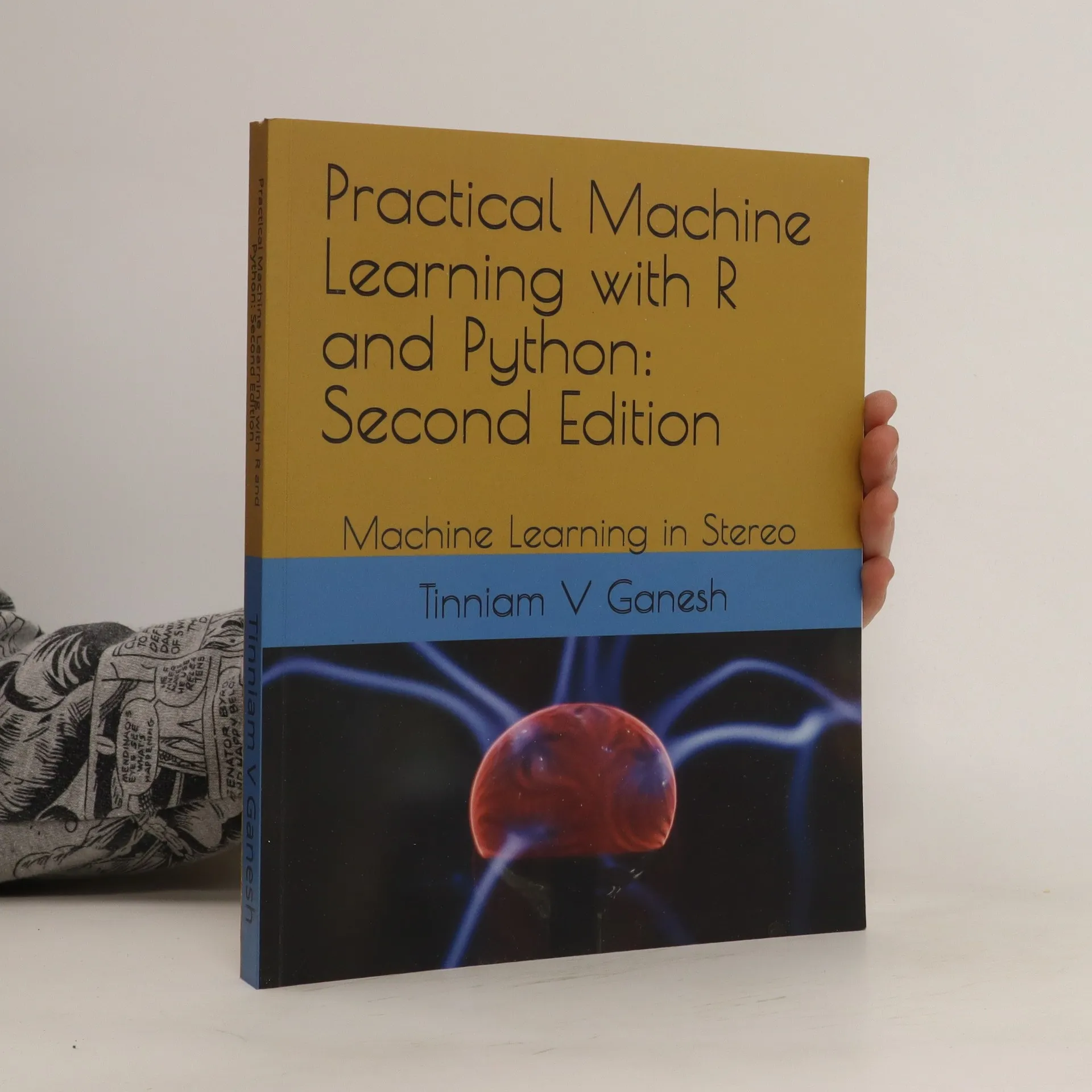
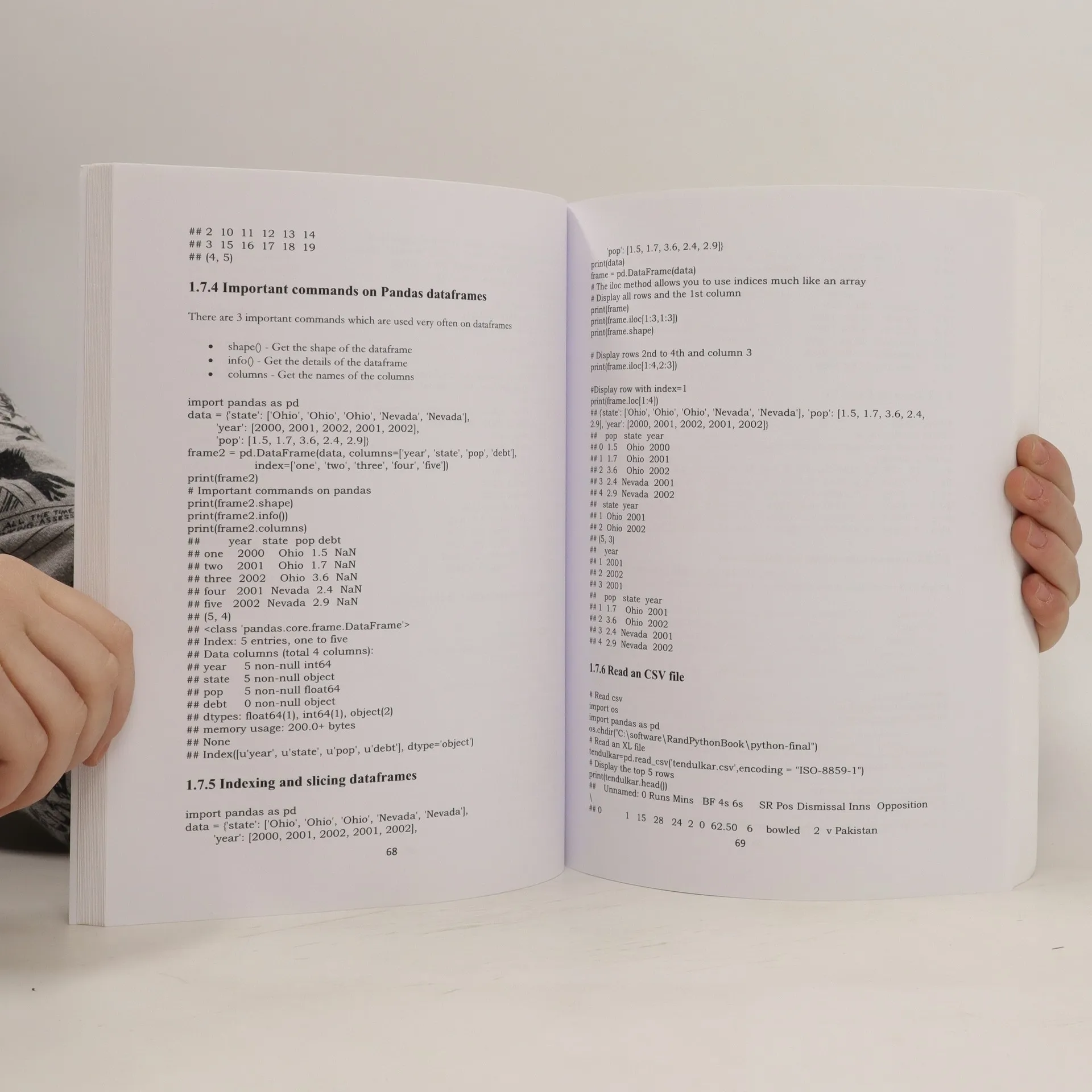
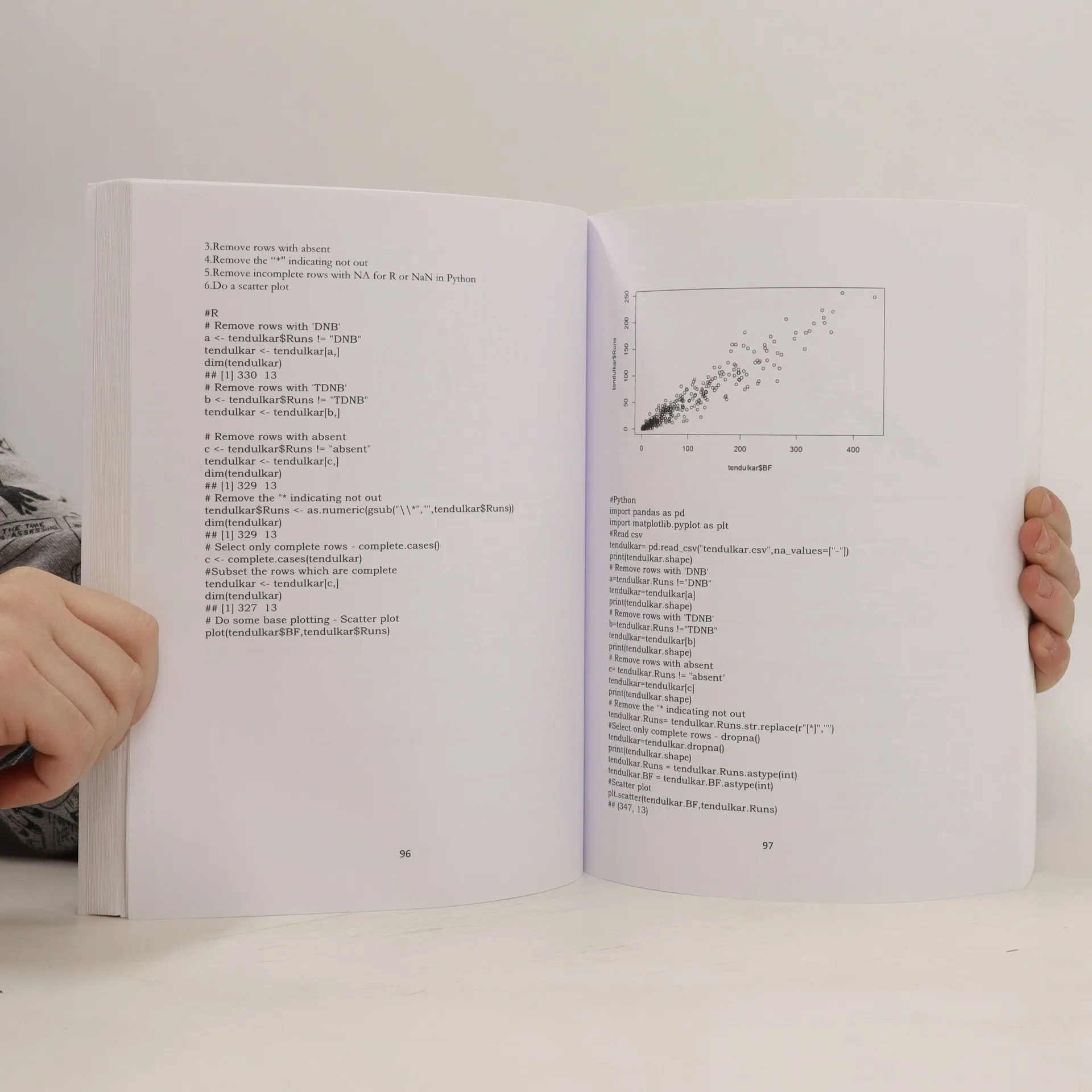
This book implements many common Machine Learning algorithms in equivalent R and Python. It covers different regression models, classification algorithms including logistic regression, KNN classification, SVMs, b-splines, random forest, boosting, and other techniques like best-fit, forward fit, backward fit, and lasso and ridge regression. The book also discusses classification metrics for computing accuracy, recall, precision, and includes implementations of validation, ROC, and AUC curves in both R and Python. Additionally, it covers unsupervised learning methods like K-Means, PCA, and Hierarchical clustering. The first two chapters discuss important programming constructs in R and Python, while the third chapter highlights equivalent programming phrases in both languages. This makes it useful for novices and experts alike, as those with no knowledge of R and Python can benefit from the introductory chapters, and those proficient in one language can further their knowledge of the other. Familiarity with both languages will allow readers to internalize the algorithms through equivalent implementations. This book serves as a handy reference for Machine Learning algorithms in both R and Python.
Book purchase
Practical Machine Learning with R and Python, Tinniam V. Ganesh
- Language

- Released
- 2018
- Binding
- (Paperback)
Payment methods
No one has rated yet.
- Title
- Practical Machine Learning with R and Python
- Language
- English
- Authors
- Tinniam V. Ganesh
- Released
- 2018
- Format
- Paperback
- Pages
- 269
- ISBN10
- 1983035661
- ISBN13
- 9781983035661
- Series
- Tags
- Description
- This book implements many common Machine Learning algorithms in equivalent R and Python. It covers different regression models, classification algorithms including logistic regression, KNN classification, SVMs, b-splines, random forest, boosting, and other techniques like best-fit, forward fit, backward fit, and lasso and ridge regression. The book also discusses classification metrics for computing accuracy, recall, precision, and includes implementations of validation, ROC, and AUC curves in both R and Python. Additionally, it covers unsupervised learning methods like K-Means, PCA, and Hierarchical clustering. The first two chapters discuss important programming constructs in R and Python, while the third chapter highlights equivalent programming phrases in both languages. This makes it useful for novices and experts alike, as those with no knowledge of R and Python can benefit from the introductory chapters, and those proficient in one language can further their knowledge of the other. Familiarity with both languages will allow readers to internalize the algorithms through equivalent implementations. This book serves as a handy reference for Machine Learning algorithms in both R and Python.