

More about the book
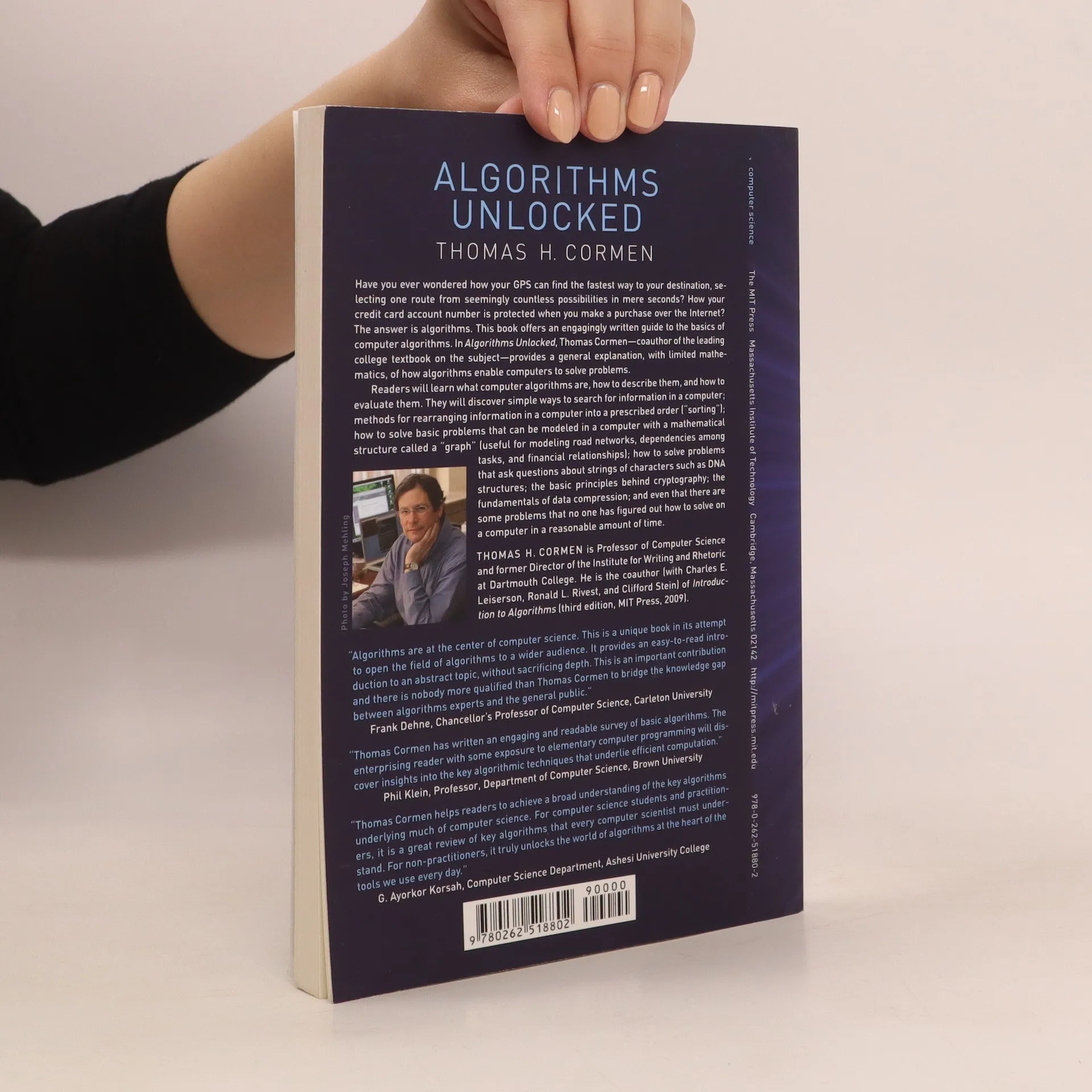
"This book offers an engagingly written guide to the basics of computer algorithms. In Algorithms Unlocked, Thomas Cormen- coauthor of the leading college textbook on the subject- provides a general explanation, with limited mathematics, of how algorithms enable computers to solve problems. Readers will learn what computer algorithms are, how to describe them, and how to evaluate them. They will discover simples ways to search for information in a computer; methods for rearranging information in a computer into a prescribed order ("sorting"); how to solve basic problems that can be modeled in a computer with a mathematical structure called a "graph" (useful for modeling road networks, dependencies among tasks, and financial relationships); how to solve problems that ask questions about strings of characters such as DNA structures; the basic principles behind cryptography; the fundamentals of data compression; and even that there are some problems that no one has figured out how to solve on a computer in a reasonable amount of time."--Back cover
Book purchase
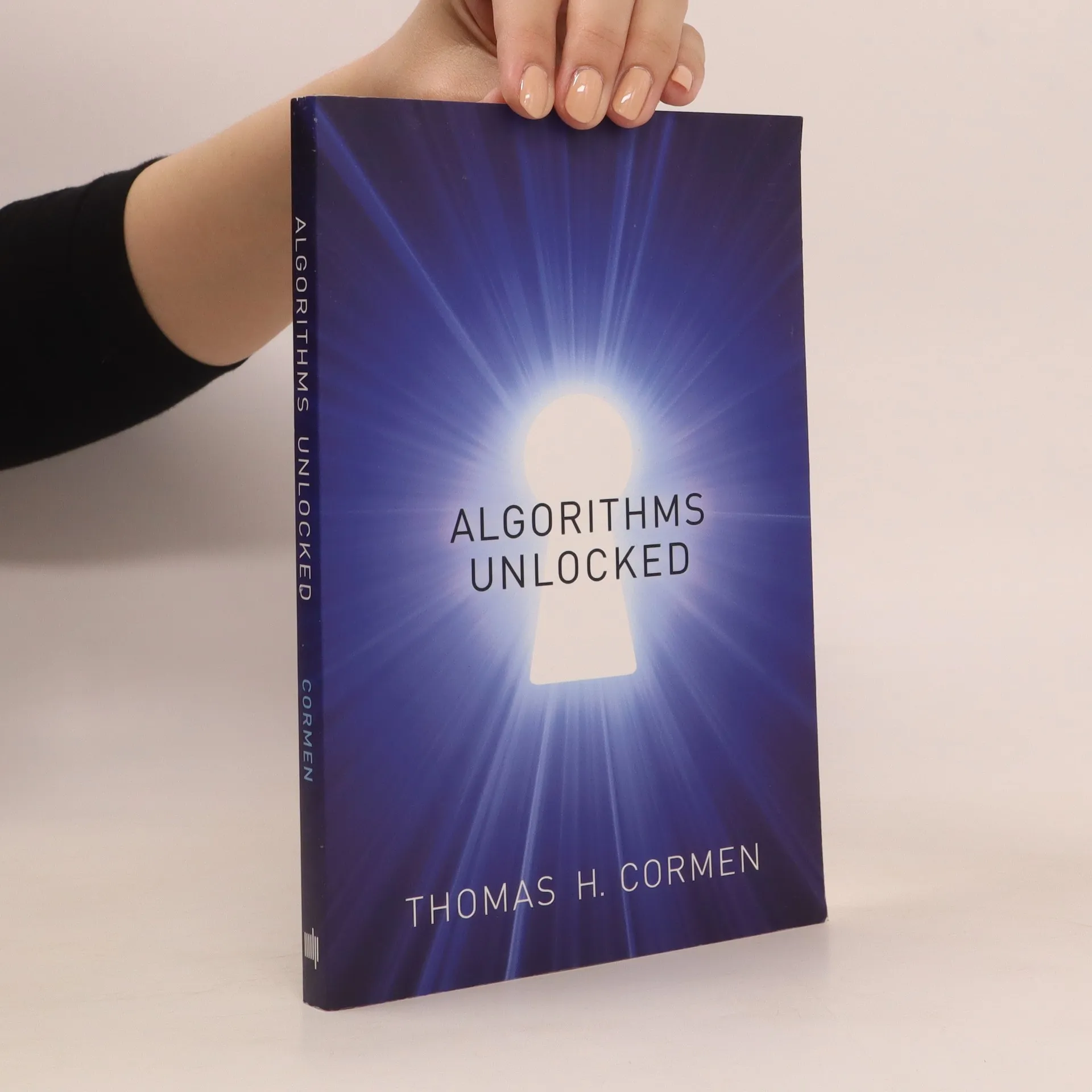
Algorithms unlocked, Thomas H. Cormen
- Language

- Released
- 2013
- Binding
- (Paperback)
Payment methods
We’re missing your review here.
- Title
- Algorithms unlocked
- Language
- English
- Authors
- Thomas H. Cormen
- Publisher
- MIT Press
- Released
- 2013
- Format
- Paperback
- ISBN10
- 0262518805
- ISBN13
- 9780262518802
- Series
- Tags
- Science, Technology, Algorithms
- Rating
- 3.8 out of 5
- Description
- "This book offers an engagingly written guide to the basics of computer algorithms. In Algorithms Unlocked, Thomas Cormen- coauthor of the leading college textbook on the subject- provides a general explanation, with limited mathematics, of how algorithms enable computers to solve problems. Readers will learn what computer algorithms are, how to describe them, and how to evaluate them. They will discover simples ways to search for information in a computer; methods for rearranging information in a computer into a prescribed order ("sorting"); how to solve basic problems that can be modeled in a computer with a mathematical structure called a "graph" (useful for modeling road networks, dependencies among tasks, and financial relationships); how to solve problems that ask questions about strings of characters such as DNA structures; the basic principles behind cryptography; the fundamentals of data compression; and even that there are some problems that no one has figured out how to solve on a computer in a reasonable amount of time."--Back cover