

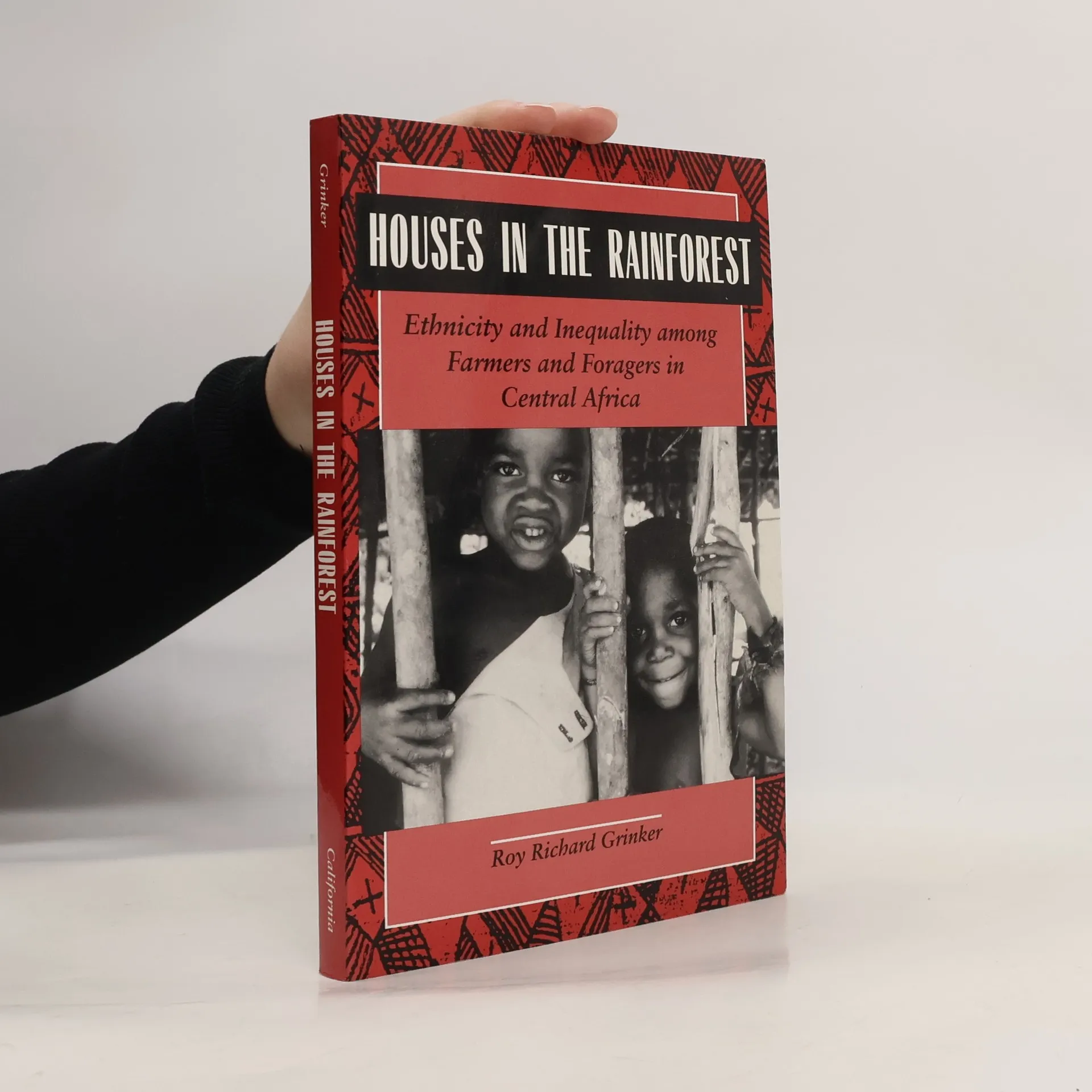


Houses in the Rainforest
Ethnicity and Inequality among Farmers and Foragers in Central Africa
Authors
Book rating
More about the book
This is the first ethnographic study of the farmers and foragers of northeastern Zaire since Colin Turnbull's classic works of the 1960s. Roy Richard Grinker lived for nearly two years among the Lese farmers and their long-term partners, the Efe (Pygmies), learned their languages, and gained unique insights into their complex social relations and ethnic identities. By showing how political organization is structured by ethnic and gender relations in the Lese house, Grinker challenges previous views of the Lese and Efe and other farmer-forager societies, as well as the conventional anthropological boundary between domestic and political contexts.
Book purchase
Houses in the Rainforest, Roy Richard Grinker
- Language

- Released
- 1994
- Binding
- (Paperback)
Payment methods
We’re missing your review here.
- Title
- Houses in the Rainforest
- Subtitle
- Ethnicity and Inequality among Farmers and Foragers in Central Africa
- Language
- English
- Authors
- Roy Richard Grinker
- Publisher
- Univ of California Press
- Released
- 1994
- Format
- Paperback
- Pages
- 244
- ISBN10
- 0520089758
- ISBN13
- 9780520089754
- Series
- Categories
- Tags
- Africa
- Rating
- 3.4 out of 5
- Description
- This is the first ethnographic study of the farmers and foragers of northeastern Zaire since Colin Turnbull's classic works of the 1960s. Roy Richard Grinker lived for nearly two years among the Lese farmers and their long-term partners, the Efe (Pygmies), learned their languages, and gained unique insights into their complex social relations and ethnic identities. By showing how political organization is structured by ethnic and gender relations in the Lese house, Grinker challenges previous views of the Lese and Efe and other farmer-forager societies, as well as the conventional anthropological boundary between domestic and political contexts.