

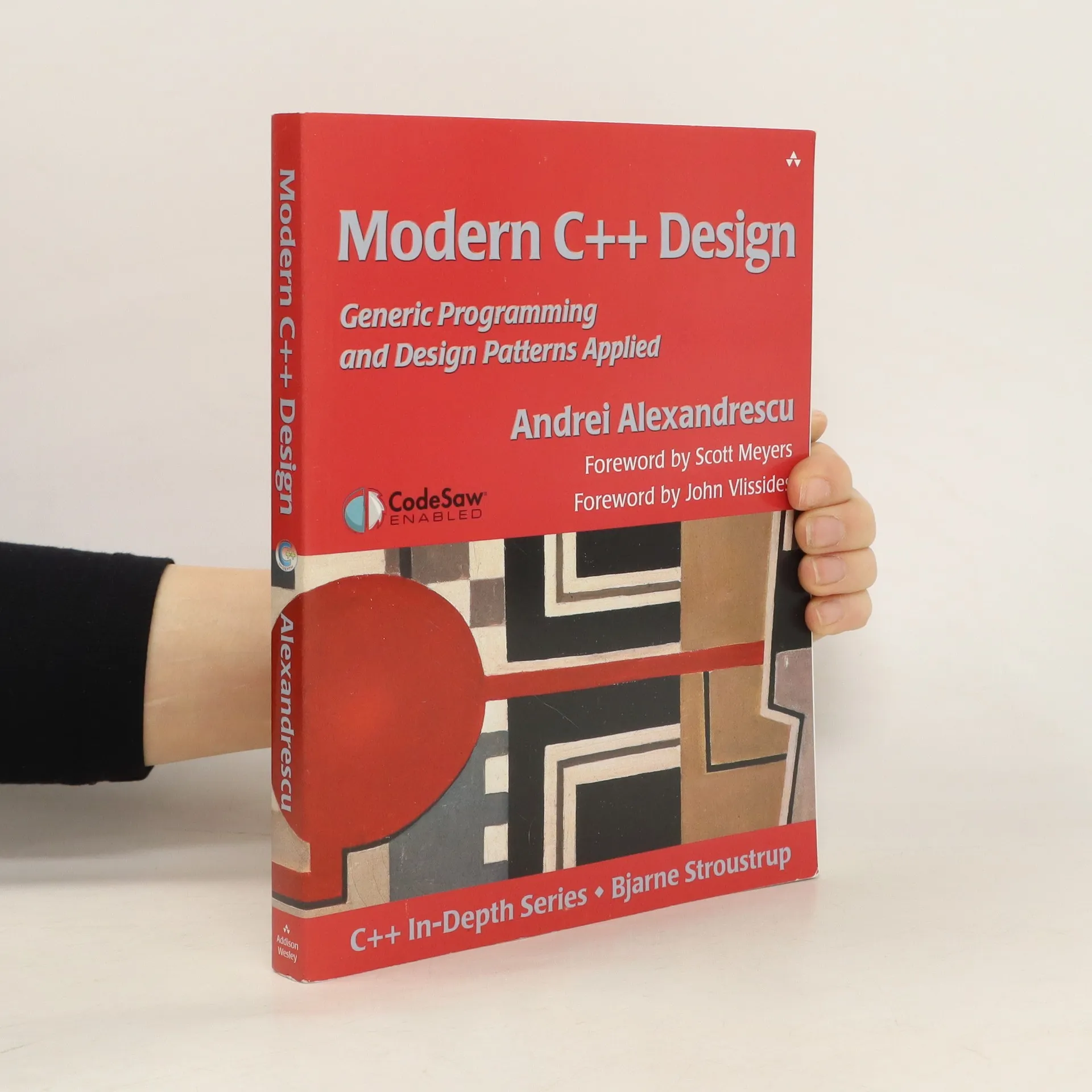


More about the book
In Modern C++ Design , Andrei Alexandrescu opens new vistas for C++ programmers. Displaying extraordinary creativity and programming virtuosity, Alexandrescu offers a cutting-edge approach to design that unites design patterns, generic programming, and C++, enabling programmers to achieve expressive, flexible, and highly reusable code. This book introduces the concept of generic components―reusable design templates that produce boilerplate code for compiler consumption―all within C++. Generic components enable an easier and more seamless transition from design to application code, generate code that better expresses the original design intention, and support the reuse of design structures with minimal recoding. The author describes the specific C++ techniques and features that are used in building generic components and goes on to implement industrial strength generic components for real-world applications. Recurring issues that C++ developers face in their day-to-day activity are discussed in depth and implemented in a generic way. These For each generic component, the book presents the fundamental problems and design options, and finally implements a generic solution.
Book purchase
Modern C++ Design, Andrei Alexandrescu
- Language

- Released
- 2001
- Binding
- (Paperback)
Payment methods
We’re missing your review here.
- Title
- Modern C++ Design
- Language
- English
- Authors
- Andrei Alexandrescu
- Publisher
- Addison-Wesley Professional
- Released
- 2001
- Format
- Paperback
- Pages
- 352
- ISBN10
- 0201704315
- ISBN13
- 9780201704310
- Series
- Rating
- 4.25 out of 5
- Description
- In Modern C++ Design , Andrei Alexandrescu opens new vistas for C++ programmers. Displaying extraordinary creativity and programming virtuosity, Alexandrescu offers a cutting-edge approach to design that unites design patterns, generic programming, and C++, enabling programmers to achieve expressive, flexible, and highly reusable code. This book introduces the concept of generic components―reusable design templates that produce boilerplate code for compiler consumption―all within C++. Generic components enable an easier and more seamless transition from design to application code, generate code that better expresses the original design intention, and support the reuse of design structures with minimal recoding. The author describes the specific C++ techniques and features that are used in building generic components and goes on to implement industrial strength generic components for real-world applications. Recurring issues that C++ developers face in their day-to-day activity are discussed in depth and implemented in a generic way. These For each generic component, the book presents the fundamental problems and design options, and finally implements a generic solution.