


More about the book
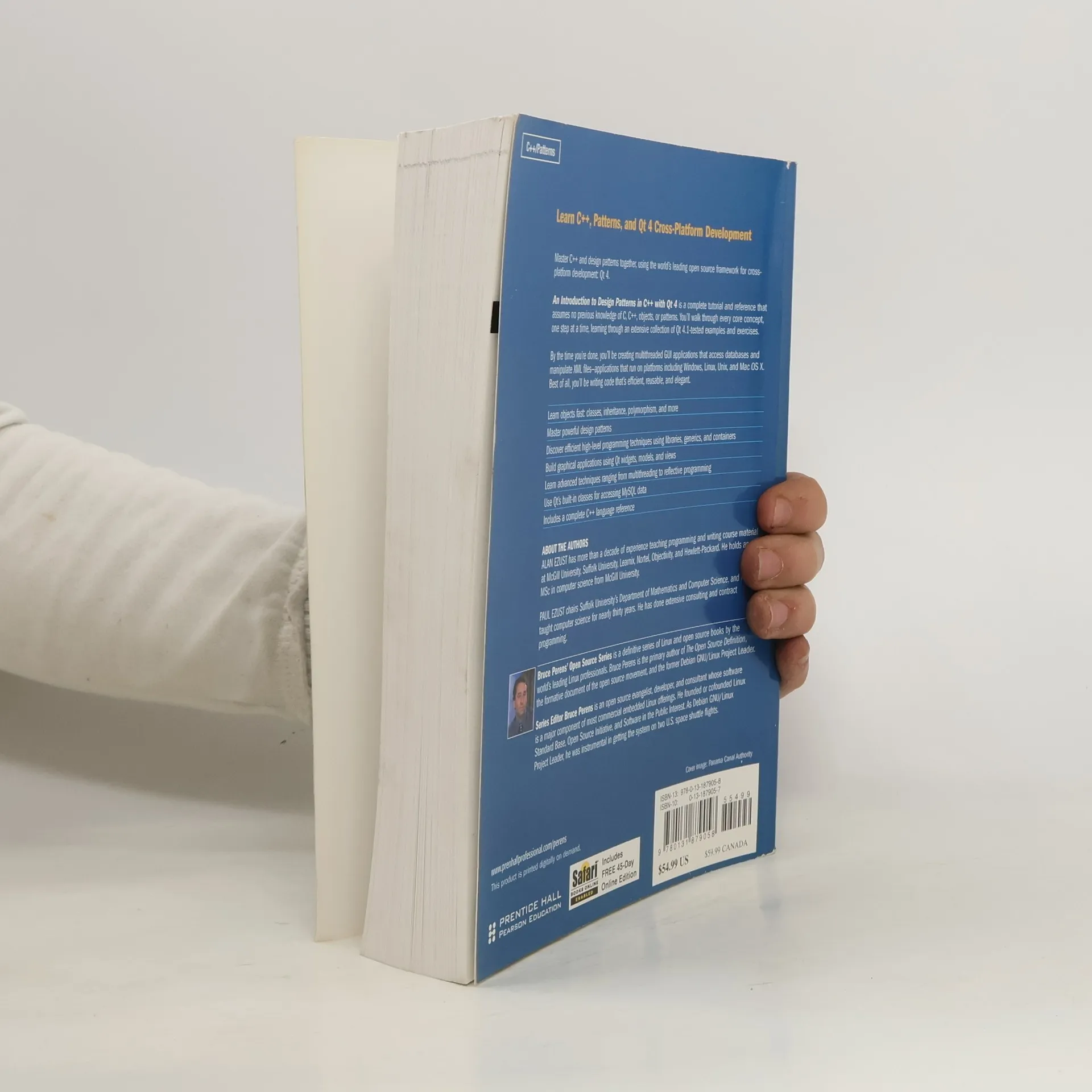
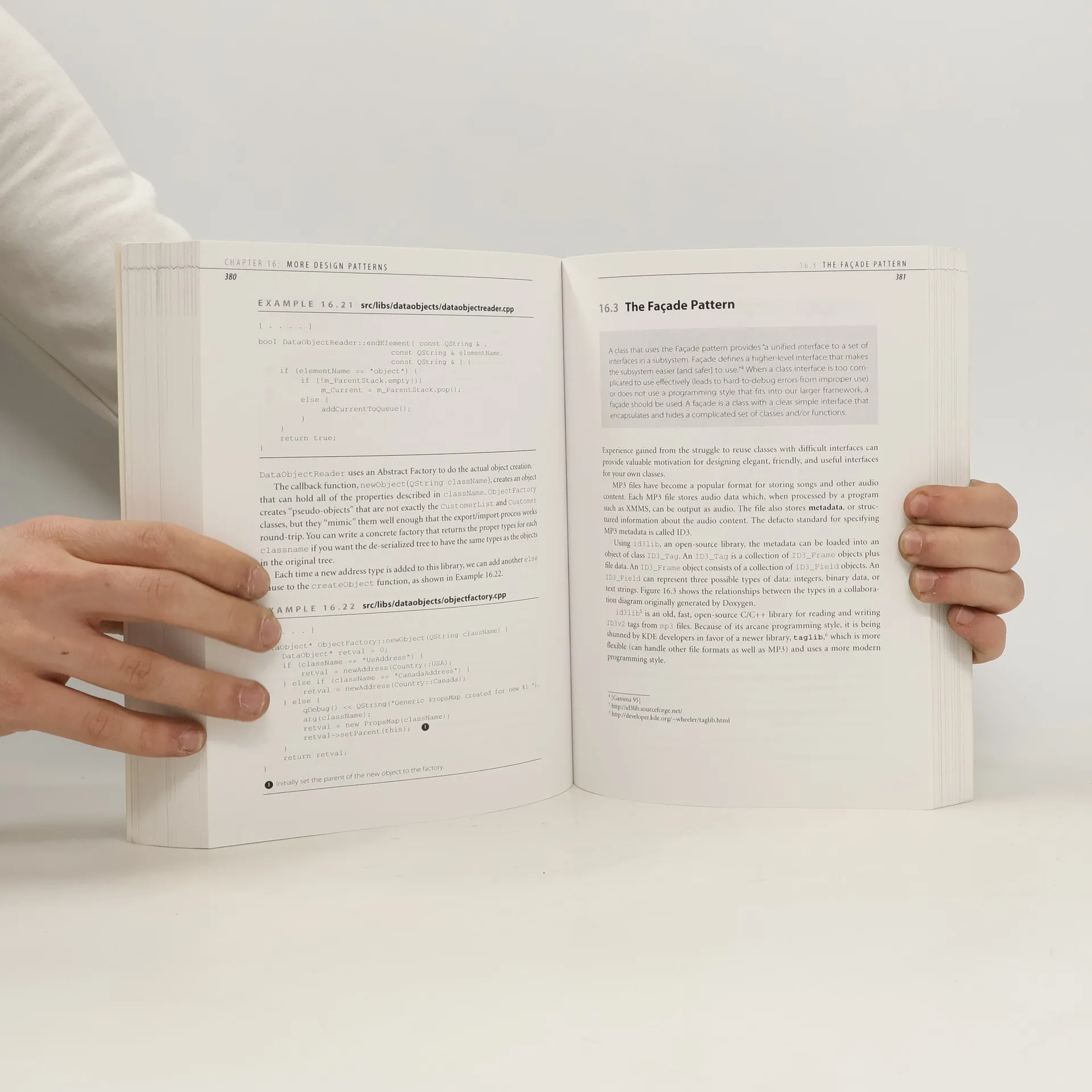
Learn C++, Patterns, and Qt 4 Cross-Platform Development Master C++ and design patterns together, using the world's leading open source framework for cross-platform Qt 4. An Introduction to Design Patterns in C++ with Qt 4 is a complete tutorial and reference that assumes no previous knowledge of C, C++, objects, or patterns. You'll walk through every core concept, one step at a time, learning through an extensive collection of Qt 4.1-tested examples and exercises. By the time you're done, you'll be creating multithreaded GUI applications that access databases and manipulate XML files--applications that run on platforms including Windows, Linux, Unix, and Mac OS X. Best of all, you'll be writing code that's efficient, reusable, and elegant.
Book purchase
An Introduction to Design Patterns in C++ with Qt 4, Alan Ezust, Paul Ezust
- Language

- Released
- 2007
- Binding
- (Paperback)
Payment methods
We’re missing your review here.
- Title
- An Introduction to Design Patterns in C++ with Qt 4
- Language
- English
- Authors
- Alan Ezust, Paul Ezust
- Publisher
- Pearson Education Limited
- Released
- 2007
- Format
- Paperback
- Pages
- 656
- ISBN10
- 0131879057
- ISBN13
- 9780131879058
- Series
- Tags
- Rating
- 3.65 out of 5
- Description
- Learn C++, Patterns, and Qt 4 Cross-Platform Development Master C++ and design patterns together, using the world's leading open source framework for cross-platform Qt 4. An Introduction to Design Patterns in C++ with Qt 4 is a complete tutorial and reference that assumes no previous knowledge of C, C++, objects, or patterns. You'll walk through every core concept, one step at a time, learning through an extensive collection of Qt 4.1-tested examples and exercises. By the time you're done, you'll be creating multithreaded GUI applications that access databases and manipulate XML files--applications that run on platforms including Windows, Linux, Unix, and Mac OS X. Best of all, you'll be writing code that's efficient, reusable, and elegant.