

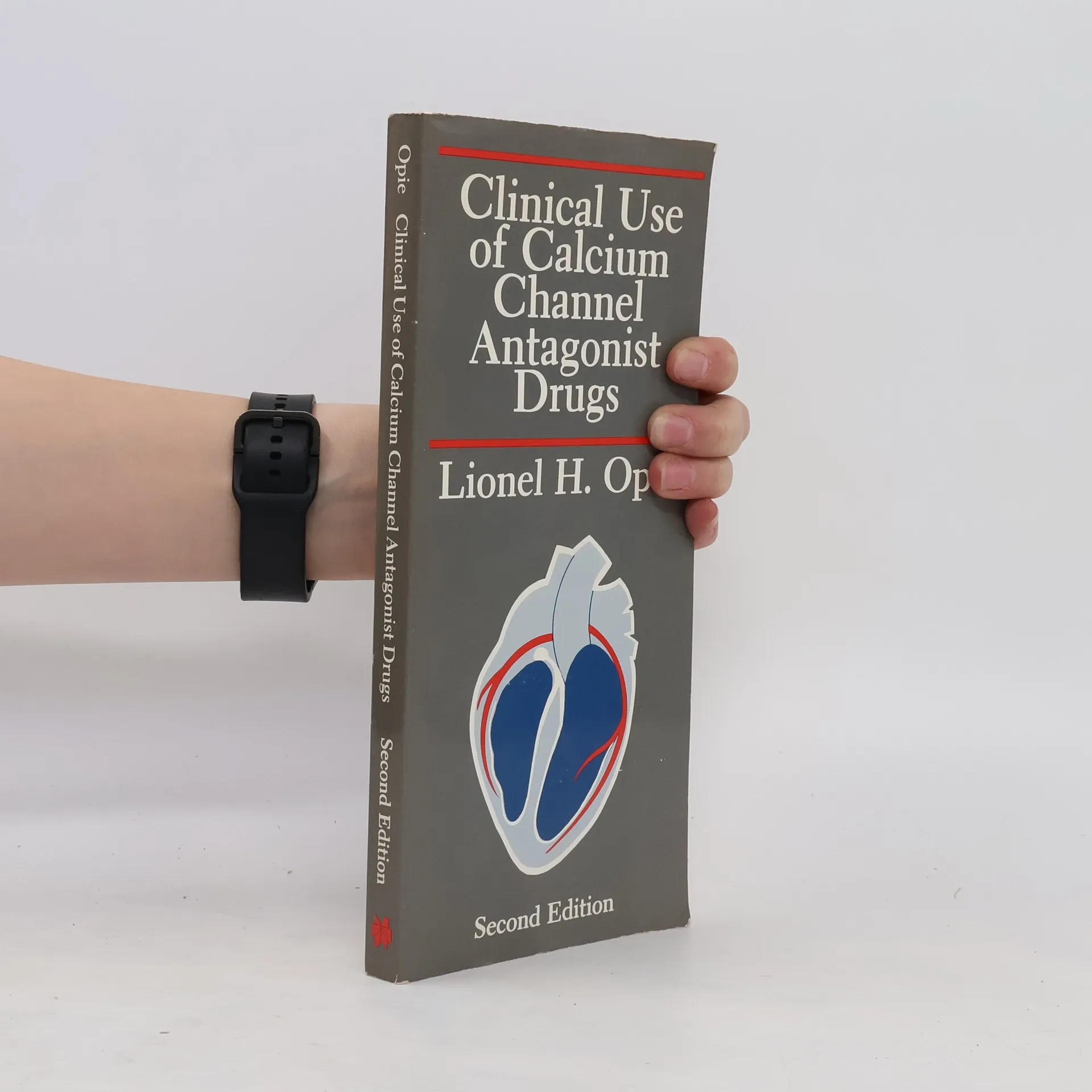


Clinical Use of Calcium Channel Antagonist Drugs
More about the book
Calcium antagonists are now regarded as the most important advance in cardiac drug therapy since the advent of beta-adrenergic blocking agents. Acting ba sically as vasodilators-though with many other com plex mechanisms especially in the case of the anti arrhythmic calcium antagonists, these agents have grown in importance to become among the therapeutic agents of first choice for angina pectoris and hyper tension. The major aim of the present book is to present the clinician with the information needed for the practical use of calcium antagonists. What do all the numerous and often conflicting trials say? Do these agents really work? If so, which agent and in what dose? How do the three front runners, verapamil, nifedipine and diltia zem compare in the efficacy and side-effects with each other? How do the new second generation agents, now entering the North American market, slot in and com pare with the three first-liners? When the gloss is taken away from the advertisements, what is really left? The strong clinical bias of the present book should be complimented by further reading of books slanted towards fundamentals. One of the most important and recent of these is that by Dr Winifred Nayler (Calcium Antagonists, Academic Press, 1988). That book should be basic for essential background knowledge in the area of calcium antagonists. The important basic contribu tions of Fleckenstein deserve emphasis.
Book purchase
Clinical Use of Calcium Channel Antagonist Drugs, Lionel Henry Opie, William A. Coetzee
- Language

- Released
- 1990
- Binding
- (Paperback)
Payment methods
No one has rated yet.
- Title
- Clinical Use of Calcium Channel Antagonist Drugs
- Language
- English
- Authors
- Lionel Henry Opie, William A. Coetzee
- Publisher
- Kluwer Academic Publishers
- Released
- 1990
- Format
- Paperback
- Pages
- 326
- ISBN10
- 0792308727
- ISBN13
- 9780792308720
- Series
- Categories
- Description
- Calcium antagonists are now regarded as the most important advance in cardiac drug therapy since the advent of beta-adrenergic blocking agents. Acting ba sically as vasodilators-though with many other com plex mechanisms especially in the case of the anti arrhythmic calcium antagonists, these agents have grown in importance to become among the therapeutic agents of first choice for angina pectoris and hyper tension. The major aim of the present book is to present the clinician with the information needed for the practical use of calcium antagonists. What do all the numerous and often conflicting trials say? Do these agents really work? If so, which agent and in what dose? How do the three front runners, verapamil, nifedipine and diltia zem compare in the efficacy and side-effects with each other? How do the new second generation agents, now entering the North American market, slot in and com pare with the three first-liners? When the gloss is taken away from the advertisements, what is really left? The strong clinical bias of the present book should be complimented by further reading of books slanted towards fundamentals. One of the most important and recent of these is that by Dr Winifred Nayler (Calcium Antagonists, Academic Press, 1988). That book should be basic for essential background knowledge in the area of calcium antagonists. The important basic contribu tions of Fleckenstein deserve emphasis.