

Parameters
- 434 pages
- 16 hours of reading
More about the book
A style is any pattern we see in a person's way of accomplishing a particular type of task. The "task" of interest in the present context is education-learning and remembering in school and transferring what is learned to the world outside of school. Teachers are expressing some sort of awareness of style when they observe a particular action taken by a particular student and then say something like: "This doesn't surprise me! That's just the way he is. " Observation of a single action cannot reveal a style. One's impres sion of a person's style is abstracted from multiple experiences of the person under similar circumstances. In education, if we understand the styles of individual students, we can often anticipate their perceptions and subsequent behaviors, anticipate their misunderstandings, take ad vantage of their strengths, and avoid (or correct) their weaknesses. These are some of the goals of the present text. In the first chapter, I present an overview of the terminology and research methods used by various authors of the text. Although they differ a bit with regard to meanings ascribed to certain terms or with regard to conclusions drawn from certain types of data, there is none theless considerable agreement, especially when one realizes that they represent three different continents and five different nationalities.
Book purchase
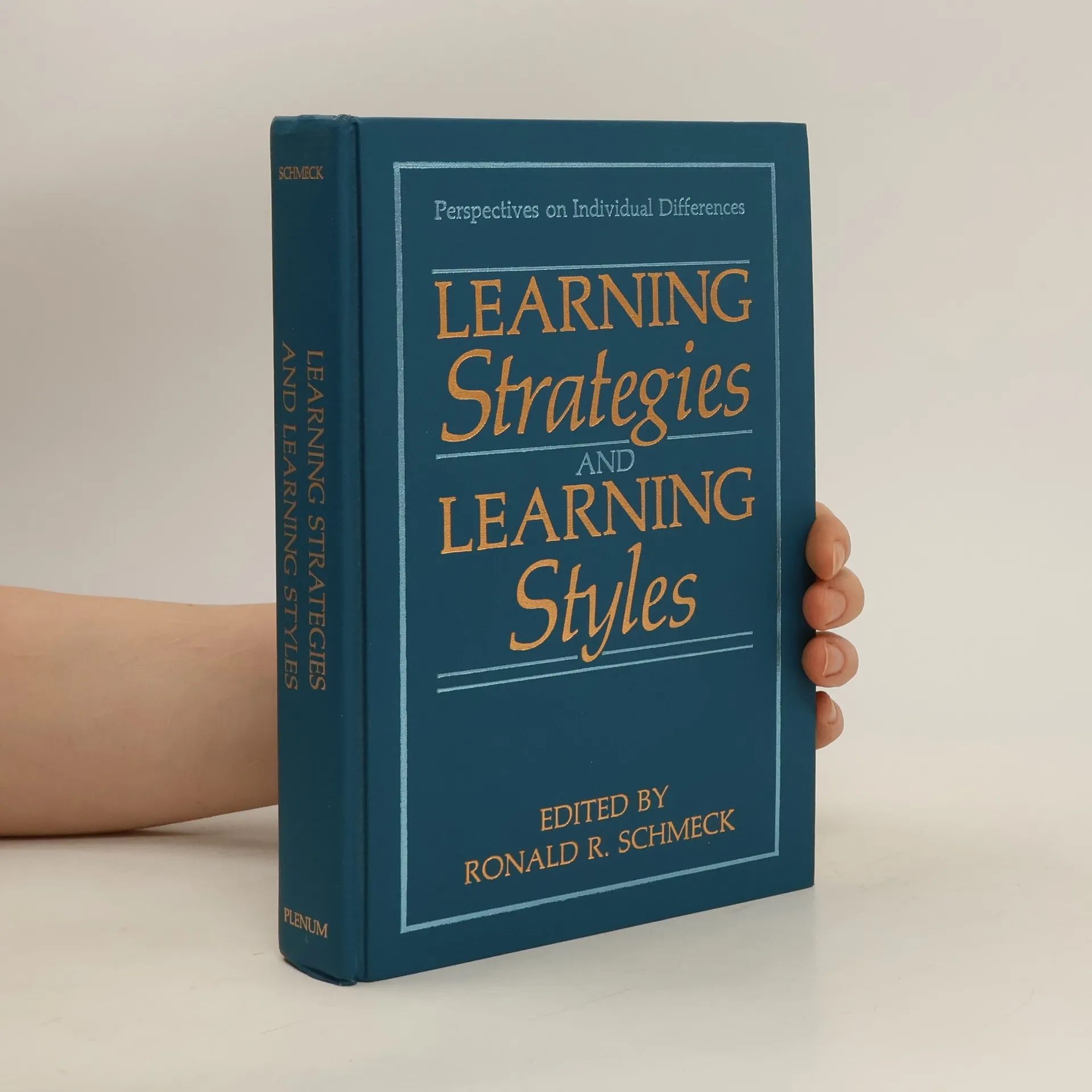
Learning Strategies and Learning Styles, Ronald R. Schmeck
- Language

- Released
- 1988
- Binding
- (Hardcover)
Payment methods
We’re missing your review here.
- Title
- Learning Strategies and Learning Styles
- Language
- English
- Authors
- Ronald R. Schmeck
- Publisher
- Springer
- Released
- 1988
- Format
- Hardcover
- Pages
- 434
- ISBN10
- 0306428601
- ISBN13
- 9780306428609
- Series
- Categories
- Rating
- 4 out of 5
- Description
- A style is any pattern we see in a person's way of accomplishing a particular type of task. The "task" of interest in the present context is education-learning and remembering in school and transferring what is learned to the world outside of school. Teachers are expressing some sort of awareness of style when they observe a particular action taken by a particular student and then say something like: "This doesn't surprise me! That's just the way he is. " Observation of a single action cannot reveal a style. One's impres sion of a person's style is abstracted from multiple experiences of the person under similar circumstances. In education, if we understand the styles of individual students, we can often anticipate their perceptions and subsequent behaviors, anticipate their misunderstandings, take ad vantage of their strengths, and avoid (or correct) their weaknesses. These are some of the goals of the present text. In the first chapter, I present an overview of the terminology and research methods used by various authors of the text. Although they differ a bit with regard to meanings ascribed to certain terms or with regard to conclusions drawn from certain types of data, there is none theless considerable agreement, especially when one realizes that they represent three different continents and five different nationalities.