

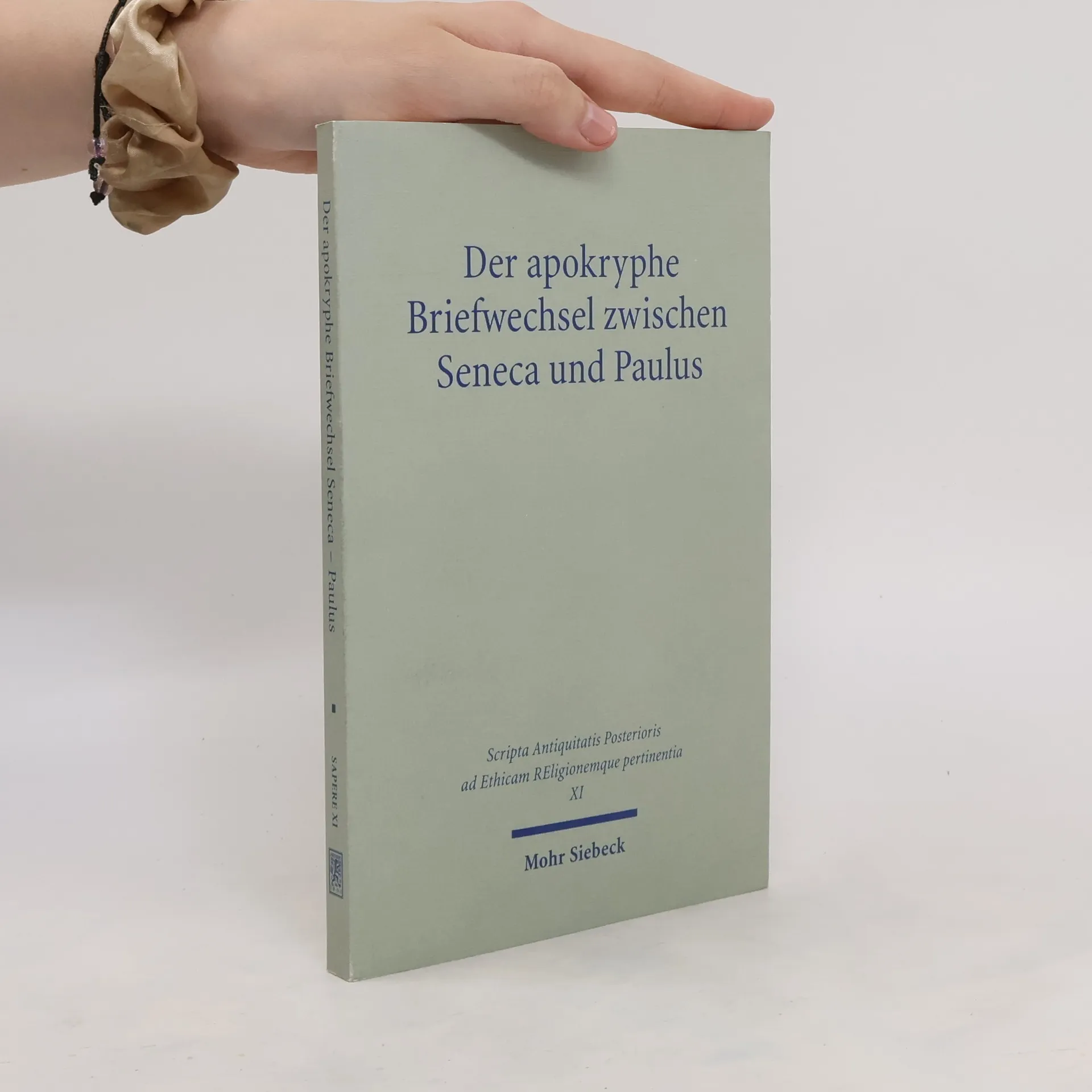


Der apokryphe Briefwechsel zwischen Seneca und Paulus
Authors
Parameters
More about the book
In the second half of the fourth century, an unknown author crafted a correspondence between Seneca and Paul, consisting of fourteen brief letters. These letters, characterized by their minimal content, aim solely to portray Seneca as a friend of Paul, highlighting the connection between the pagan philosopher and Latin Christian theologians of the time while inventing an apostolic tradition. This volume features a new German translation of these letters based on the latest critical edition, accompanied by an introduction, notes, and testimonies. Additionally, it presents two lesser-known documents related to the correspondence, translated into German for the first time: a fictitious letter from Mordechai to Alexander the Great, rooted in the novelistic tradition, and a letter from Seneca addressing pride and idols, which is actually a fifth-century Christian apology. The accompanying essays explore significant themes regarding Stoicism and Christianity, including concepts of God and ethics, as well as the reception of Seneca throughout the Middle Ages and early modern period. This work sheds light on the historical interplay between these philosophical and theological traditions.
Book purchase
Der apokryphe Briefwechsel zwischen Seneca und Paulus, Lucius Annaeus Seneca
- Language

- Released
- 2006
- Binding
- (Paperback)
Payment methods
No one has rated yet.
- Title
- Der apokryphe Briefwechsel zwischen Seneca und Paulus
- Language
- German
- Authors
- Lucius Annaeus Seneca
- Publisher
- Mohr Siebeck
- Released
- 2006
- Format
- Paperback
- ISBN10
- 3161491300
- ISBN13
- 9783161491306
- Series
- Categories
- Description
- In the second half of the fourth century, an unknown author crafted a correspondence between Seneca and Paul, consisting of fourteen brief letters. These letters, characterized by their minimal content, aim solely to portray Seneca as a friend of Paul, highlighting the connection between the pagan philosopher and Latin Christian theologians of the time while inventing an apostolic tradition. This volume features a new German translation of these letters based on the latest critical edition, accompanied by an introduction, notes, and testimonies. Additionally, it presents two lesser-known documents related to the correspondence, translated into German for the first time: a fictitious letter from Mordechai to Alexander the Great, rooted in the novelistic tradition, and a letter from Seneca addressing pride and idols, which is actually a fifth-century Christian apology. The accompanying essays explore significant themes regarding Stoicism and Christianity, including concepts of God and ethics, as well as the reception of Seneca throughout the Middle Ages and early modern period. This work sheds light on the historical interplay between these philosophical and theological traditions.