



More about the book
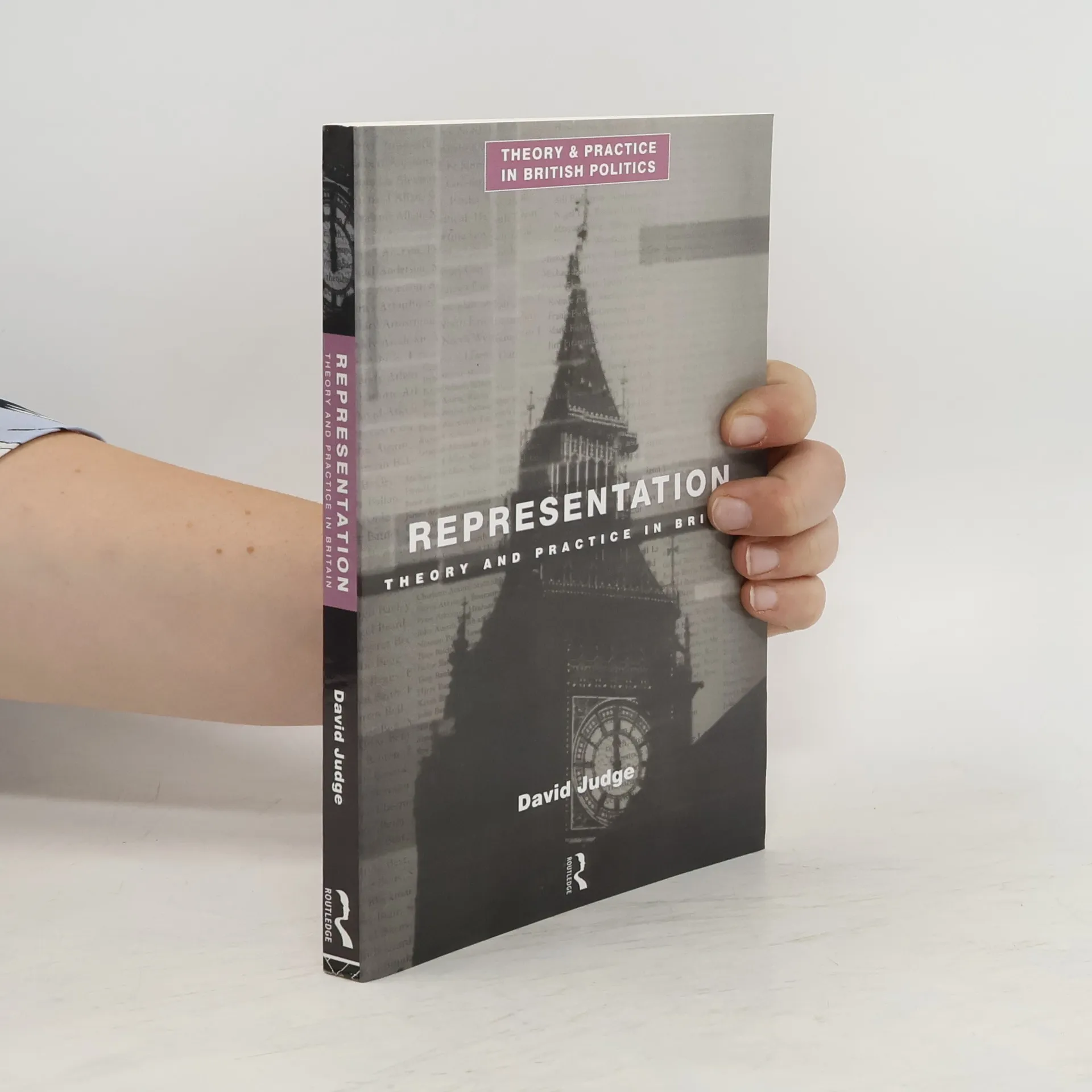
This book examines the meaning and practice of political representation in Britain. It reveals the intricate connections between theory and action and how different notions of representation coexist in a complex and potent mix. The thoughts of major theorists - from Edmund Burke, Jeremy Bentham, John Stuart Mill, through G.D.H. Cole to Paul Hirst - are used to outline the diversity of ideas and practical forms of representation in Britain. Clear accounts of microcosmic, trustee, party, interest, functional, associational and territorial modes of representation are provided as a foundation from which ideas about 'post-parliamentary governance' and the 'crisis of legitimacy' are analysed. A wide-ranging review of representation at local, subnational, national and European levels reveals the concept's fundamental significance in the practice of modern politics.
Book purchase
Representation, David Judge
- Language

- Released
- 1999
- Binding
- (Paperback)
Payment methods
We’re missing your review here.
- Title
- Representation
- Subtitle
- Theory and Practice in Britain
- Language
- English
- Authors
- David Judge
- Publisher
- Routledge
- Released
- 1999
- Format
- Paperback
- Pages
- 230
- ISBN10
- 0415081971
- ISBN13
- 9780415081979
- Series
- Tags
- Rating
- 2.5 out of 5
- Description
- This book examines the meaning and practice of political representation in Britain. It reveals the intricate connections between theory and action and how different notions of representation coexist in a complex and potent mix. The thoughts of major theorists - from Edmund Burke, Jeremy Bentham, John Stuart Mill, through G.D.H. Cole to Paul Hirst - are used to outline the diversity of ideas and practical forms of representation in Britain. Clear accounts of microcosmic, trustee, party, interest, functional, associational and territorial modes of representation are provided as a foundation from which ideas about 'post-parliamentary governance' and the 'crisis of legitimacy' are analysed. A wide-ranging review of representation at local, subnational, national and European levels reveals the concept's fundamental significance in the practice of modern politics.