

Parameters
More about the book
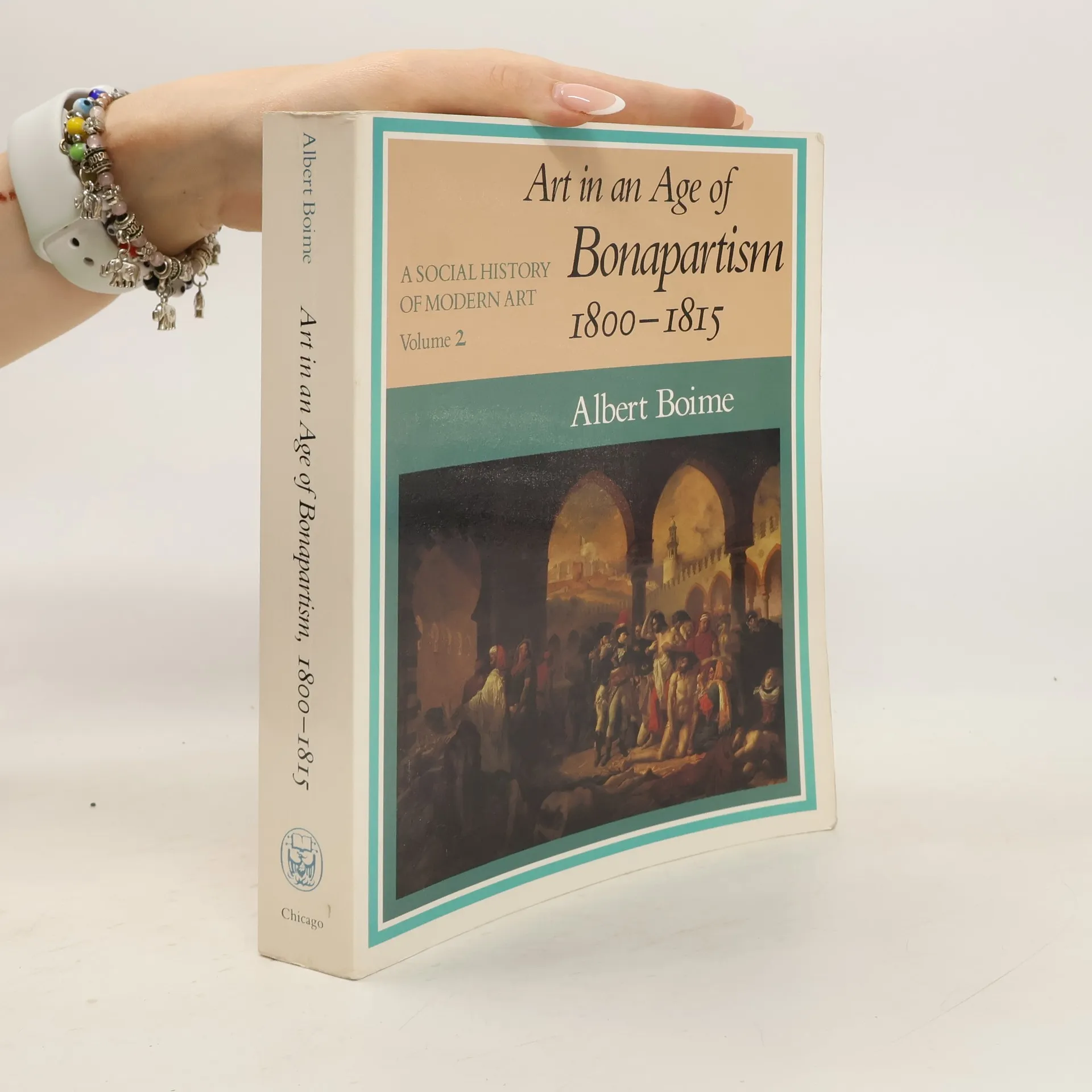
In this second volume, Albert Boime continues his work on the social history of Western art in the Modern epoch. This volume offers a major critique and revisionist interpretation of Western European culture, history, and society from Napoleon's seizure of power to 1815. Boime argues that Napoleon manipulated the production of images, as well as information generally, in order to maintain his political hegemony. He examines the works of French painters such as Jacques-Louis David and Jean Auguste Dominique Ingres, to illustrate how the art of the time helped to further the emperor's propagandistic goals. He also explores the work of contemporaneous English genre painters, Spain's Francisco de Goya, the German Romantics Philipp Otto Runge and Caspar David Friedrich, and the emergence of a national Italian art.Heavily illustrated, this volume is an invaluable social history of modern art during the Napoleonic era.Stimulating and informative, this volume will become a valuable resource for faculty and undergraduates.—R. W. Liscombe, Choice
Book purchase
Art in an age of Bonapartism 1800-1815, Albert Boime
- Language

- Released
- 1990
- Binding
- (Paperback)
Payment methods
We’re missing your review here.
- Title
- Art in an age of Bonapartism 1800-1815
- Language
- English
- Authors
- Albert Boime
- Publisher
- The University of Chicago Press
- Released
- 1990
- Format
- Paperback
- ISBN10
- 0226063364
- ISBN13
- 9780226063362
- Series
- Tags
- Fine Art
- Rating
- 3.75 out of 5
- Description
- In this second volume, Albert Boime continues his work on the social history of Western art in the Modern epoch. This volume offers a major critique and revisionist interpretation of Western European culture, history, and society from Napoleon's seizure of power to 1815. Boime argues that Napoleon manipulated the production of images, as well as information generally, in order to maintain his political hegemony. He examines the works of French painters such as Jacques-Louis David and Jean Auguste Dominique Ingres, to illustrate how the art of the time helped to further the emperor's propagandistic goals. He also explores the work of contemporaneous English genre painters, Spain's Francisco de Goya, the German Romantics Philipp Otto Runge and Caspar David Friedrich, and the emergence of a national Italian art.Heavily illustrated, this volume is an invaluable social history of modern art during the Napoleonic era.Stimulating and informative, this volume will become a valuable resource for faculty and undergraduates.—R. W. Liscombe, Choice