


Parameters
More about the book
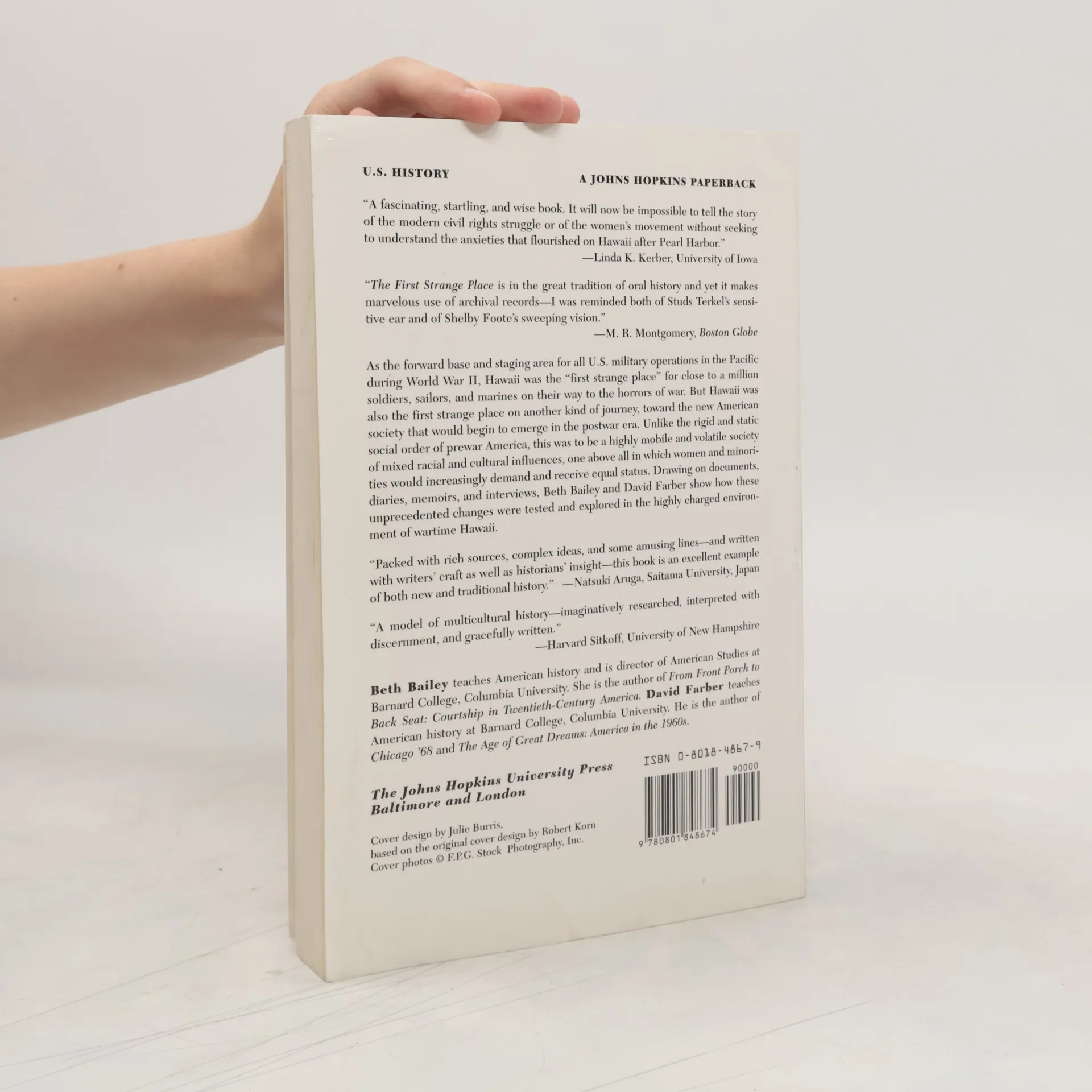
As the forward base and staging area for all US military operations in the Pacific during World War II, Hawaii was the "first strange place" for close to a million soldiers, sailors, and marines on their way to the horrors of war. But Hawaii was also the first strange place on another kind of journey, toward the new American society that would begin to emerge in the postwar era. Unlike the rigid and static social order of prewar America, this was to be a highly mobile and volatile society of mixed racial and cultural influences, one above all in which women and minorities would increasingly demand and receive equal status. Drawing on documents, diaries, memoirs, and interviews, Beth Bailey and David Farber show how these unprecedented changes were tested and explored in the highly charged environment of wartime Hawaii.
Book purchase
The First Strange Place, Beth Bailey, David Farber
- Language

- Released
- 1994
- Binding
- (Paperback)
Payment methods
We’re missing your review here.
- Title
- The First Strange Place
- Subtitle
- Race and Sex in World War II Hawaii
- Language
- English
- Authors
- Beth Bailey, David Farber
- Publisher
- JHU Press
- Released
- 1994
- Format
- Paperback
- ISBN10
- 0801848679
- ISBN13
- 9780801848674
- Series
- Categories
- Rating
- 3.8 out of 5
- Description
- As the forward base and staging area for all US military operations in the Pacific during World War II, Hawaii was the "first strange place" for close to a million soldiers, sailors, and marines on their way to the horrors of war. But Hawaii was also the first strange place on another kind of journey, toward the new American society that would begin to emerge in the postwar era. Unlike the rigid and static social order of prewar America, this was to be a highly mobile and volatile society of mixed racial and cultural influences, one above all in which women and minorities would increasingly demand and receive equal status. Drawing on documents, diaries, memoirs, and interviews, Beth Bailey and David Farber show how these unprecedented changes were tested and explored in the highly charged environment of wartime Hawaii.