


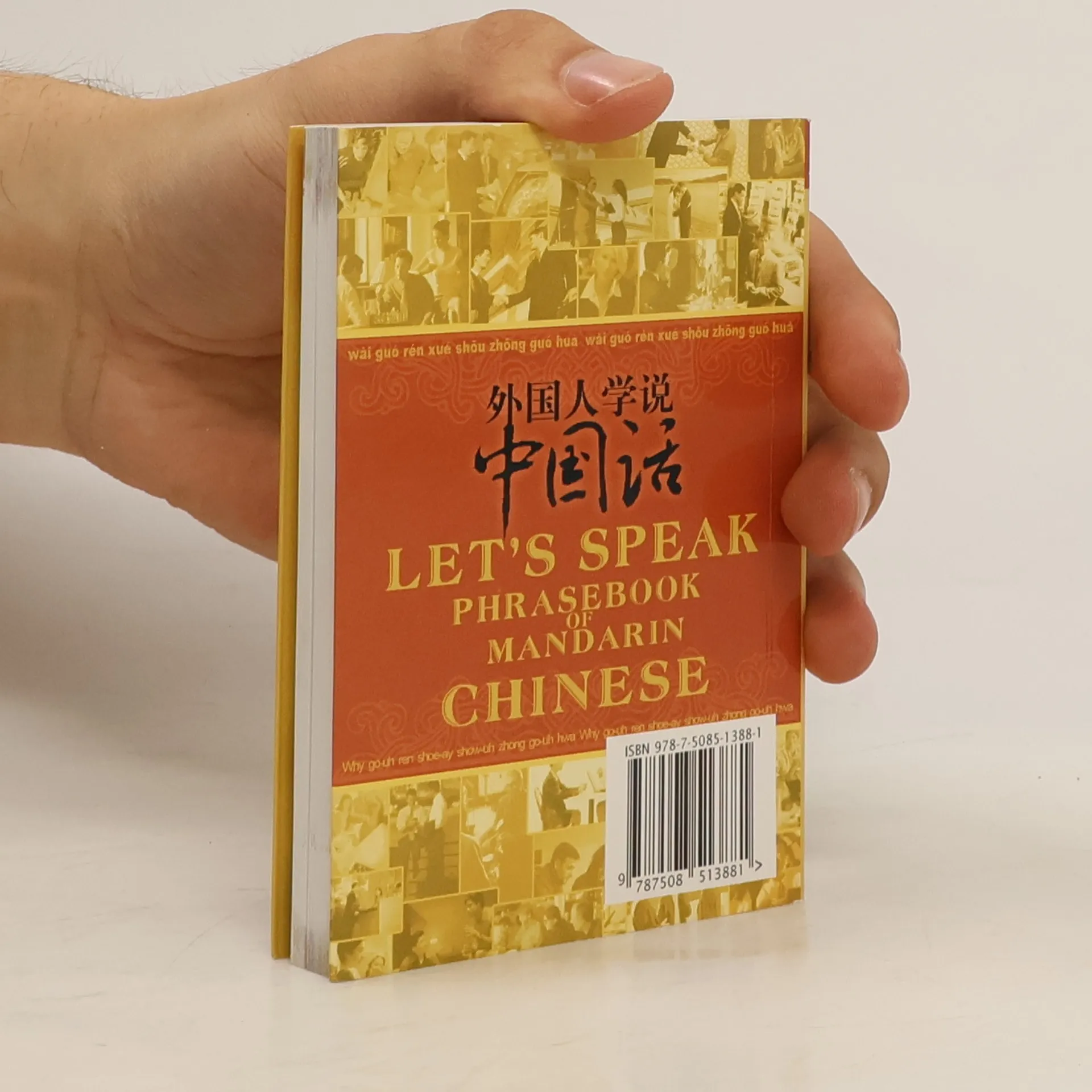
Let's Phrasebook of Mandarin Chinese. 外国人学说中国话
Authors
More about the book
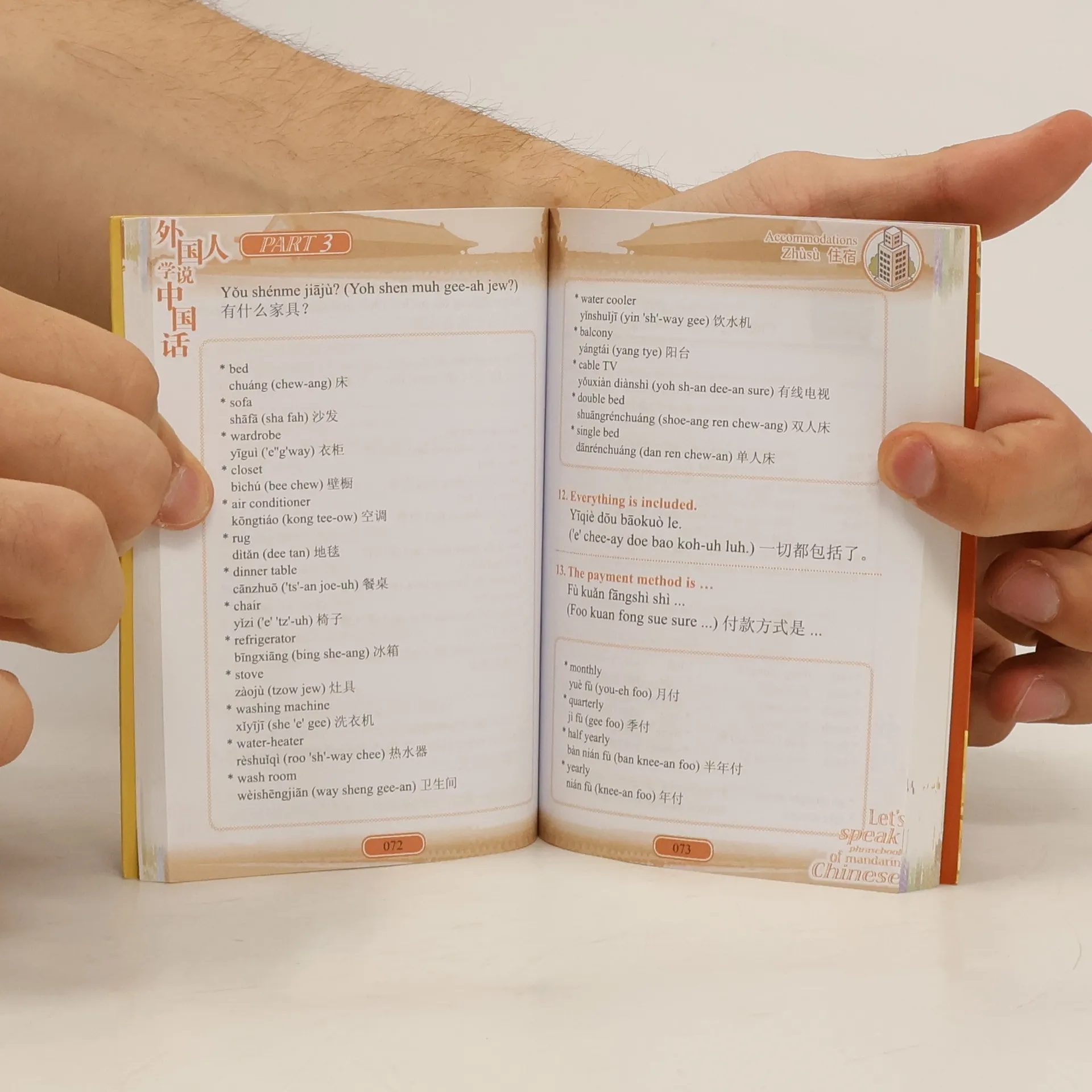
Hanyu Pinyin ( ), commonly called Pinyin, is the most common variant of Standard Mandarin in use. Hanyu means the Chinese language, pin means "spell" and yin means "sound". Pinyin uses Roman letters to represent sounds in Standard Mandarin, however, they are pronounced differently. The pronunciation of Chinese is generally given in terms of initials and finals. Tones are an important part of Chinese. They are the variation of pitch within a syllable and are used to distinguish words with the same Pinyin. There are basically four tones plus a neutral tone in Mandarin Chinese. Each tone is represented by a diacritical mark above a non-medial vowel. The neutral tone is used for stressless syllables and its pitch is determined by the tones of adjacent syllables. N.B. neutral is never a starting tone.
Book purchase
Let's Phrasebook of Mandarin Chinese. 外国人学说中国话, 旅舜
- Language


- Released
- 2008
- Binding
- (Paperback)
Payment methods
No one has rated yet.
- Title
- Let's Phrasebook of Mandarin Chinese. 外国人学说中国话
- Language
- English, Chinese
- Authors
- 旅舜
- Publisher
- China Intercontinental Press
- Released
- 2008
- Format
- Paperback
- Pages
- 191
- ISBN10
- 7508513886
- ISBN13
- 9787508513881
- Series
- Categories
- Description
- Hanyu Pinyin ( ), commonly called Pinyin, is the most common variant of Standard Mandarin in use. Hanyu means the Chinese language, pin means "spell" and yin means "sound". Pinyin uses Roman letters to represent sounds in Standard Mandarin, however, they are pronounced differently. The pronunciation of Chinese is generally given in terms of initials and finals. Tones are an important part of Chinese. They are the variation of pitch within a syllable and are used to distinguish words with the same Pinyin. There are basically four tones plus a neutral tone in Mandarin Chinese. Each tone is represented by a diacritical mark above a non-medial vowel. The neutral tone is used for stressless syllables and its pitch is determined by the tones of adjacent syllables. N.B. neutral is never a starting tone.