


More about the book
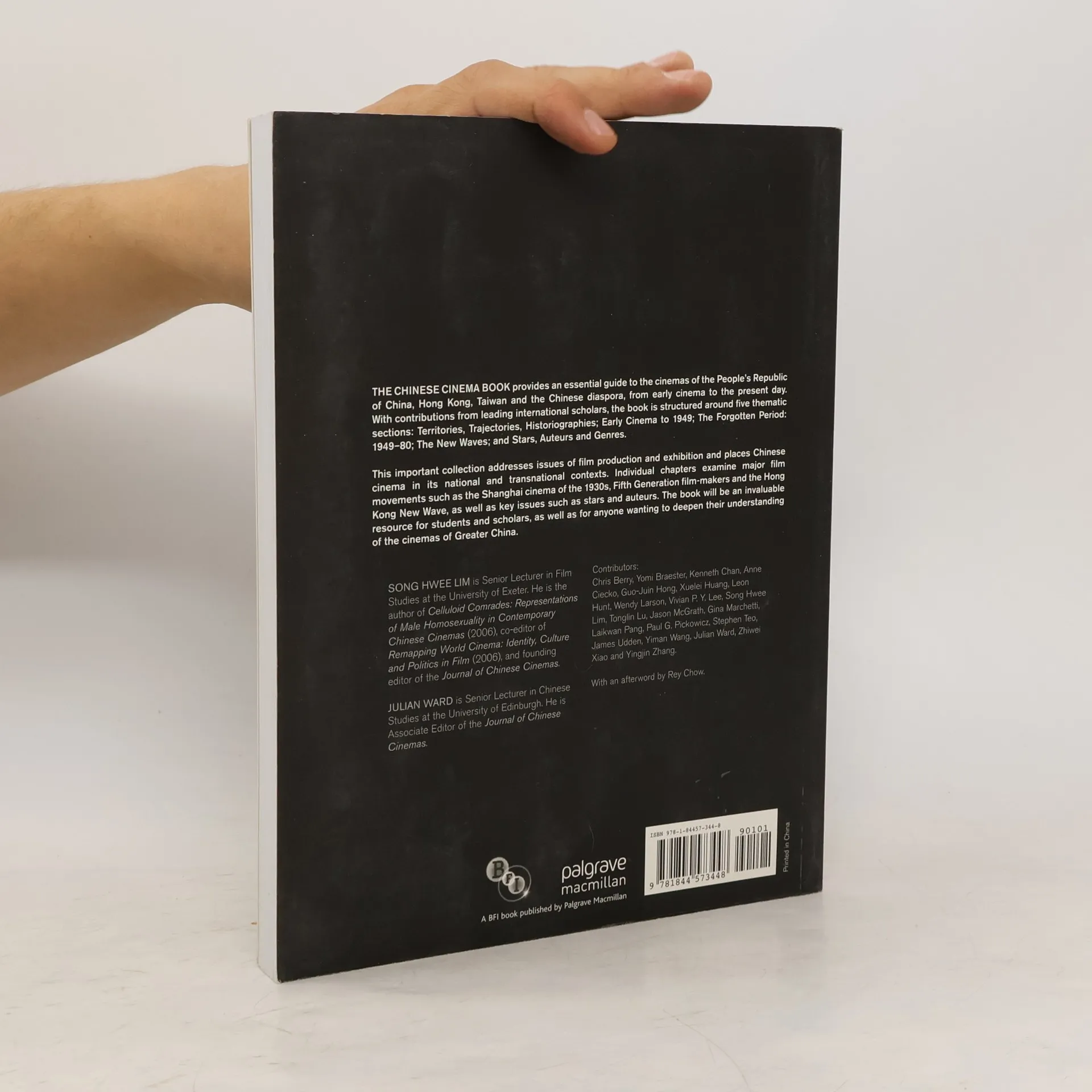
The Chinese Cinema Book provides an essential guide to the cinemas of the People’s Republic of China, Hong Kong, Taiwan and the Chinese diaspora, from early cinema to the present day. With contributions from leading international scholars, the book is structured around five thematic sections: Territories, Trajectories, Historiographies; Early Cinema to 1949; The Forgotten Period: 1949–80; The New Waves; and Stars, Auteurs and Genres. This important collection addresses issues of film production and exhibition and places Chinese cinema in its national and transnational contexts. Individual chapters examine major film movements such as the Shanghai cinema of the 1930s, Fifth Generation film-makers and the Hong Kong New Wave, as well as key issues such as stars and auteurs. The book will be an invaluable resource for students and scholars, as well as for anyone wanting to deepen their understanding of the cinemas of Greater China.
Book purchase
The Chinese Cinema Book, Jason McGrath, Song Hwee Lim, Julian Ward
- Language

- Released
- 2011
- Binding
- (Paperback)
Payment methods
We’re missing your review here.
- Title
- The Chinese Cinema Book
- Language
- English
- Authors
- Jason McGrath, Song Hwee Lim, Julian Ward
- Publisher
- British film institute
- Released
- 2011
- Format
- Paperback
- Pages
- 232
- ISBN10
- 1844573443
- ISBN13
- 9781844573448
- Series
- Categories
- Tags
- Filmthema, China, Performing Arts
- Rating
- 3.75 out of 5
- Description
- The Chinese Cinema Book provides an essential guide to the cinemas of the People’s Republic of China, Hong Kong, Taiwan and the Chinese diaspora, from early cinema to the present day. With contributions from leading international scholars, the book is structured around five thematic sections: Territories, Trajectories, Historiographies; Early Cinema to 1949; The Forgotten Period: 1949–80; The New Waves; and Stars, Auteurs and Genres. This important collection addresses issues of film production and exhibition and places Chinese cinema in its national and transnational contexts. Individual chapters examine major film movements such as the Shanghai cinema of the 1930s, Fifth Generation film-makers and the Hong Kong New Wave, as well as key issues such as stars and auteurs. The book will be an invaluable resource for students and scholars, as well as for anyone wanting to deepen their understanding of the cinemas of Greater China.