

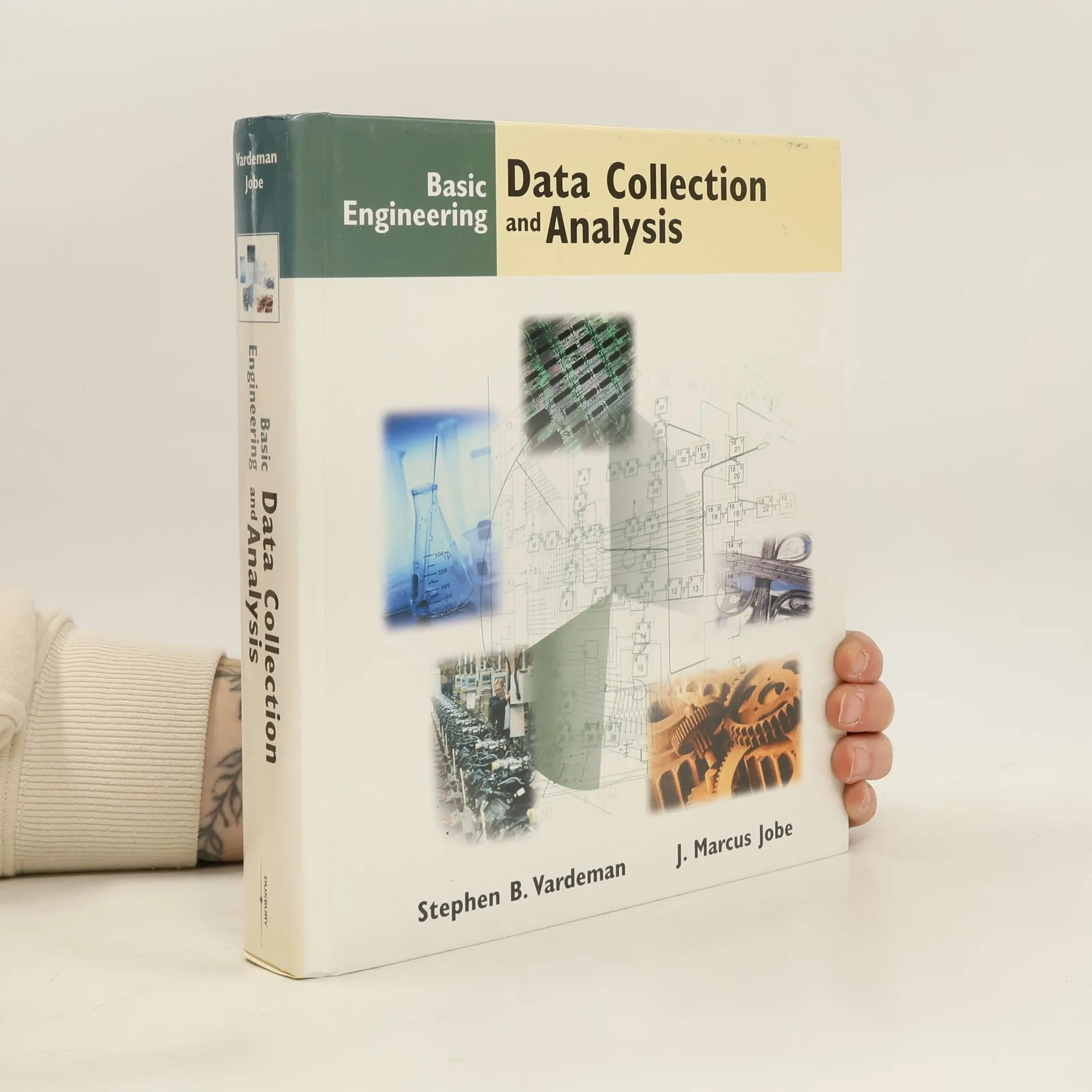
Basic Engineering Data Collection and Analysis
Book rating
More about the book
Stephen Vardeman and J. Marcus Jobe's motivating new book is appropriate for students in introductory engineering statistics courses, including chemical, mechanical, environmental, civil, electrical, and industrial. The authors stress the practical issues in data collection and the interpretation of the results of statistical studies over mathematical theory. Using real data and scenario examples to teach readers how to apply statistical methods, the book clearly and patiently helps students learn to solve engineering problems. The book's practical, applied approach encourages students to "do" statistics by carrying data collection and analysis projects all the way from problem formulation to preparation of professional technical reports.
Book purchase
Basic Engineering Data Collection and Analysis, Stephen B. Vardeman, John Marcus Jobe
- Language

- Released
- 2000
- Binding
- (Hardcover)
Payment methods
We’re missing your review here.
- Title
- Basic Engineering Data Collection and Analysis
- Language
- English
- Authors
- Stephen B. Vardeman, John Marcus Jobe
- Publisher
- Cengage Learning
- Released
- 2000
- Format
- Hardcover
- Pages
- 848
- ISBN10
- 053436957X
- ISBN13
- 9780534369576
- Series
- Categories
- Rating
- 3.85 out of 5
- Description
- Stephen Vardeman and J. Marcus Jobe's motivating new book is appropriate for students in introductory engineering statistics courses, including chemical, mechanical, environmental, civil, electrical, and industrial. The authors stress the practical issues in data collection and the interpretation of the results of statistical studies over mathematical theory. Using real data and scenario examples to teach readers how to apply statistical methods, the book clearly and patiently helps students learn to solve engineering problems. The book's practical, applied approach encourages students to "do" statistics by carrying data collection and analysis projects all the way from problem formulation to preparation of professional technical reports.