

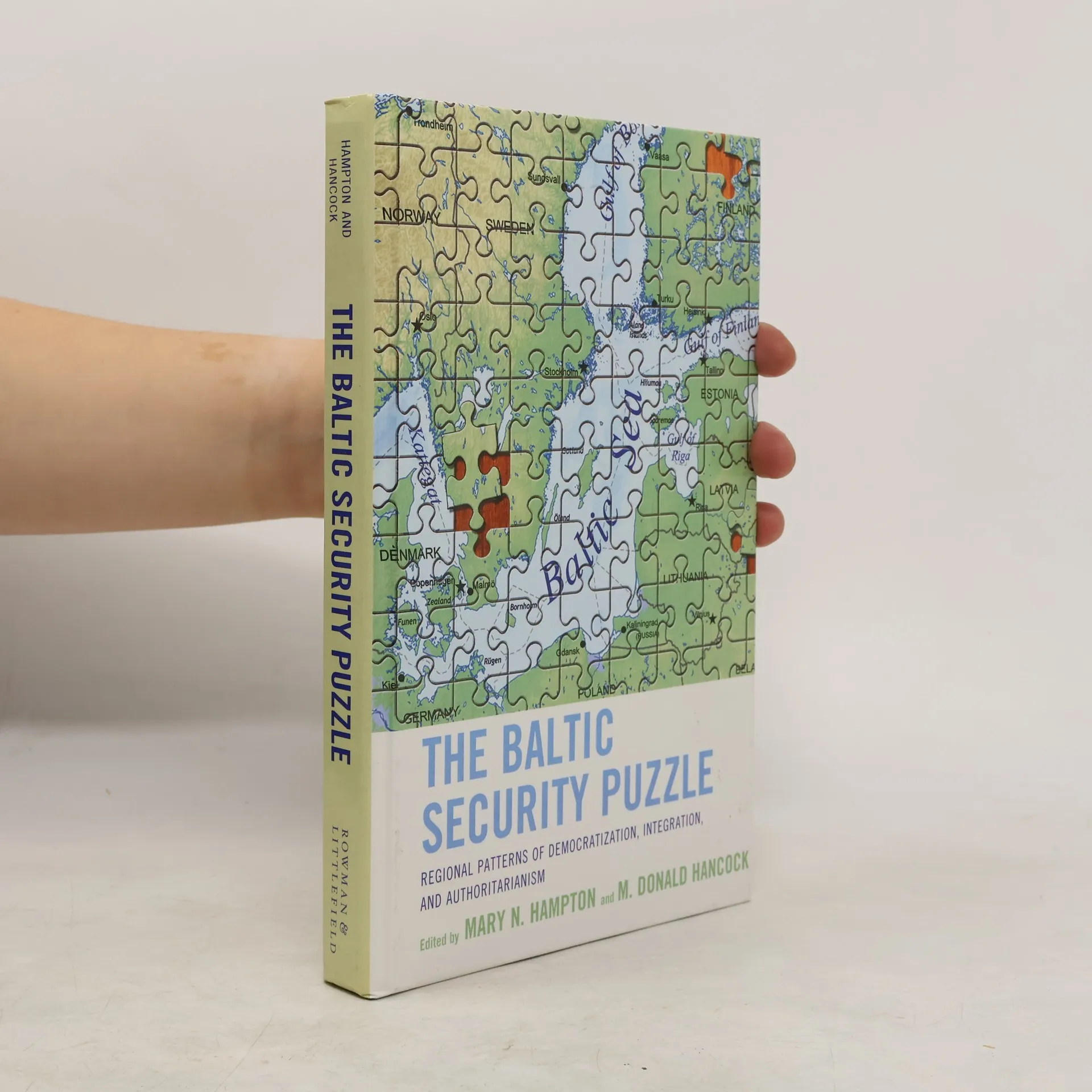


The Baltic Security Puzzle
Regional Patterns of Democratization, Integration, and Authoritarianism
Book rating
Parameters
- 224 pages
- 8 hours of reading
More about the book
International experts assess the components of the Baltic security puzzle by placing the security and political interests of the states of Latvia, Estonia, and Lithuania within the historical, economic, and political narratives of the greater Baltic region. They first reevaluate Baltic history as a progression of conflict, partial integration, Cold War division, up to today’s efforts to build a security community. Next, they focus on economic and social relations by contrasting patterns of democratization, domestic politics, EU membership, and the economics of crime. Lastly, they analyze military security and evolving regional perceptions of threats as well as the dynamics of alliance behavior and the recent geostrategic clashes unearthed by Russia’s behavior in Ukraine.
Book purchase
The Baltic Security Puzzle, Donald M. Hancock, Mary N. Hampton
- Language

- Released
- 2015
- Binding
- (Hardcover)
Payment methods
We’re missing your review here.
- Title
- The Baltic Security Puzzle
- Subtitle
- Regional Patterns of Democratization, Integration, and Authoritarianism
- Language
- English
- Authors
- Donald M. Hancock, Mary N. Hampton
- Publisher
- Rowman & Littlefield
- Released
- 2015
- Format
- Hardcover
- Pages
- 224
- ISBN10
- 1442248521
- ISBN13
- 9781442248526
- Series
- Tags
- Politics, Political Theories, Collected Works, International Relations, Eastern Europe, Diplomacy, Lithuania, Estonia, Latvia
- Rating
- 2 out of 5
- Description
- International experts assess the components of the Baltic security puzzle by placing the security and political interests of the states of Latvia, Estonia, and Lithuania within the historical, economic, and political narratives of the greater Baltic region. They first reevaluate Baltic history as a progression of conflict, partial integration, Cold War division, up to today’s efforts to build a security community. Next, they focus on economic and social relations by contrasting patterns of democratization, domestic politics, EU membership, and the economics of crime. Lastly, they analyze military security and evolving regional perceptions of threats as well as the dynamics of alliance behavior and the recent geostrategic clashes unearthed by Russia’s behavior in Ukraine.