

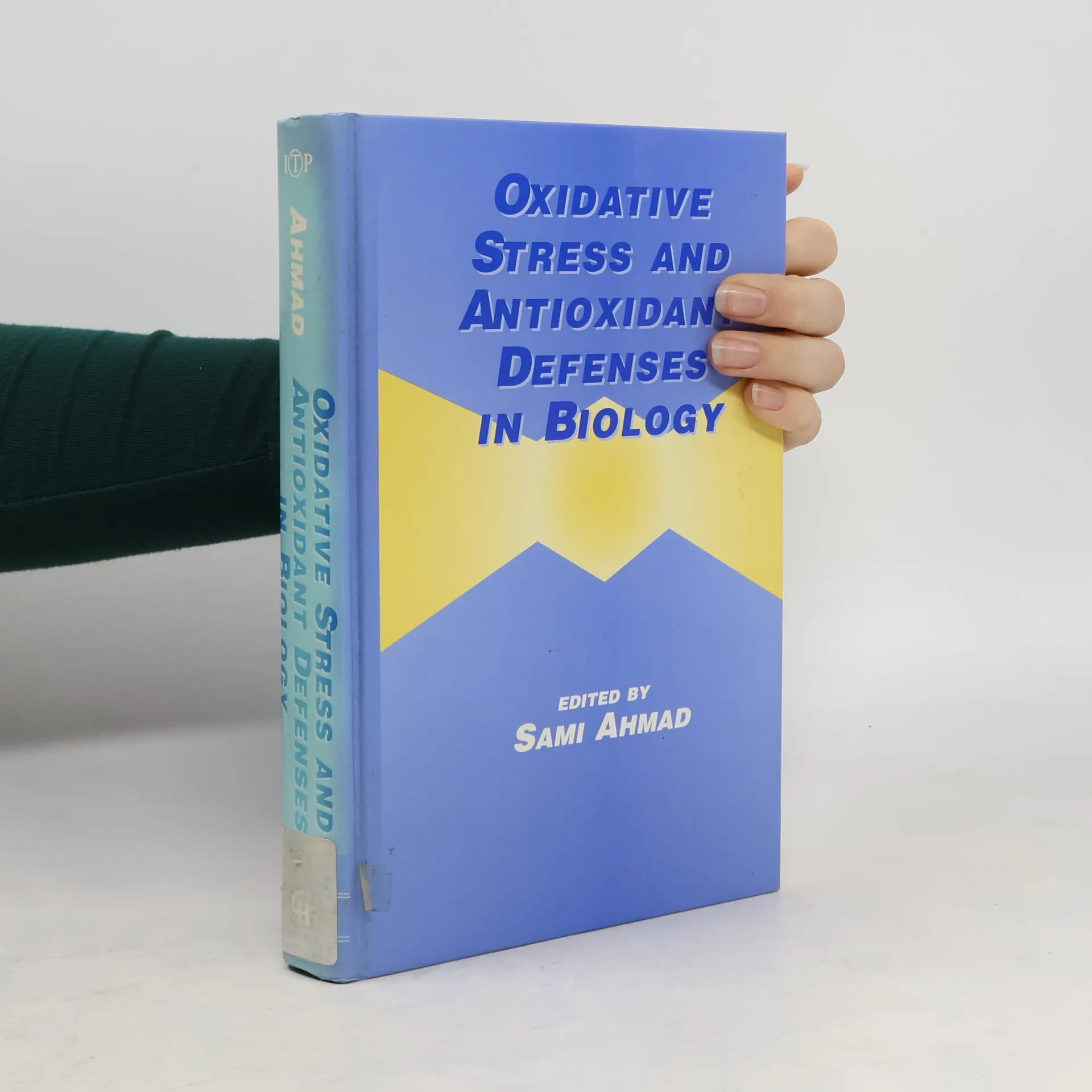
Oxidative Stress and Antioxidant Defenses in Biology
Authors
More about the book
The ground-state of molecular oxygen, O2, is vital for metabolic processes in all aerobic life forms, including prokaryotes, protists, plants, fungi, and animals. Research has shown that O2 dependence introduces universal toxicity to aerobic life. This paradox arises from the one-electron reduction of O2, leading to the formation of the superoxide anion free radical (O2-), generated by various biological sources such as redox-active autoxidizable molecules, oxidoreductases, and organelles like mitochondria and chloroplasts. Additionally, oxygen can be activated in photosensitizing reactions to produce highly reactive singlet oxygen (1O2). In biological systems, O2- can further reduce to hydrogen peroxide (H2O2) through the Fenton reaction, leading to the hydroxyl radical (·OH). These forms of activated oxygen constitute reactive oxygen species (ROS) and metabolites (ROM). Both ·OH and 1O2 are extremely reactive, causing damage through the oxidation of proteins, DNA, and lipids, resulting in unstable hydroperoxides. Their breakdown products, such as malondialdehyde and hydroxynonenals, are highly reactive and threaten cellular integrity. This cascade of reactions leads to endogenous oxidative stress, a challenge all aerobic organisms must manage.
Book purchase
Oxidative Stress and Antioxidant Defenses in Biology, Sami Ahmad Khan
- Language

- Released
- 1995
- Binding
- (Hardcover)
Payment methods
No one has rated yet.
- Title
- Oxidative Stress and Antioxidant Defenses in Biology
- Language
- English
- Authors
- Sami Ahmad Khan
- Publisher
- Springer
- Released
- 1995
- Format
- Hardcover
- Pages
- 448
- ISBN10
- 0412039710
- ISBN13
- 9780412039713
- Series
- Categories
- Description
- The ground-state of molecular oxygen, O2, is vital for metabolic processes in all aerobic life forms, including prokaryotes, protists, plants, fungi, and animals. Research has shown that O2 dependence introduces universal toxicity to aerobic life. This paradox arises from the one-electron reduction of O2, leading to the formation of the superoxide anion free radical (O2-), generated by various biological sources such as redox-active autoxidizable molecules, oxidoreductases, and organelles like mitochondria and chloroplasts. Additionally, oxygen can be activated in photosensitizing reactions to produce highly reactive singlet oxygen (1O2). In biological systems, O2- can further reduce to hydrogen peroxide (H2O2) through the Fenton reaction, leading to the hydroxyl radical (·OH). These forms of activated oxygen constitute reactive oxygen species (ROS) and metabolites (ROM). Both ·OH and 1O2 are extremely reactive, causing damage through the oxidation of proteins, DNA, and lipids, resulting in unstable hydroperoxides. Their breakdown products, such as malondialdehyde and hydroxynonenals, are highly reactive and threaten cellular integrity. This cascade of reactions leads to endogenous oxidative stress, a challenge all aerobic organisms must manage.