

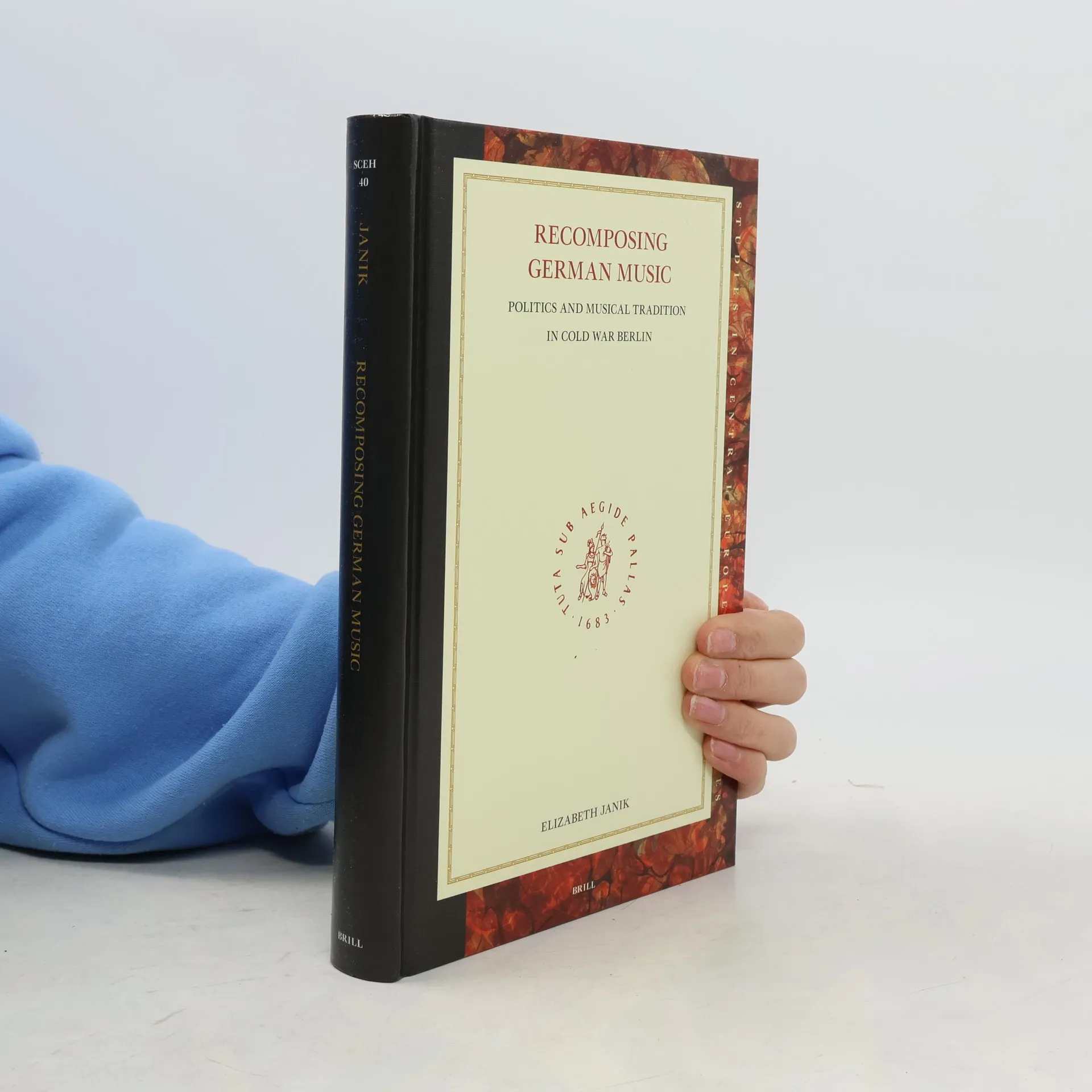


Studies in Central European Histories - 40: Recomposing German Music
Politics and Musical Tradition in Cold War Berlin
Authors
Parameters
- 354 pages
- 13 hours of reading
More about the book
Recomposing German Music illuminates the tangled relationship between music and politics in 20th-century Germany. Focusing on the reconstruction and division of Berlin’s musical community after 1945, author Elizabeth Janik demonstrates how military occupation and Cold War rivalry transformed the city’s elite musical institutions. Berlin became a crucible for competing interpretations of German musical tradition. Cultural authorities in East and West Berlin disputed the social authority responsible for defining and upholding musical standards, the appropriate relationship between art and the state, the definition of musical progress, and finally, the nature and purpose of music itself. This study is an important contribution to the social history of 20th-century music and the comparative cultural history of the two Cold War Germanys.
Book purchase
Studies in Central European Histories - 40: Recomposing German Music, Elizabeth Janik
- Language

- Released
- 2005
- Binding
- (Hardcover)
Payment methods
No one has rated yet.
- Title
- Studies in Central European Histories - 40: Recomposing German Music
- Subtitle
- Politics and Musical Tradition in Cold War Berlin
- Language
- English
- Authors
- Elizabeth Janik
- Publisher
- Brill
- Released
- 2005
- Format
- Hardcover
- Pages
- 354
- ISBN10
- 900414661X
- ISBN13
- 9789004146617
- Series
- Tags
- Art, Music Theme, Germany, Culture and Society, Berlin, History of Europe, Winter, Cold, Social History
- Description
- Recomposing German Music illuminates the tangled relationship between music and politics in 20th-century Germany. Focusing on the reconstruction and division of Berlin’s musical community after 1945, author Elizabeth Janik demonstrates how military occupation and Cold War rivalry transformed the city’s elite musical institutions. Berlin became a crucible for competing interpretations of German musical tradition. Cultural authorities in East and West Berlin disputed the social authority responsible for defining and upholding musical standards, the appropriate relationship between art and the state, the definition of musical progress, and finally, the nature and purpose of music itself. This study is an important contribution to the social history of 20th-century music and the comparative cultural history of the two Cold War Germanys.