

More about the book
Efforts to reconstruct social reality have led to various theoretical and methodological strategies. Qualitative sociology addresses gaps in the literature by offering a comprehensive overview of non-quantitative methods used in sociological research, along with the conceptual rationales for each. Drs. Schwartz and Jacobs emphasize the importance of a clear discussion on both theoretical and practical aspects of "reality reconstruction" and "formal sociology." They draw on the theories of notable figures such as Weber, Mead, Blumer, and Goffman to explain and illustrate methods like field studies, participant observation, interviewing, life histories, unobtrusive measures, audio-visual techniques, and phenomenology. The authors not only describe these methods but also enhance understanding by evaluating their strengths and weaknesses and providing insights into their application. Throughout the text, a collection of case studies illustrates the substantive work qualitative research can yield. This text stands out for its extensive coverage of methods, presented in an informal, conversational style that makes the content accessible to students without prior knowledge of qualitative theories and practices.
Book purchase
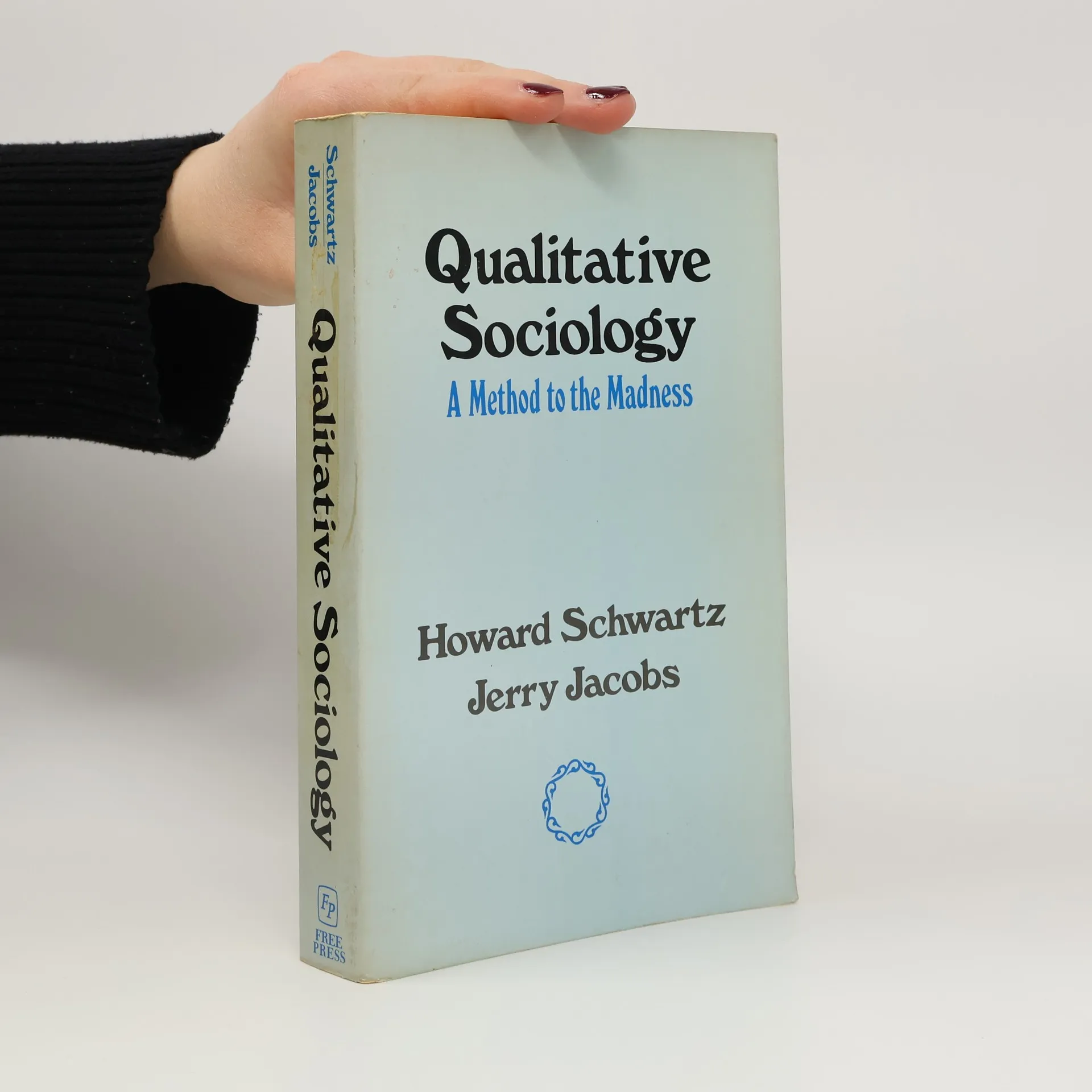
Qualitative Sociology, Howard Schwartz, Jerry Jacobs
- Language

- Released
- 1979
- Binding
- (Paperback)
Payment methods
We’re missing your review here.
- Title
- Qualitative Sociology
- Subtitle
- A Method to the Madness
- Language
- English
- Authors
- Howard Schwartz, Jerry Jacobs
- Publisher
- Free Press
- Released
- 1979
- Format
- Paperback
- Pages
- 480
- ISBN10
- 0029281601
- ISBN13
- 9780029281604
- Series
- Rating
- 4.35 out of 5
- Description
- Efforts to reconstruct social reality have led to various theoretical and methodological strategies. Qualitative sociology addresses gaps in the literature by offering a comprehensive overview of non-quantitative methods used in sociological research, along with the conceptual rationales for each. Drs. Schwartz and Jacobs emphasize the importance of a clear discussion on both theoretical and practical aspects of "reality reconstruction" and "formal sociology." They draw on the theories of notable figures such as Weber, Mead, Blumer, and Goffman to explain and illustrate methods like field studies, participant observation, interviewing, life histories, unobtrusive measures, audio-visual techniques, and phenomenology. The authors not only describe these methods but also enhance understanding by evaluating their strengths and weaknesses and providing insights into their application. Throughout the text, a collection of case studies illustrates the substantive work qualitative research can yield. This text stands out for its extensive coverage of methods, presented in an informal, conversational style that makes the content accessible to students without prior knowledge of qualitative theories and practices.