

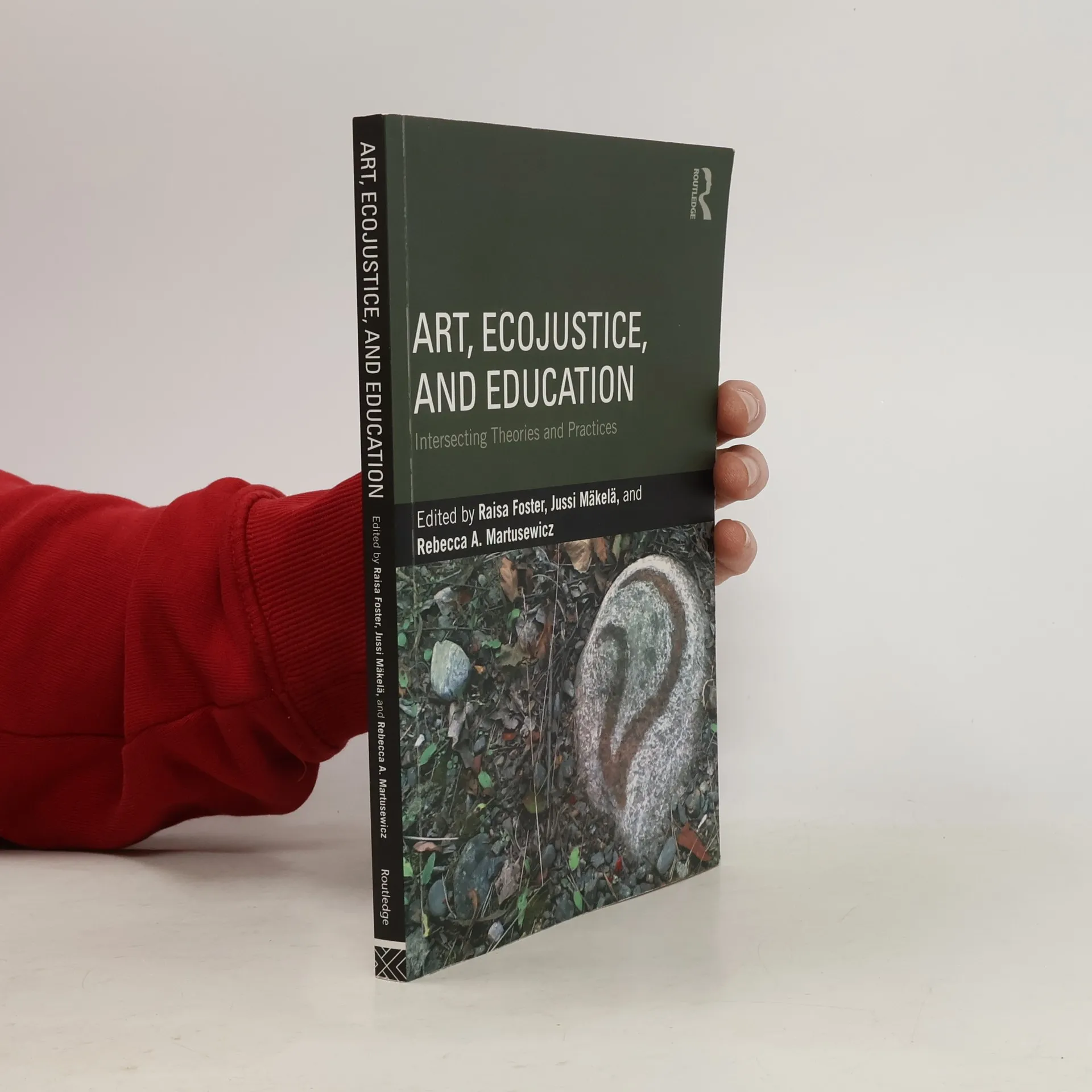
Art, EcoJustice, and Education
Intersecting Theories and Practices
Book rating
Parameters
- 186 pages
- 7 hours of reading
More about the book
Emphasizing the importance of contemporary art forms in EcoJustice Education, this book examines the interconnections between social justice and ecological well-being, and the role of art to enact change in destructive systems. Artists, educators, and scholars in diverse disciplines from around the world explore the power of art to disrupt ways of thinking that are taken for granted and dominate modern discourses, including approaches to education. The EcoJustice framework presented in this book identifies three strands-cultural ecological analysis, revitalizing the commons, and enacting imagination-that help students to recognize the value in diverse ways of knowing and being, reflect on their own assumptions, and develop their critical analytic powers in relation to important problems. This distinctive collection offers educators a mix of practical resources and inspiration to expand their pedagogical practices. A Companion Website includes interactive artworks, supplemental resources, and guiding questions for students and instructors.
Book purchase
Art, EcoJustice, and Education, Rebecca A Martusewicz, Raisa Foster, Jussi P. Mäkelä
- Language

- Released
- 2018
- Binding
- (Paperback)
Payment methods
We’re missing your review here.
- Title
- Art, EcoJustice, and Education
- Subtitle
- Intersecting Theories and Practices
- Language
- English
- Publisher
- Routledge
- Released
- 2018
- Format
- Paperback
- Pages
- 186
- ISBN10
- 1138732451
- ISBN13
- 9781138732452
- Series
- Categories
- Rating
- 5 out of 5
- Description
- Emphasizing the importance of contemporary art forms in EcoJustice Education, this book examines the interconnections between social justice and ecological well-being, and the role of art to enact change in destructive systems. Artists, educators, and scholars in diverse disciplines from around the world explore the power of art to disrupt ways of thinking that are taken for granted and dominate modern discourses, including approaches to education. The EcoJustice framework presented in this book identifies three strands-cultural ecological analysis, revitalizing the commons, and enacting imagination-that help students to recognize the value in diverse ways of knowing and being, reflect on their own assumptions, and develop their critical analytic powers in relation to important problems. This distinctive collection offers educators a mix of practical resources and inspiration to expand their pedagogical practices. A Companion Website includes interactive artworks, supplemental resources, and guiding questions for students and instructors.