

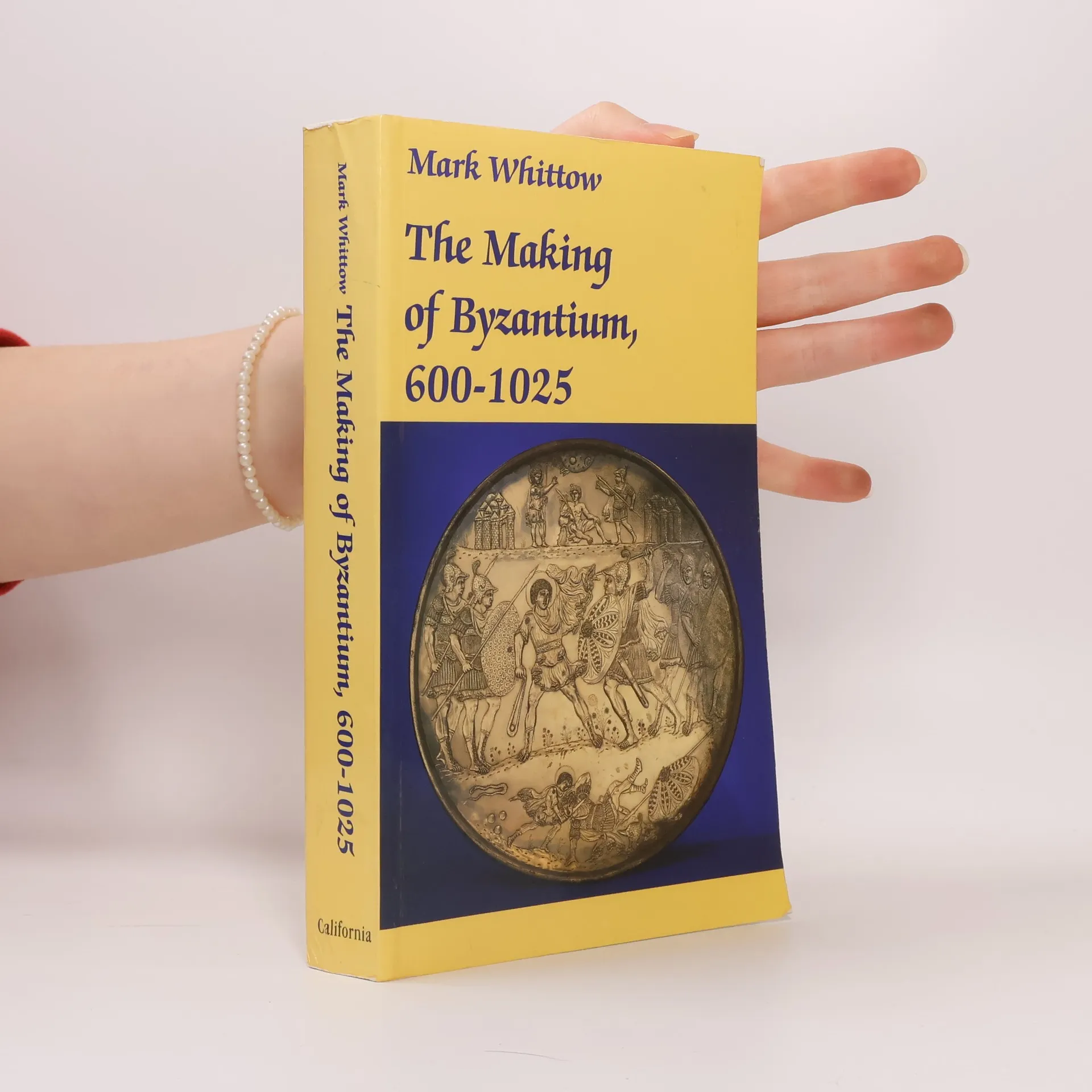
More about the book
Mark Whittow presents a clear, up-to-date reassessment of the Byzantine empire during a crucial phase in the history of the Near East. Against a geopolitical background (superbly illustrated with fourteen maps), his book covers the last decade of the Roman empire as a superpower, the catastrophic crisis of the seventh century, and the means whereby the embattled Byzantine empire hung on in Constantinople and Asia Minor until the Abbasid Caliphate's decline opened up new perspectives for Christian power in the Near East.A special feature is Whittow's coverage of Byzantium's neighbors, allies, and enemies in Europe and Asia. He stresses the geographical context of events, often overlooked in other accounts of this period. The origins of Russia, relations with the nomad powers of the steppe world, the competition between Bulgars, Romans, and Slavs in the Balkans, and the frequently ignored region of the Transcaucasus are all given extended treatment. No such wide-ranging work has appeared in English for nearly 30 years, and Whittow's book will be invaluable for all scholars, students, and enthusiasts of medieval history.
Book purchase
The Making of Byzantium, 600-1025, Mark Whittow
- Language

- Released
- 1996
- Binding
- (Paperback)
Payment methods
We’re missing your review here.
- Title
- The Making of Byzantium, 600-1025
- Language
- English
- Authors
- Mark Whittow
- Publisher
- University of California Press
- Released
- 1996
- Format
- Paperback
- Pages
- 504
- ISBN10
- 0520204972
- ISBN13
- 9780520204973
- Series
- Categories
- Tags
- Historical Themes, Wars, School, Europe, Middle Ages, Russia, Ancient History, History of Europe, Inspiration, Archaeology, Greece, Western Europe, Church History, Roman Empire, Iran, Geopolitics, Balkans, Byzantine Empire, Icons, Nomads, Anatolia
- Rating
- 3.95 out of 5
- Description
- Mark Whittow presents a clear, up-to-date reassessment of the Byzantine empire during a crucial phase in the history of the Near East. Against a geopolitical background (superbly illustrated with fourteen maps), his book covers the last decade of the Roman empire as a superpower, the catastrophic crisis of the seventh century, and the means whereby the embattled Byzantine empire hung on in Constantinople and Asia Minor until the Abbasid Caliphate's decline opened up new perspectives for Christian power in the Near East.A special feature is Whittow's coverage of Byzantium's neighbors, allies, and enemies in Europe and Asia. He stresses the geographical context of events, often overlooked in other accounts of this period. The origins of Russia, relations with the nomad powers of the steppe world, the competition between Bulgars, Romans, and Slavs in the Balkans, and the frequently ignored region of the Transcaucasus are all given extended treatment. No such wide-ranging work has appeared in English for nearly 30 years, and Whittow's book will be invaluable for all scholars, students, and enthusiasts of medieval history.