

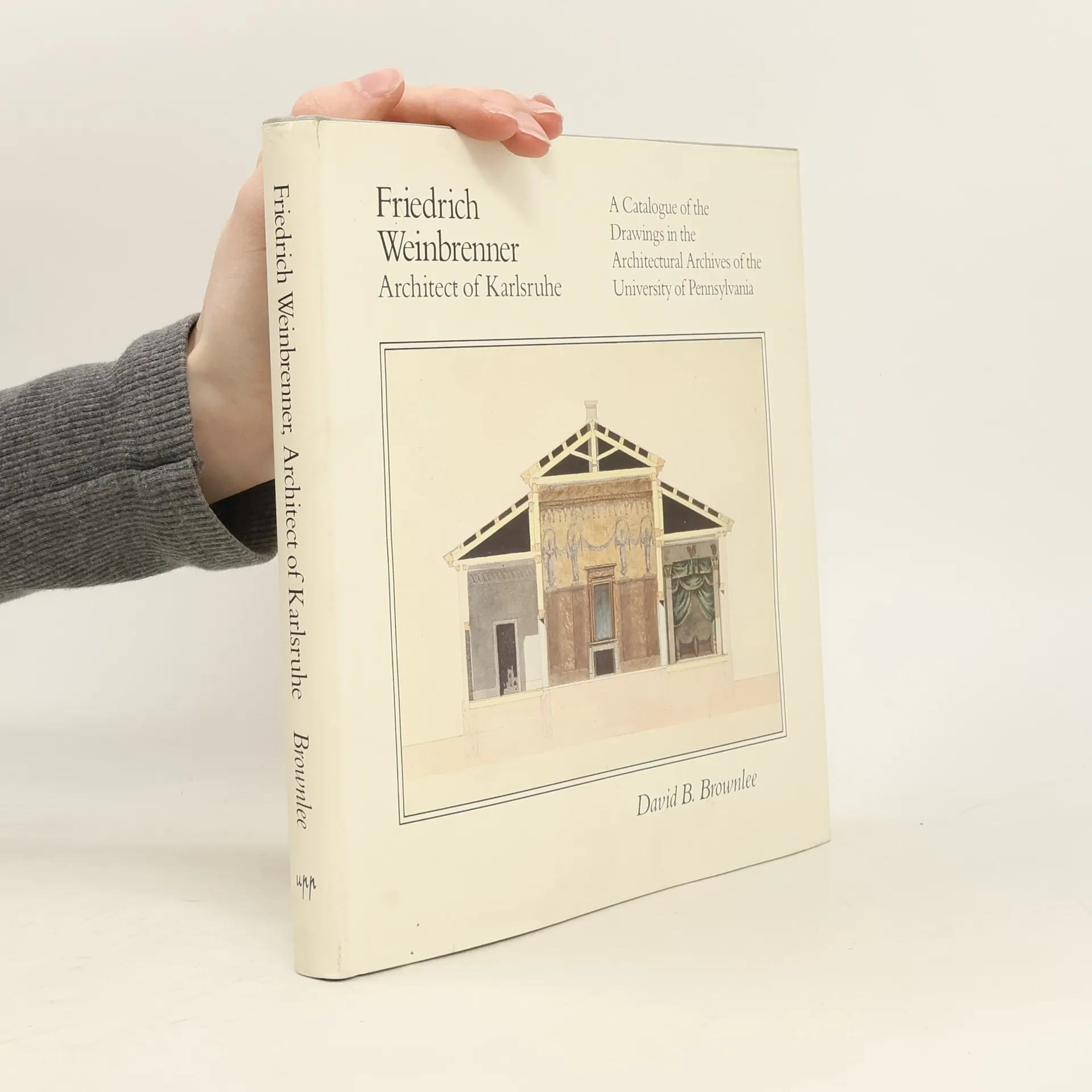
Friedrich Weinbrenner, Architect of Karlsruhe
A Catalogue of the Drawings in the Architectural Archives of the University of Pennsylvania
More about the book
Friedrich Weinbrenner was the first internationally important German architect of the nineteenth century. His planning for the city of Karlsruhe—and his design of every imaginable type of structure, including palaces, churches, synagogue, government buildings, city gates, shops, fountains, theaters, armories, cemetery buildings and farms—is a remarkable achievement. This collection includes treatment of Weinbrenner's contributions to agricultural architecture. Based on new rationalist models that were greatly influenced by the scientific movement in the mideighteenth century.
Book purchase
Friedrich Weinbrenner, Architect of Karlsruhe, Friedrich Weinbrenner, David Bruce Brownlee, University of Pennsylvania. Architectural Archives, Arthur Ross Gallery
- Language

- Released
- 1986
- Binding
- (Hardcover)
Payment methods
No one has rated yet.
- Title
- Friedrich Weinbrenner, Architect of Karlsruhe
- Subtitle
- A Catalogue of the Drawings in the Architectural Archives of the University of Pennsylvania
- Language
- English
- Authors
- Friedrich Weinbrenner, David Bruce Brownlee, University of Pennsylvania. Architectural Archives, Arthur Ross Gallery
- Publisher
- University of Pennsylvania Press
- Released
- 1986
- Format
- Hardcover
- Pages
- 171
- ISBN10
- 0812280105
- ISBN13
- 9780812280104
- Series
- Description
- Friedrich Weinbrenner was the first internationally important German architect of the nineteenth century. His planning for the city of Karlsruhe—and his design of every imaginable type of structure, including palaces, churches, synagogue, government buildings, city gates, shops, fountains, theaters, armories, cemetery buildings and farms—is a remarkable achievement. This collection includes treatment of Weinbrenner's contributions to agricultural architecture. Based on new rationalist models that were greatly influenced by the scientific movement in the mideighteenth century.