

More about the book
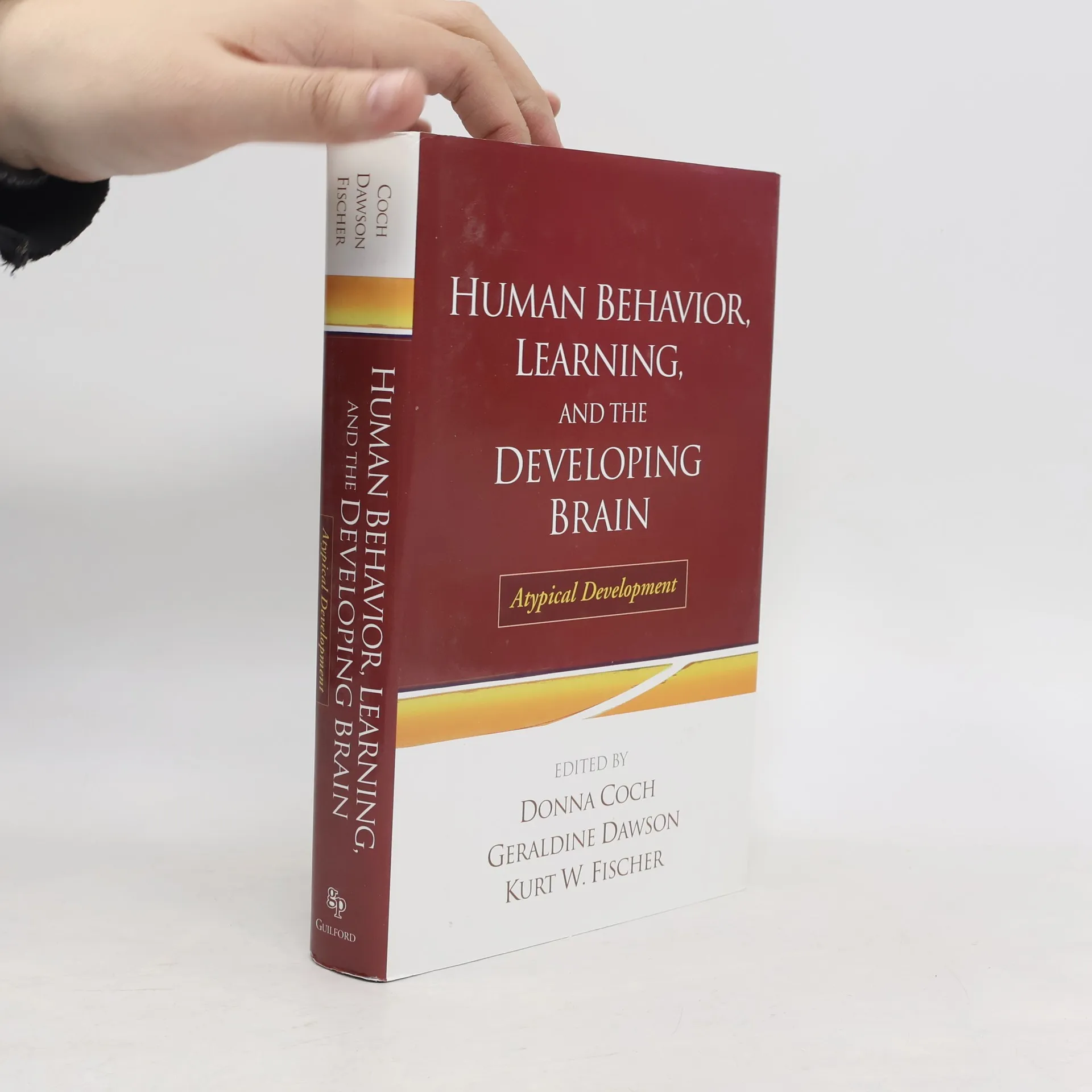
Thoroughly examining brain-behavior relationships in atypically developing children, this important volume integrates theories and data from multiple disciplines. Leading authorities present research on specific clinical problems, including autism, Williams syndrome, learning and language disabilities, ADHD, and issues facing infants of diabetic mothers. In addition, the effects of social stress and maltreatment on brain development and behavior are reviewed. Demonstrating the uses of cutting-edge methods from developmental neuroscience, developmental psychology, and cognitive science, the contributors emphasize the implications of their findings for real-world educational and clinical practices. Illustrations include eight pages in full color.
Book purchase
Human Behavior, Learning, and the Developing Brain, Donna Cochran, Geraldine Dawson, Kurt W. Fischer
- Language

- Released
- 2007
- Binding
- (Hardcover)
Payment methods
No one has rated yet.
- Title
- Human Behavior, Learning, and the Developing Brain
- Subtitle
- Atypical Development
- Language
- English
- Authors
- Donna Cochran, Geraldine Dawson, Kurt W. Fischer
- Publisher
- Guilford Press
- Released
- 2007
- Format
- Hardcover
- Pages
- 378
- ISBN10
- 1593851375
- ISBN13
- 9781593851378
- Series
- Categories
- Tags
- Science, Medicine, Children, Linguistics, Neuroscience, Brain, Genetics, Autism, Developmental Psychology, Behaviour, Ethology, Pediatrics, Clinical Psychology, Neuropsychology, Dyslexia, Dyscalculia
- Description
- Thoroughly examining brain-behavior relationships in atypically developing children, this important volume integrates theories and data from multiple disciplines. Leading authorities present research on specific clinical problems, including autism, Williams syndrome, learning and language disabilities, ADHD, and issues facing infants of diabetic mothers. In addition, the effects of social stress and maltreatment on brain development and behavior are reviewed. Demonstrating the uses of cutting-edge methods from developmental neuroscience, developmental psychology, and cognitive science, the contributors emphasize the implications of their findings for real-world educational and clinical practices. Illustrations include eight pages in full color.