

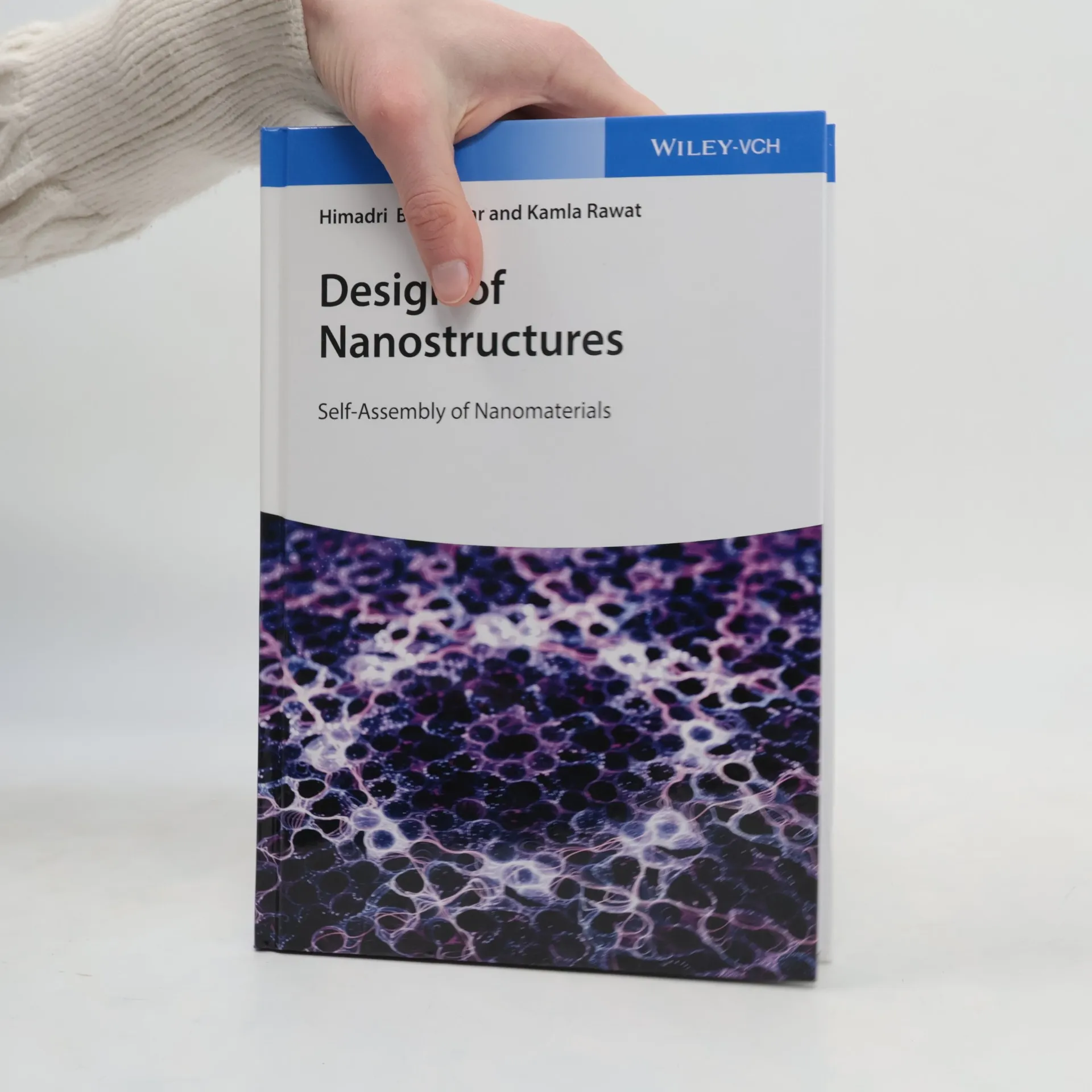


Design of Nanostructures
Self-Assembly of Nanomaterials
Authors
More about the book
Adopting a unique approach, this book provides a thorough, one-stop introduction to nanoscience and self-assembly of nanomaterials composed of such materials as metals, metal oxides, metal sulphides, polymers, and biopolymers. Clearly divided into three sections covering the main aspects of nanoscience, the first part deals with the basic principles of nanoscale science. Alongside essential approaches and forces, this section also covers thermodynamics, phase transitions, and applications to biological systems. The second and third parts then go on to provide a detailed description of the synthesis of inorganic and organic nanoparticles, respectively. With its interdisciplinary content of importance to many different branches of nanoscience, this is essential reading for material scientists, physicists, biophysical chemists, chemical engineers, and biotechnologists alike.
Book purchase
Design of Nanostructures, Kamla Rawat, Himadri B. Sahu
- Language

- Released
- 2017
- Binding
- (Hardcover)
Payment methods
No one has rated yet.
- Title
- Design of Nanostructures
- Subtitle
- Self-Assembly of Nanomaterials
- Language
- English
- Authors
- Kamla Rawat, Himadri B. Sahu
- Publisher
- Wiley-VCH
- Released
- 2017
- Format
- Hardcover
- Pages
- 352
- ISBN10
- 3527343334
- ISBN13
- 9783527343331
- Series
- Categories
- Tags
- Natural sciences, Germany, Technology, Professional Literature, Humanities, Chemical Engineering, Nanotechnology
- Description
- Adopting a unique approach, this book provides a thorough, one-stop introduction to nanoscience and self-assembly of nanomaterials composed of such materials as metals, metal oxides, metal sulphides, polymers, and biopolymers. Clearly divided into three sections covering the main aspects of nanoscience, the first part deals with the basic principles of nanoscale science. Alongside essential approaches and forces, this section also covers thermodynamics, phase transitions, and applications to biological systems. The second and third parts then go on to provide a detailed description of the synthesis of inorganic and organic nanoparticles, respectively. With its interdisciplinary content of importance to many different branches of nanoscience, this is essential reading for material scientists, physicists, biophysical chemists, chemical engineers, and biotechnologists alike.