

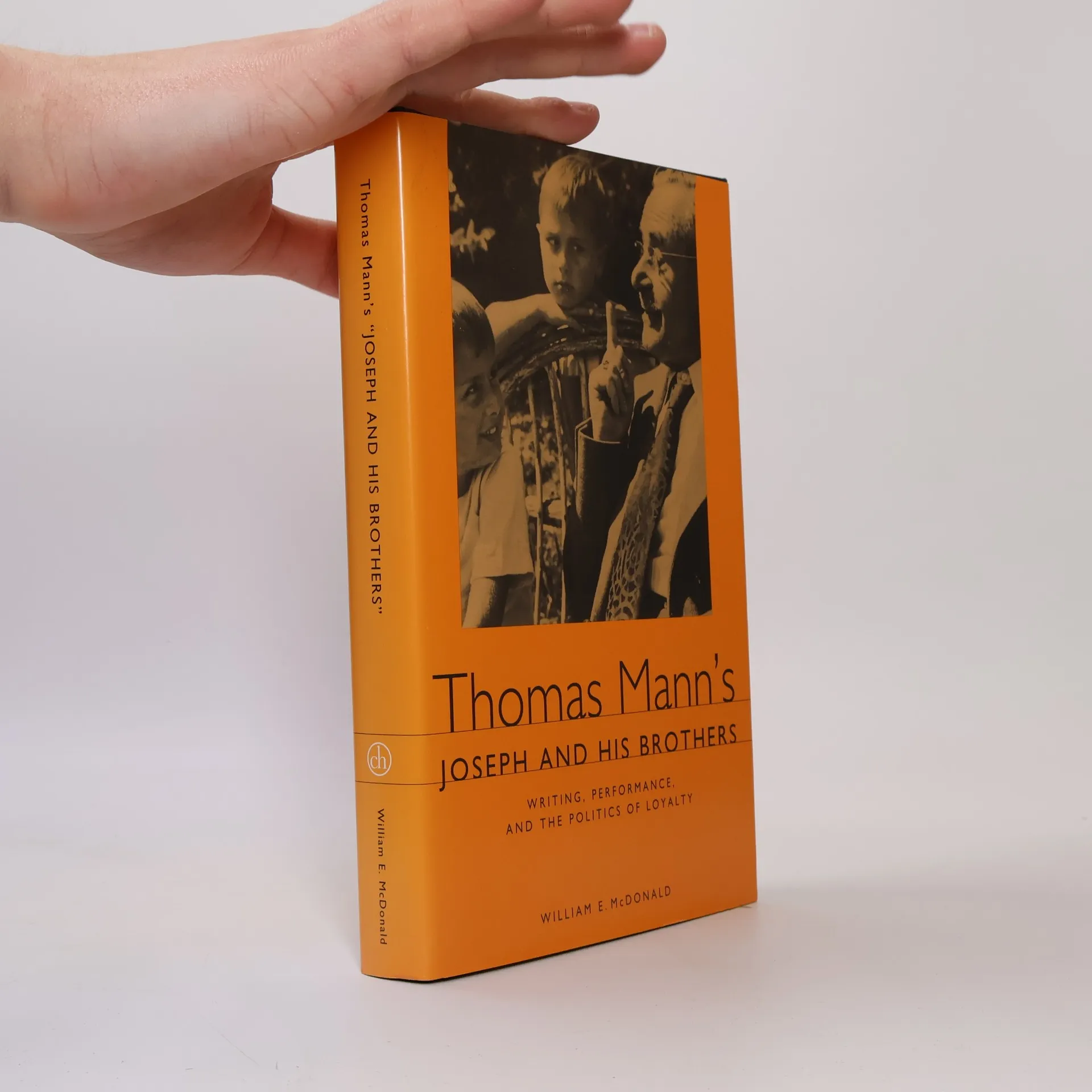


More about the book
McDonald's study offers fresh insights into Mann's Joseph tetralogy in two ways. Beginning with Mann's well documented love for public performance, he rereads the Joseph novels as a script, showing how performance figures prominently in the form as well as the substance of the narrative. Then he interprets several of the essay-lectures composed during the Joseph years (1926-1943), emphasizing their performative qualities and their conscious (and subliminal) interweavings with the novel. Mann's passionate re-enactment of Kleist's play "Amphitryon" in his 1927 lecture provided a model of identity that he developed fully in Joseph. The model also helped him contain the more pessimistic account of identity he encountered in Freud. The Freud lectures of 1929 and 1936 develop psychoanalysis as an Enlightenment project useful in combating the irrationalism of the Nazis, and carefully control its darker aspects.Table of Contents "Jacob and His Sons""Kleist's Amphitryon and the Beginnings of the Joseph Novels"Freud's Position in the History of Modern Thought": The Containment of Totem and TabooRevisionary Narcissism and Perfomance in Young JosephNarcissism, Performance, and the Face of the Father in Joseph In Egypt"The Performance of my Life": The 1936 "Freud" Lecture and Joseph the Provider
Book purchase
Thomas Mann's Joseph and His Brothers, William E. McDonald
- Language

- Released
- 1999
- Binding
- (Hardcover),
- Book condition
- Very Good
- Price
- €8.19
Payment methods
No one has rated yet.
- Title
- Thomas Mann's Joseph and His Brothers
- Language
- English
- Authors
- William E. McDonald
- Publisher
- Camden House
- Released
- 1999
- Format
- Hardcover
- Pages
- 290
- ISBN10
- 157113154X
- ISBN13
- 9781571131546
- Series
- Categories
- Description
- McDonald's study offers fresh insights into Mann's Joseph tetralogy in two ways. Beginning with Mann's well documented love for public performance, he rereads the Joseph novels as a script, showing how performance figures prominently in the form as well as the substance of the narrative. Then he interprets several of the essay-lectures composed during the Joseph years (1926-1943), emphasizing their performative qualities and their conscious (and subliminal) interweavings with the novel. Mann's passionate re-enactment of Kleist's play "Amphitryon" in his 1927 lecture provided a model of identity that he developed fully in Joseph. The model also helped him contain the more pessimistic account of identity he encountered in Freud. The Freud lectures of 1929 and 1936 develop psychoanalysis as an Enlightenment project useful in combating the irrationalism of the Nazis, and carefully control its darker aspects.Table of Contents "Jacob and His Sons""Kleist's Amphitryon and the Beginnings of the Joseph Novels"Freud's Position in the History of Modern Thought": The Containment of Totem and TabooRevisionary Narcissism and Perfomance in Young JosephNarcissism, Performance, and the Face of the Father in Joseph In Egypt"The Performance of my Life": The 1936 "Freud" Lecture and Joseph the Provider