

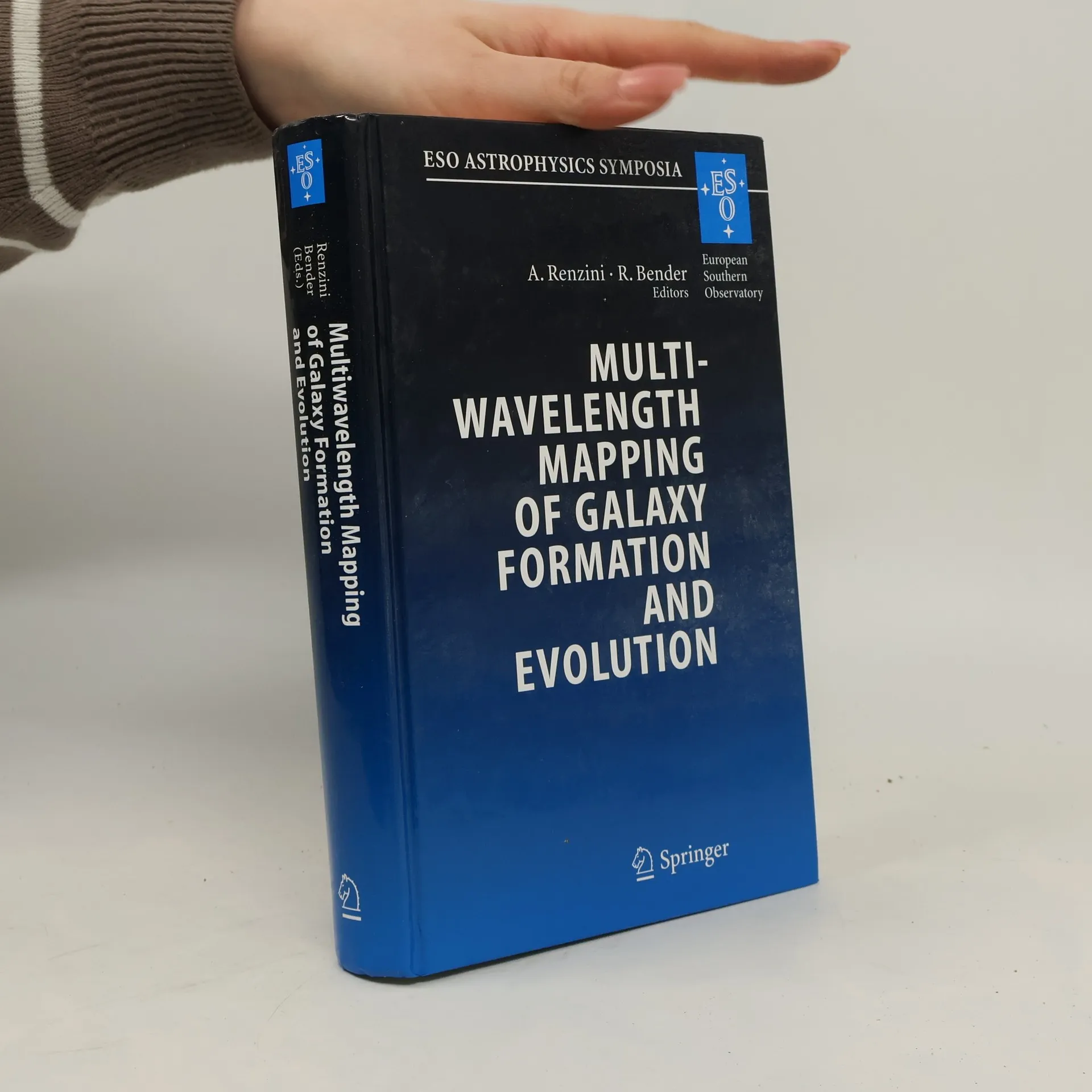

ESO Astrophysics Symposia: Multiwavelength Mapping of Galaxy Formation and Evolution
Proceedings of the ESO Workshop Held at Venice, Italy, 13-16 October 2003
Authors
Parameters
- 487 pages
- 18 hours of reading
More about the book
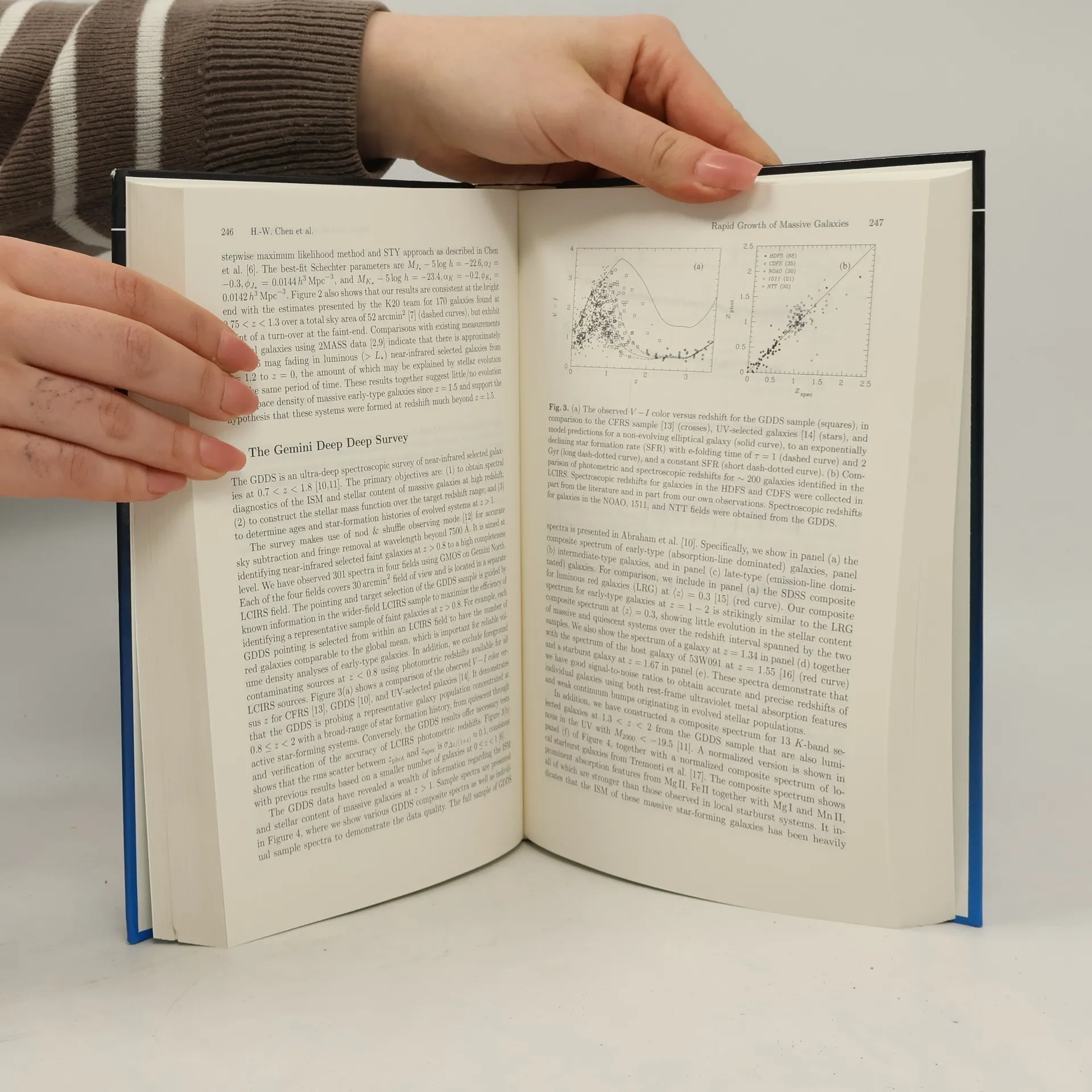
The possibilities of astronomical observation have dramatically increased over the last decade. Major satellites, like the Hubble Space Telescope, Chandra and XMM Newton, are complemented by numerous large ground-based observatories, from 8m-10m optical telescopes to sub-mm and radio facilities. As a result, observational astronomy has access to virtually the whole electromagnetic spectrum of galaxies, even at high redshifts. Theoretical models of galaxy formation and cosmological evolution now face a serious challenge to match the plethora of observational data. In October 2003, over 170 astronomers from 15 countries met for a 4-day workshop to extensively illustrate and discuss all major observational projects and ongoing theoretical efforts to model galaxy formation and evolution. This volume contains the complete proceedings of this meeting and is therefore a unique and timely overview of the current state of research in this rapidly evolving field.
Book purchase
ESO Astrophysics Symposia: Multiwavelength Mapping of Galaxy Formation and Evolution, Ralf Bender, Alvio Renzini
- Language

- Released
- 2005
- Binding
- (Hardcover)
Payment methods
No one has rated yet.
- Title
- ESO Astrophysics Symposia: Multiwavelength Mapping of Galaxy Formation and Evolution
- Subtitle
- Proceedings of the ESO Workshop Held at Venice, Italy, 13-16 October 2003
- Language
- English
- Authors
- Ralf Bender, Alvio Renzini
- Publisher
- Springer
- Released
- 2005
- Format
- Hardcover
- Pages
- 487
- ISBN10
- 3540256652
- ISBN13
- 9783540256656
- Series
- Tags
- Natural sciences, University Textbooks, Science, Professional Literature, Space, Physics Textbooks, Evolution, Cosmology, Cartography, Theoretical Physics, Astrophysics, Galaxies, Observatories
- Description
- The possibilities of astronomical observation have dramatically increased over the last decade. Major satellites, like the Hubble Space Telescope, Chandra and XMM Newton, are complemented by numerous large ground-based observatories, from 8m-10m optical telescopes to sub-mm and radio facilities. As a result, observational astronomy has access to virtually the whole electromagnetic spectrum of galaxies, even at high redshifts. Theoretical models of galaxy formation and cosmological evolution now face a serious challenge to match the plethora of observational data. In October 2003, over 170 astronomers from 15 countries met for a 4-day workshop to extensively illustrate and discuss all major observational projects and ongoing theoretical efforts to model galaxy formation and evolution. This volume contains the complete proceedings of this meeting and is therefore a unique and timely overview of the current state of research in this rapidly evolving field.