

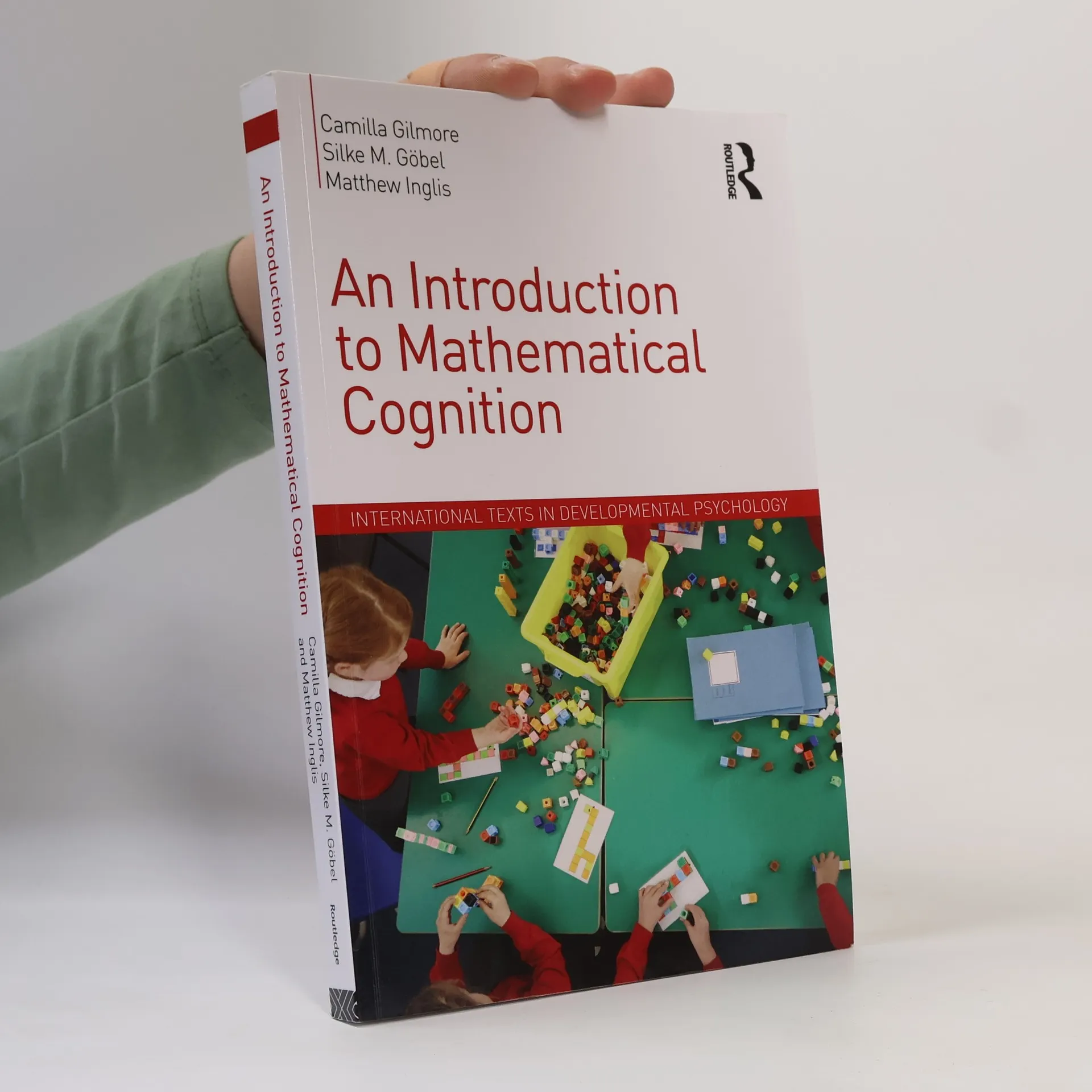


Parameters
- 264 pages
- 10 hours of reading
More about the book
The last decade has seen a rapid growth in our understanding of the cognitive systems that underlie mathematical learning and performance, and an increased recognition of the importance of this topic. This book showcases international research on the most important cognitive issues that affect mathematical performance across a wide age range, from early childhood to adulthood. The book considers the foundational competencies of nonsymbolic and symbolic number processing before discussing arithmetic, conceptual understanding, individual differences and dyscalculia, algebra, number systems, reasoning and higher-level mathematics such as formal proof. Drawing on diverse methodology from behavioural experiments to brain imaging, each chapter discusses key theories and empirical findings and introduces key tasks used by researchers. The final chapter discusses challenges facing the future development of the field of mathematical cognition and reviews a set of open questions that mathematical cognition researchers should address to move the field forward. This book is ideal for undergraduate or graduate students of psychology, education, cognitive sciences, cognitive neuroscience and other academic and clinical audiences including mathematics educators and educational psychologists.
Book purchase
An Introduction to Mathematical Cognition, Camilla Gilmore, Silke M. Göbel, Matthew Inglis
- Language

- Released
- 2018
- Binding
- (Paperback)
Payment methods
We’re missing your review here.
- Title
- An Introduction to Mathematical Cognition
- Language
- English
- Authors
- Camilla Gilmore, Silke M. Göbel, Matthew Inglis
- Publisher
- Routledge
- Released
- 2018
- Format
- Paperback
- Pages
- 264
- ISBN10
- 1138923958
- ISBN13
- 9781138923959
- Series
- Categories
- Tags
- Psychological Topics, References & Manuals, Professional Literature, Developmental Psychology, Psychological Aspects
- Rating
- 3 out of 5
- Description
- The last decade has seen a rapid growth in our understanding of the cognitive systems that underlie mathematical learning and performance, and an increased recognition of the importance of this topic. This book showcases international research on the most important cognitive issues that affect mathematical performance across a wide age range, from early childhood to adulthood. The book considers the foundational competencies of nonsymbolic and symbolic number processing before discussing arithmetic, conceptual understanding, individual differences and dyscalculia, algebra, number systems, reasoning and higher-level mathematics such as formal proof. Drawing on diverse methodology from behavioural experiments to brain imaging, each chapter discusses key theories and empirical findings and introduces key tasks used by researchers. The final chapter discusses challenges facing the future development of the field of mathematical cognition and reviews a set of open questions that mathematical cognition researchers should address to move the field forward. This book is ideal for undergraduate or graduate students of psychology, education, cognitive sciences, cognitive neuroscience and other academic and clinical audiences including mathematics educators and educational psychologists.