

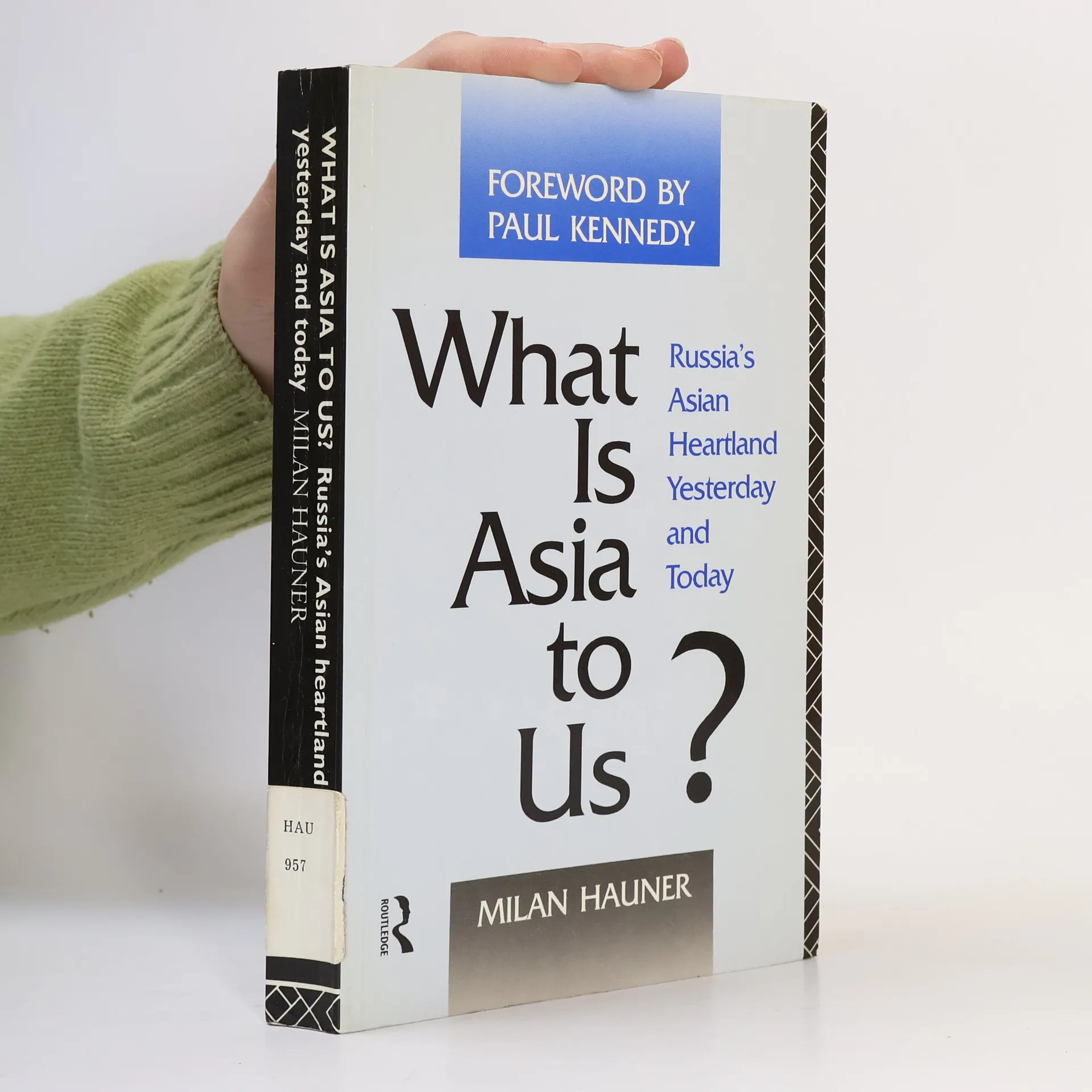
What Is Asia to Us?
Russia's Asian Heartland Yesterday and Today
Authors
Book rating
More about the book
What is Asia to Us, now available in paperback, looks at the uneasy relationship of Russia and Soviet Central Asia. It examines both the significance of Asia to the Russian mind and the place that Asia has occupied in Russian geopolitical thinking over the last hundred years, showing that recent outbreaks of violence are only the latest manifestation of long-standing tension. Hauner surveys events from the conquest of Turkestan to the invasion of Afghanistan and beyond in order to reassess existing theories about Russia's aims in Asia. He also examines the views of Russians themselves and explores the place of Eurasia in Mikhail Gorbachev's vision of a common European house.
Book purchase
What Is Asia to Us?, Milan Hauner, Paul Kennedy
- Language

- Released
- 1992
- Binding
- (Paperback)
Payment methods
We’re missing your review here.
- Title
- What Is Asia to Us?
- Subtitle
- Russia's Asian Heartland Yesterday and Today
- Language
- English
- Authors
- Milan Hauner, Paul Kennedy
- Publisher
- Routledge
- Released
- 1992
- Format
- Paperback
- Pages
- 288
- ISBN10
- 0415081092
- ISBN13
- 9780415081092
- Series
- Tags
- Russia, Asia, Geopolitics
- Rating
- 3.5 out of 5
- Description
- What is Asia to Us, now available in paperback, looks at the uneasy relationship of Russia and Soviet Central Asia. It examines both the significance of Asia to the Russian mind and the place that Asia has occupied in Russian geopolitical thinking over the last hundred years, showing that recent outbreaks of violence are only the latest manifestation of long-standing tension. Hauner surveys events from the conquest of Turkestan to the invasion of Afghanistan and beyond in order to reassess existing theories about Russia's aims in Asia. He also examines the views of Russians themselves and explores the place of Eurasia in Mikhail Gorbachev's vision of a common European house.