

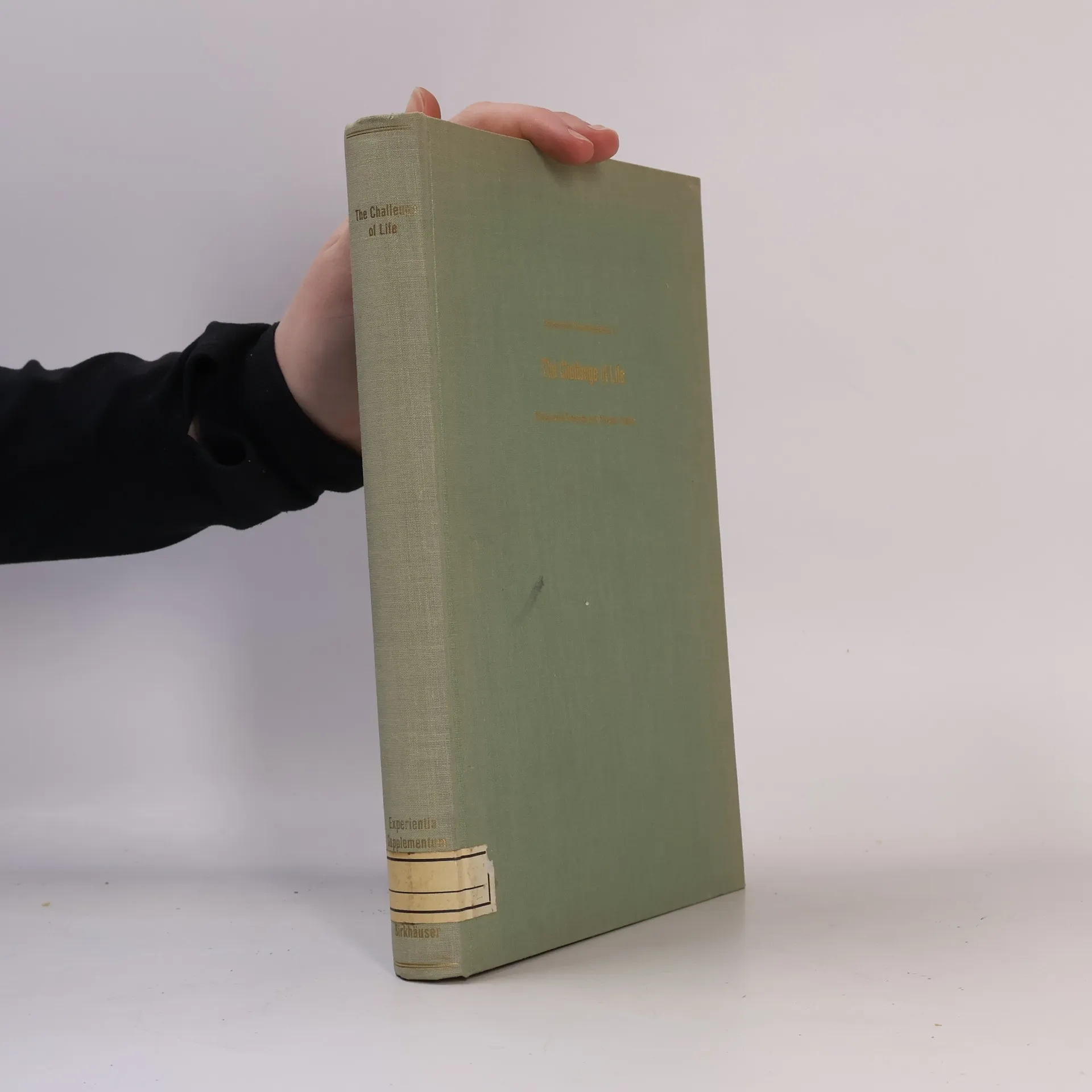
Experientia Supplementum: The Challenge of Life
Biomedical Progress and Human Values
Authors
More about the book
In the autumn of 1971 F. Hoffmann-La Roche & Co. Ltd in Basel celebrated their 75th anniversary. The company was one of the first in the chemical industry to concentrate from the beginning on pharmaceuticals. Step by step new activi ties were taken up, but all within the frontiers of biology. During the 75 years of Roche the research division has become by far the largest department in the company, with basic research assuming an increasingly important part in it. For this reason Roche cannot but feel a share of res pons i bility towards the many problems raised by biomedical progress. Hence, the idea of celebrating the anniversary along conventional lines could not be seriously entertained. The occasion was to show Roche at work. A special kind of work certainly, breaking away from the daily routine into the sphere offree communi cation with thinking people outside the purview of the company's usual tasks."
Book purchase
Experientia Supplementum: The Challenge of Life, J. Salanki, H. S. Viersma
- Language

- Released
- 1972
- Binding
- (Hardcover)
Payment methods
No one has rated yet.
- Title
- Experientia Supplementum: The Challenge of Life
- Subtitle
- Biomedical Progress and Human Values
- Language
- English
- Authors
- J. Salanki, H. S. Viersma
- Publisher
- Birkhäuser
- Released
- 1972
- Format
- Hardcover
- Pages
- 456
- ISBN10
- 3764305894
- ISBN13
- 9783764305895
- Series
- Categories
- Description
- In the autumn of 1971 F. Hoffmann-La Roche & Co. Ltd in Basel celebrated their 75th anniversary. The company was one of the first in the chemical industry to concentrate from the beginning on pharmaceuticals. Step by step new activi ties were taken up, but all within the frontiers of biology. During the 75 years of Roche the research division has become by far the largest department in the company, with basic research assuming an increasingly important part in it. For this reason Roche cannot but feel a share of res pons i bility towards the many problems raised by biomedical progress. Hence, the idea of celebrating the anniversary along conventional lines could not be seriously entertained. The occasion was to show Roche at work. A special kind of work certainly, breaking away from the daily routine into the sphere offree communi cation with thinking people outside the purview of the company's usual tasks."