

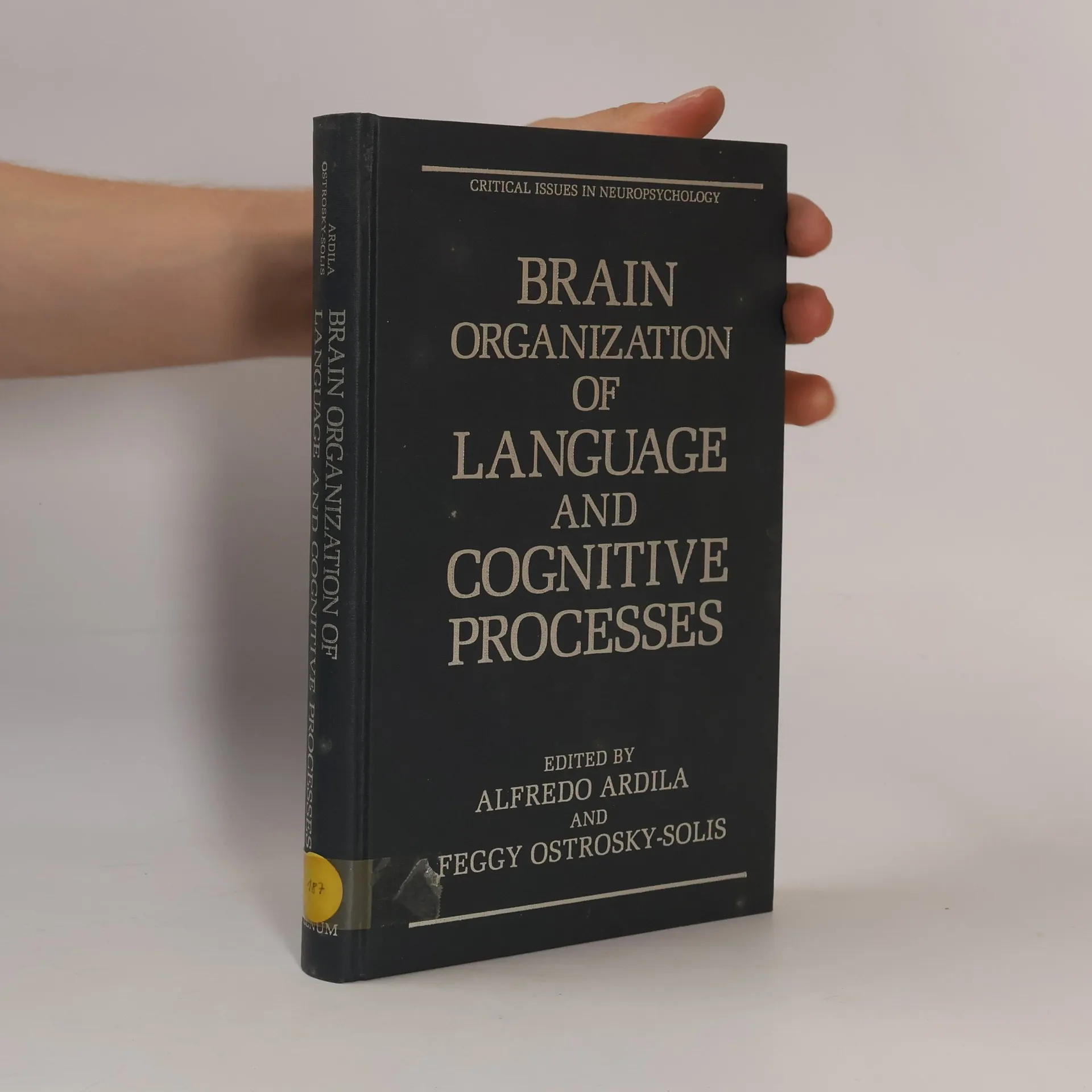
Critical Issues in Neuropsychology: Brain Organization of Language and Cognitive Processes
More about the book
Neuropsychology has seen significant advancements recently, with an increase in methods, theoretical approaches, and publications that enhance our understanding of the complex relationships between brain and behavior. This volume compiles papers that offer new research and clinical insights into brain-behavior relationships. Some chapters introduce fresh research on specific topics, while others summarize evidence for particular theoretical positions or review areas and propose new research directions. The authors aim to advance neuropsychology and deepen our understanding of cognitive activity organization. Part I focuses on foundational theoretical and technical approaches to studying brain organization in cognitive processes. Hanlon and Brown provide an overview of clinical and experimental work through the lens of microgenetic theory, which views cognition as developing through distinct structural stages. They address the growing dissatisfaction with traditional center and pathway theories, as well as newer modular accounts. Additionally, they explore how microgenesis can inform the interpretation of brain damage symptoms, contributing to a structural model of hierarchical levels through which cognitive functions develop.
Book purchase
Critical Issues in Neuropsychology: Brain Organization of Language and Cognitive Processes, Alfredo Ardila, Feggy Ostrosky-Solis
- Language

- Released
- 1989
- Binding
- (Hardcover)
Payment methods
No one has rated yet.
- Title
- Critical Issues in Neuropsychology: Brain Organization of Language and Cognitive Processes
- Language
- English
- Authors
- Alfredo Ardila, Feggy Ostrosky-Solis
- Publisher
- Springer
- Released
- 1989
- Format
- Hardcover
- Pages
- 276
- ISBN10
- 0306431696
- ISBN13
- 9780306431692
- Series
- Categories
- Description
- Neuropsychology has seen significant advancements recently, with an increase in methods, theoretical approaches, and publications that enhance our understanding of the complex relationships between brain and behavior. This volume compiles papers that offer new research and clinical insights into brain-behavior relationships. Some chapters introduce fresh research on specific topics, while others summarize evidence for particular theoretical positions or review areas and propose new research directions. The authors aim to advance neuropsychology and deepen our understanding of cognitive activity organization. Part I focuses on foundational theoretical and technical approaches to studying brain organization in cognitive processes. Hanlon and Brown provide an overview of clinical and experimental work through the lens of microgenetic theory, which views cognition as developing through distinct structural stages. They address the growing dissatisfaction with traditional center and pathway theories, as well as newer modular accounts. Additionally, they explore how microgenesis can inform the interpretation of brain damage symptoms, contributing to a structural model of hierarchical levels through which cognitive functions develop.