

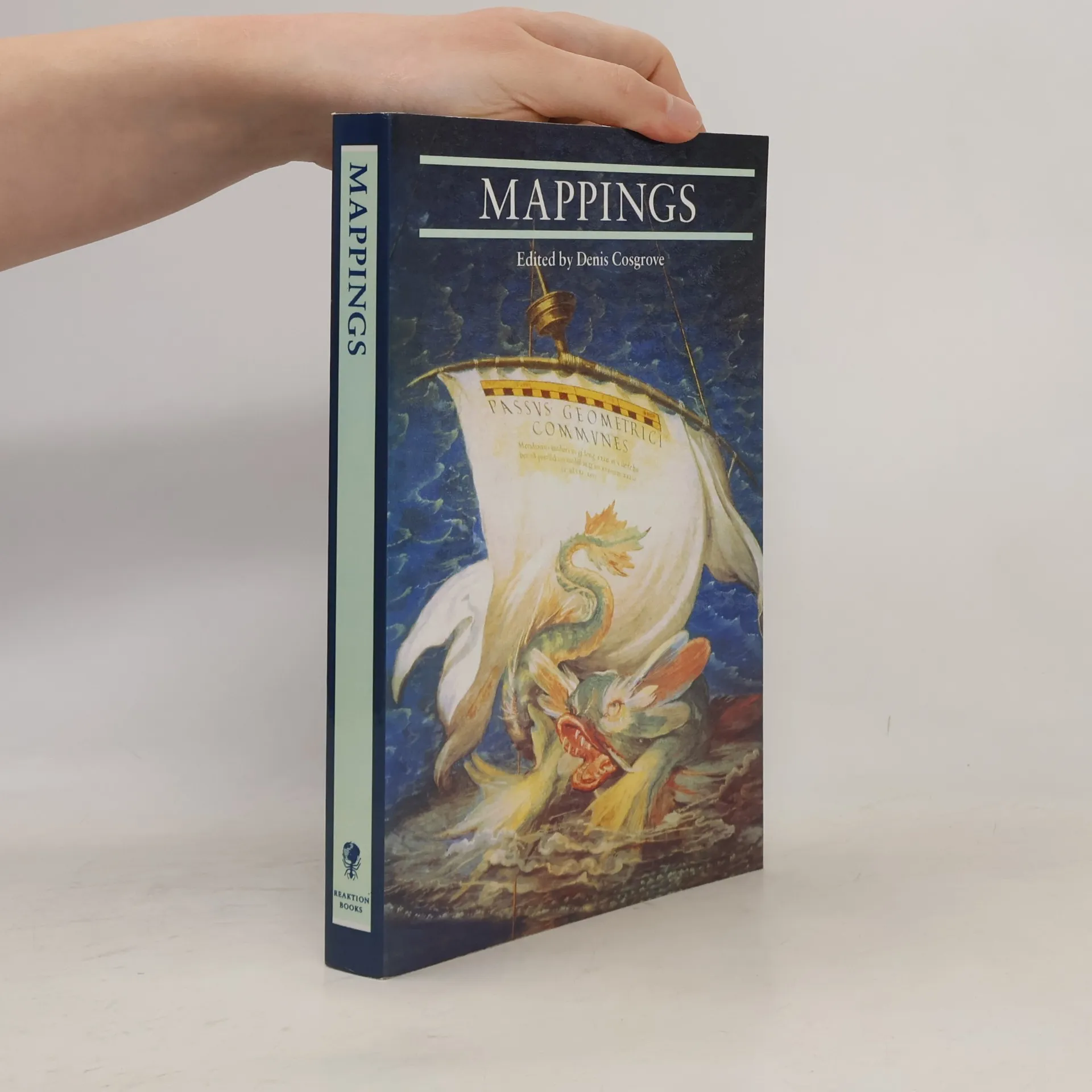
Parameters
- 320 pages
- 12 hours of reading
More about the book
Mappings explores what mapping has meant in the past and how its meanings have altered. How have maps and mapping served to order and represent physical, social and imaginative worlds? How has the practice of mapping shaped modern seeing and knowing? In what ways do contemporary changes in our experience of the world alter the meanings and practice of mapping, and vice versa?In their diverse expressions, maps and the representational processes of mapping have constructed the spaces of modernity since the early Renaissance. The map's spatial fixity, its capacity to frame, control and communicate knowledge through combining image and text, and cartography's increasing claims to scientific authority, make mapping at once an instrument and a metaphor for rational understanding of the world.Among the topics the authors investigate are projective and imaginative mappings; mappings of terraqueous spaces; mapping and localism at the 'chorographic' scale; and mapping as personal exploration.With essays by Jerry Brotton, Paul Carter, Michael Charlesworth, James Corner, Wystan Curnow, Christian Jacob, Luciana de Lima Martins, David Matless, Armand Mattelart, Lucia Nuti and Alessandro Scafi
Book purchase
Mappings, Denis E. Cosgrove
- Language

- Released
- 1999
- Binding
- (Paperback)
Payment methods
No one has rated yet.
- Title
- Mappings
- Language
- English
- Authors
- Denis E. Cosgrove
- Publisher
- Reaktion Books
- Released
- 1999
- Format
- Paperback
- Pages
- 320
- ISBN10
- 1861890214
- ISBN13
- 9781861890214
- Series
- Categories
- Tags
- Historical Themes, Travel, References & Manuals, Science, Technology, Culture, Social History, Renaissance, Imagination, Brazil, Colonialism, Cartography, Landscape Architecture, Empire, Navigation, Authority, Citizenship
- Description
- Mappings explores what mapping has meant in the past and how its meanings have altered. How have maps and mapping served to order and represent physical, social and imaginative worlds? How has the practice of mapping shaped modern seeing and knowing? In what ways do contemporary changes in our experience of the world alter the meanings and practice of mapping, and vice versa?In their diverse expressions, maps and the representational processes of mapping have constructed the spaces of modernity since the early Renaissance. The map's spatial fixity, its capacity to frame, control and communicate knowledge through combining image and text, and cartography's increasing claims to scientific authority, make mapping at once an instrument and a metaphor for rational understanding of the world.Among the topics the authors investigate are projective and imaginative mappings; mappings of terraqueous spaces; mapping and localism at the 'chorographic' scale; and mapping as personal exploration.With essays by Jerry Brotton, Paul Carter, Michael Charlesworth, James Corner, Wystan Curnow, Christian Jacob, Luciana de Lima Martins, David Matless, Armand Mattelart, Lucia Nuti and Alessandro Scafi