

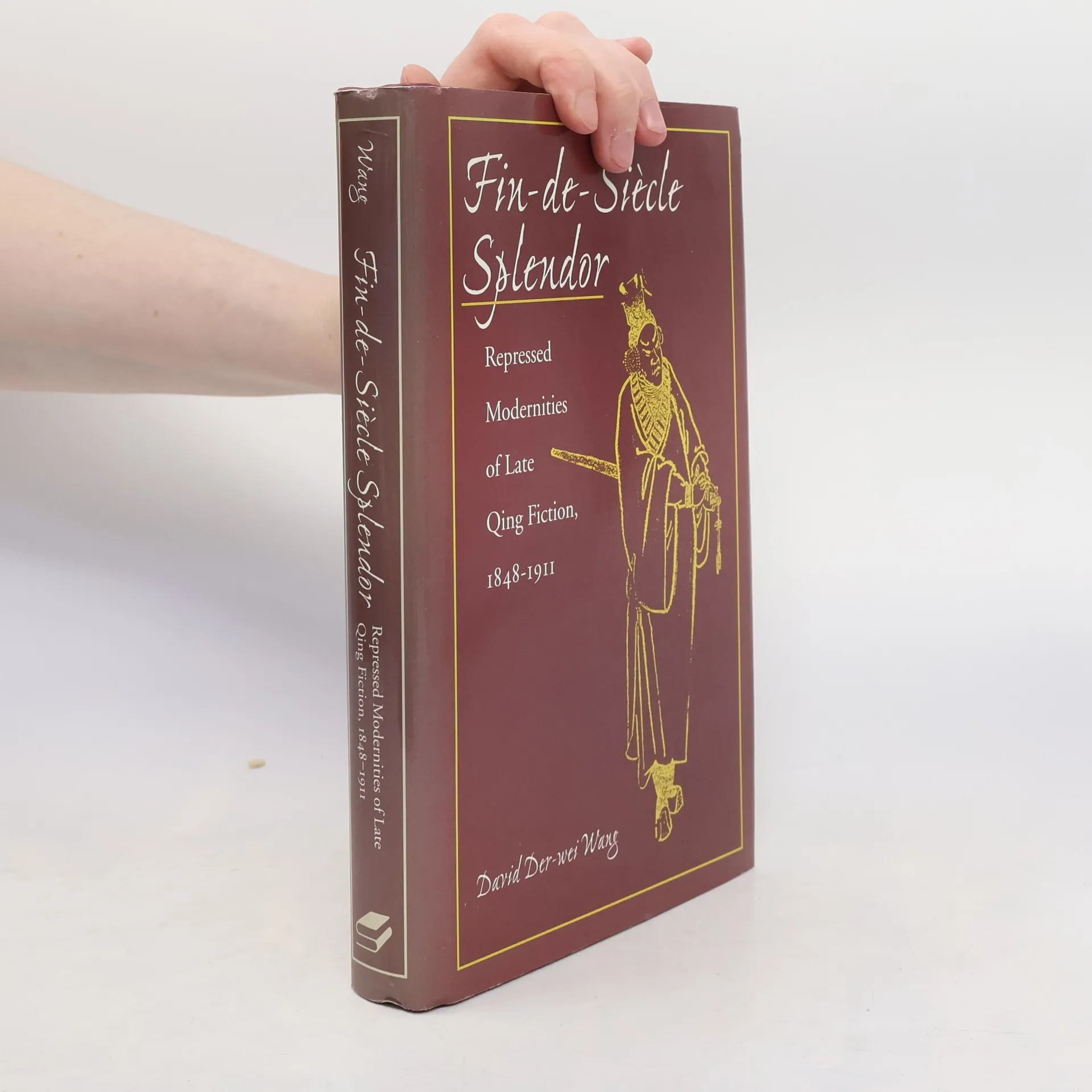
Fin-de-Siècle Splendor
Repressed Modernities of Late Qing Fiction, 1848-1911
Authors
More about the book
The prevailing view among literary historians is that the May Fourth movement of 1919 signifies the split between traditional and modern Chinese literature. This book challenges that notion, arguing that signs of reform and innovation emerged well before May Fourth. As China engaged with modern international history in the late Qing, it began to cultivate its own complex forms of modernity. The author highlights that late Qing fiction fostered a creative poetics that was overlooked by May Fourth reformers, who favored Western-style realism. A comprehensive understanding of modern Chinese fiction necessitates exploring why many genres, styles, themes, and figures from late imperial fiction were marginalized by "modern" literary discourse. The focus is on four often-dismissed genres: depravity romances, court-case and chivalric cycles, grotesque exposés, and scientific fantasies. Despite the dominance of realist orthodoxy since May Fourth, these genres have persistently re-emerged in mainstream discourse, their influence becoming more apparent in recent years. This study examines over sixty works, many of which have received little attention from Western or Chinese scholars, and is informed by contemporary literary theory, offering a critical reevaluation of Chinese literary and cultural modernity.
Book purchase
Fin-de-Siècle Splendor, Wang Dewei, David Der-wei Wang
- Language

- Released
- 1997
- Binding
- (Hardcover)
Payment methods
No one has rated yet.
- Title
- Fin-de-Siècle Splendor
- Subtitle
- Repressed Modernities of Late Qing Fiction, 1848-1911
- Language
- English
- Authors
- Wang Dewei, David Der-wei Wang
- Publisher
- Stanford University Press
- Released
- 1997
- Format
- Hardcover
- Pages
- 433
- ISBN10
- 0804728453
- ISBN13
- 9780804728454
- Series
- Tags
- Historical Themes, 20th century, 19th century, Asia, Literary Criticism, China, Chinese Literature, Chinese
- Description
- The prevailing view among literary historians is that the May Fourth movement of 1919 signifies the split between traditional and modern Chinese literature. This book challenges that notion, arguing that signs of reform and innovation emerged well before May Fourth. As China engaged with modern international history in the late Qing, it began to cultivate its own complex forms of modernity. The author highlights that late Qing fiction fostered a creative poetics that was overlooked by May Fourth reformers, who favored Western-style realism. A comprehensive understanding of modern Chinese fiction necessitates exploring why many genres, styles, themes, and figures from late imperial fiction were marginalized by "modern" literary discourse. The focus is on four often-dismissed genres: depravity romances, court-case and chivalric cycles, grotesque exposés, and scientific fantasies. Despite the dominance of realist orthodoxy since May Fourth, these genres have persistently re-emerged in mainstream discourse, their influence becoming more apparent in recent years. This study examines over sixty works, many of which have received little attention from Western or Chinese scholars, and is informed by contemporary literary theory, offering a critical reevaluation of Chinese literary and cultural modernity.