

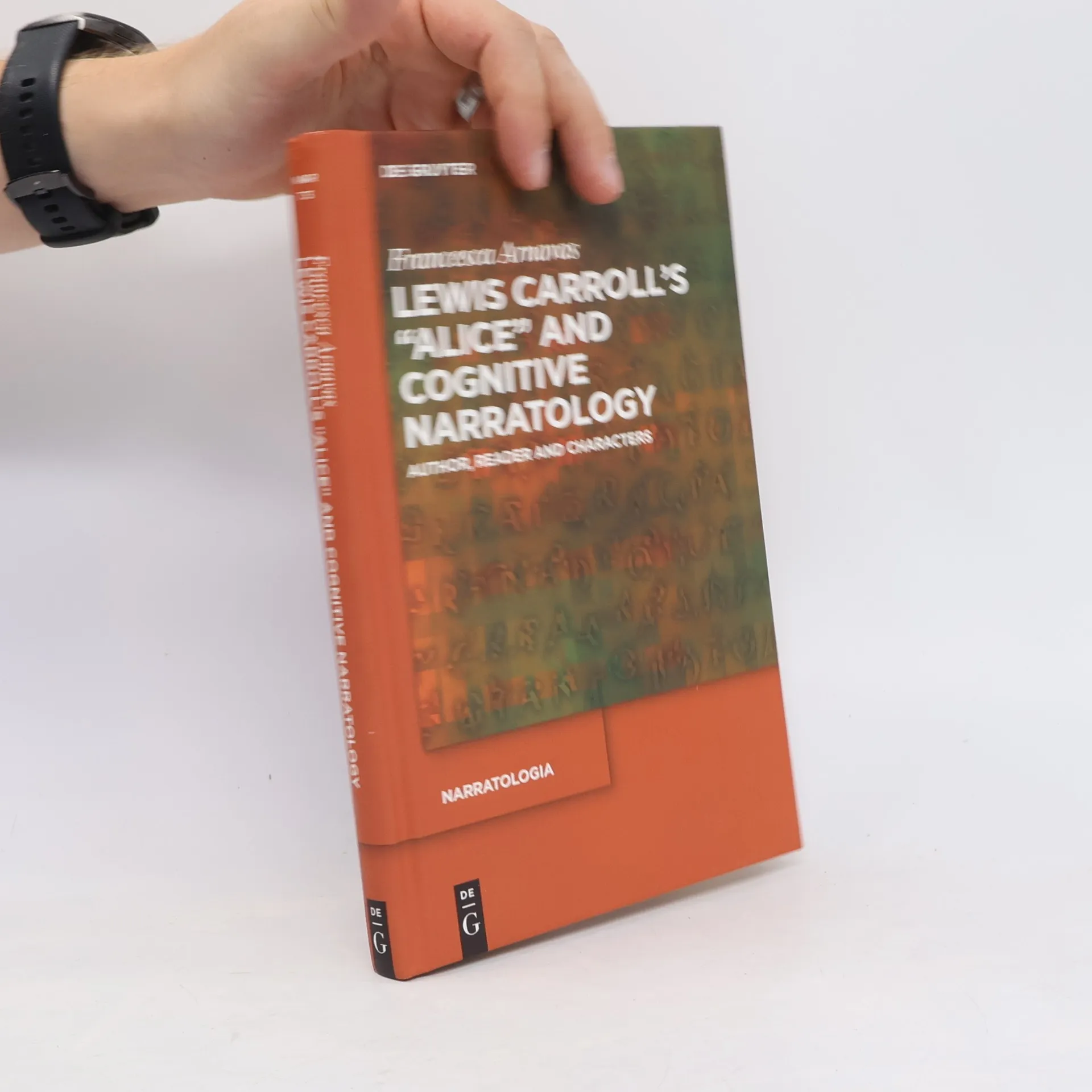
Narratologia - 73: Lewis Carroll's "Alice" and Cognitive Narratology
Author, Reader and Characters
Authors
Parameters
- 224 pages
- 8 hours of reading
More about the book
We live in an age that is witnessing a growing interest in narrative studies, cognitive neuroscientific tools, mind studies and artificial intelligence hypotheses. This book therefore aims to expand the exegesis of Carroll's "Alice" books, aligning them with the current intellectual environment. The theoretical force of this volume lies in the successful encounter between a great book (and all its polysemous ramifications) and a new interpretative point of view, powerful enough to provide a new original contribution, but well grounded enough not to distort the text itself. Moreover, this book is one of the first to offer a complete, thorough analysis of one single text through the theoretical lens of cognitive narratology, and not just as a series of brief examples embedded within a more general discussion. It emphasises in a more direct, effective way the actual novelty and usefulness of the dialogue established between narrative theory and the cognitive sciences. It links specific concepts elaborated in the theory of cognitive narratology with the analysis of the "Alice" books, helping in this way to discuss, question and extend the concepts themselves, opening up new interpretations and practical methods.
Book purchase
Narratologia - 73: Lewis Carroll's "Alice" and Cognitive Narratology, Francesca Arnavas
- Language

- Released
- 2021
- Binding
- (Hardcover)
Payment methods
No one has rated yet.
- Title
- Narratologia - 73: Lewis Carroll's "Alice" and Cognitive Narratology
- Subtitle
- Author, Reader and Characters
- Language
- English
- Authors
- Francesca Arnavas
- Publisher
- De Gruyter
- Released
- 2021
- Format
- Hardcover
- Pages
- 224
- ISBN10
- 3110689073
- ISBN13
- 9783110689075
- Series
- Tags
- Historical Themes, Children, 19th century, Great Britain, Literary Criticism, English Literature, Literary Theory
- Description
- We live in an age that is witnessing a growing interest in narrative studies, cognitive neuroscientific tools, mind studies and artificial intelligence hypotheses. This book therefore aims to expand the exegesis of Carroll's "Alice" books, aligning them with the current intellectual environment. The theoretical force of this volume lies in the successful encounter between a great book (and all its polysemous ramifications) and a new interpretative point of view, powerful enough to provide a new original contribution, but well grounded enough not to distort the text itself. Moreover, this book is one of the first to offer a complete, thorough analysis of one single text through the theoretical lens of cognitive narratology, and not just as a series of brief examples embedded within a more general discussion. It emphasises in a more direct, effective way the actual novelty and usefulness of the dialogue established between narrative theory and the cognitive sciences. It links specific concepts elaborated in the theory of cognitive narratology with the analysis of the "Alice" books, helping in this way to discuss, question and extend the concepts themselves, opening up new interpretations and practical methods.