

More about the book
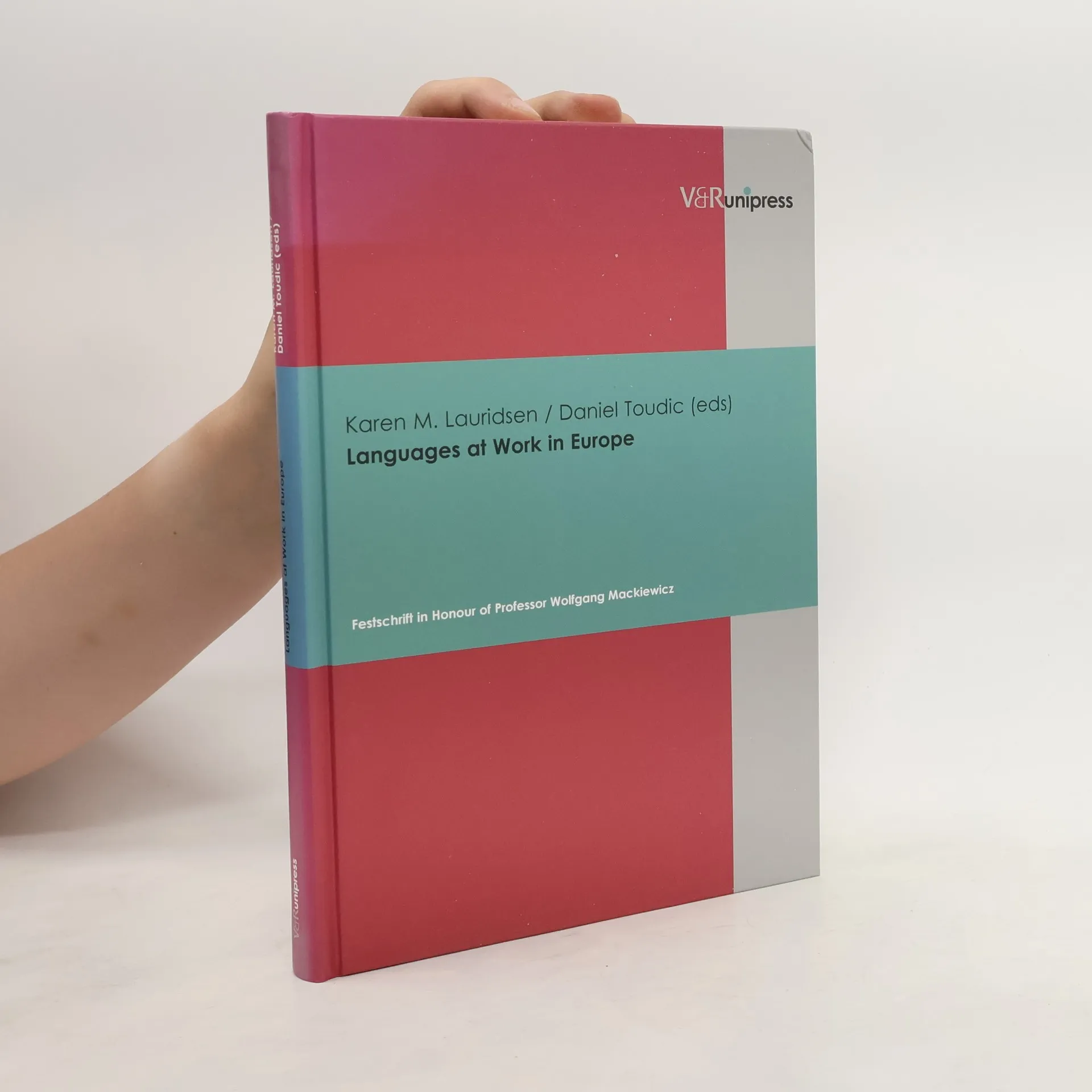
Foreign language competences are vital not only for the individual European citizen, but in a more encompassing perspective, for mobility, socio-economic development and the competitiveness of Europe in a global world. For more than a decade, Professor Wolfgang Mackiewicz (Freie Universität Berlin) has led a string of European university cooperation projects. The overarching aim has been to map out the needs for foreign language and intercultural communication skills across Europe, to identify examples of good practice, and to propose possible solutions to the challenges faced. This book pays tribute to Professor Mackiewicz and his work. It discusses how universities can continue to develop socially relevant university programmes in the Area of Languages, underpinned by solid research and in close cooperation with representatives from the world of work.
Book purchase
Languages at Work in Europe, Karen Margrethe Lauridsen, Daniel Toudic, Wolfgang Mackiewicz
- Language

- Released
- 2008
- Binding
- (Hardcover)
Payment methods
No one has rated yet.
- Title
- Languages at Work in Europe
- Language
- English
- Publisher
- V&R Unipress
- Released
- 2008
- Format
- Hardcover
- Pages
- 179
- ISBN10
- 3899714539
- ISBN13
- 9783899714531
- Series
- Categories
- Tags
- Historical Themes, Language Textbooks & Dictionaries, Europe, European Union, Multicultural Education
- Description
- Foreign language competences are vital not only for the individual European citizen, but in a more encompassing perspective, for mobility, socio-economic development and the competitiveness of Europe in a global world. For more than a decade, Professor Wolfgang Mackiewicz (Freie Universität Berlin) has led a string of European university cooperation projects. The overarching aim has been to map out the needs for foreign language and intercultural communication skills across Europe, to identify examples of good practice, and to propose possible solutions to the challenges faced. This book pays tribute to Professor Mackiewicz and his work. It discusses how universities can continue to develop socially relevant university programmes in the Area of Languages, underpinned by solid research and in close cooperation with representatives from the world of work.