

More about the book
Since the rise of New Public Management in the 1990s, European governments have increasingly relied on performance measurement as a means of controlling publicly funded organizations. This shift has led to demands for accountability from external stakeholders based on quantitative metrics, often derived from business practices. However, these measures are inadequately suited for public sector organizations, particularly those in the arts, where value and quality are difficult to quantify. Through a comprehensive literature review and an in-depth case study of a publicly funded opera company, it is demonstrated that government-imposed accountability rules fail to capture the core artistic value produced by these organizations. This artistic value is shaped by the contributions of various stakeholders—including staff, audiences, and critics—and is assessed through qualitative, often unwritten, information by the managers involved. To create effective accountability measures, governments must first understand the unique work processes and evaluation methods within arts organizations. Only by developing accountability frameworks that reflect the realities of artistic work can they provide relevant tools for these organizations to articulate their societal contributions.
Book purchase
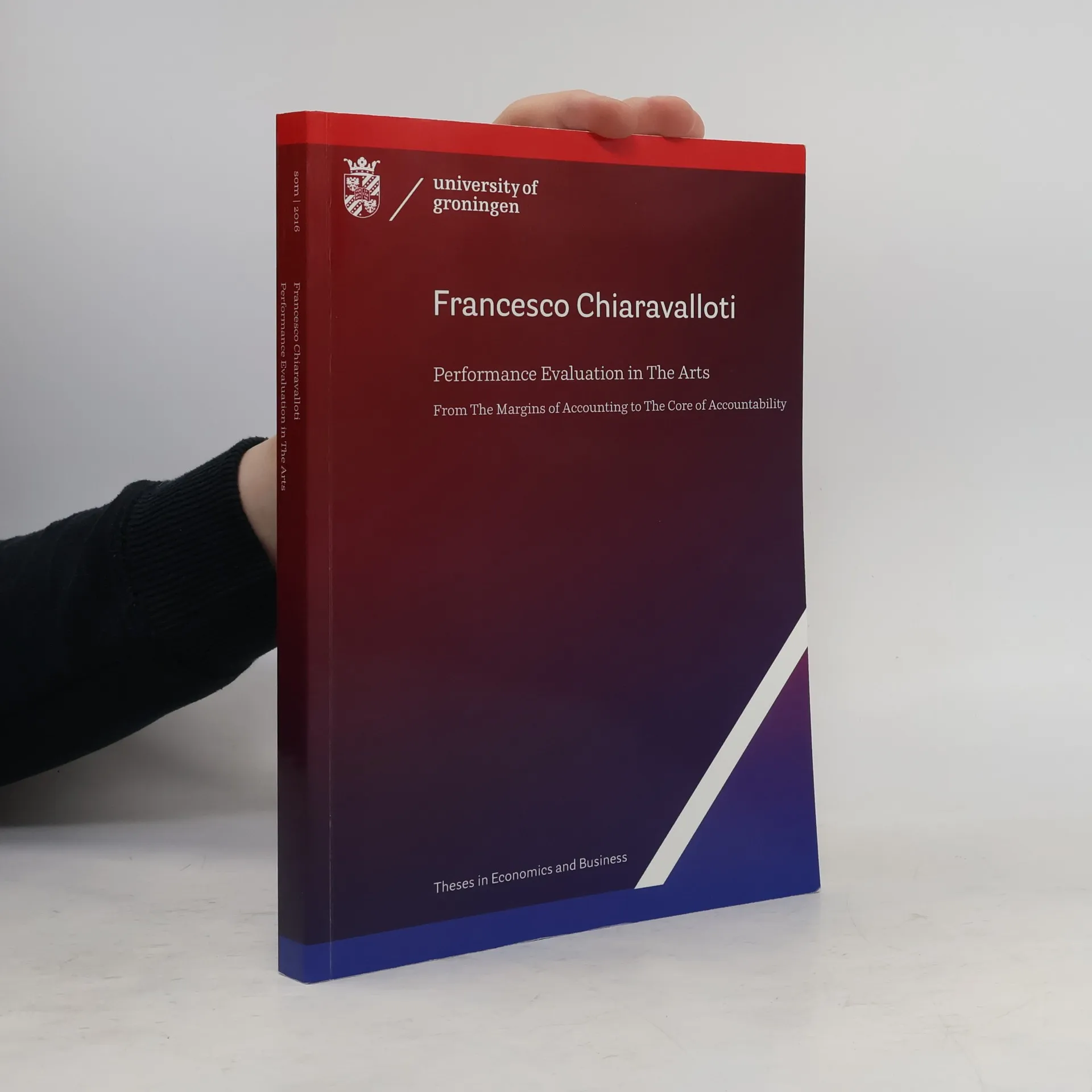
Performance Evaluation in The Arts, Francesco Chiaravalloti
- Language

- Released
- 2016
- Binding
- (Paperback)
Payment methods
No one has rated yet.
- Title
- Performance Evaluation in The Arts
- Subtitle
- From The Margins of Accounting to The Core of Accountability
- Language
- English
- Authors
- Francesco Chiaravalloti
- Publisher
- University of Groningen
- Released
- 2016
- Format
- Paperback
- ISBN10
- 9036787203
- ISBN13
- 9789036787208
- Series
- Categories
- Tags
- Business
- Description
- Since the rise of New Public Management in the 1990s, European governments have increasingly relied on performance measurement as a means of controlling publicly funded organizations. This shift has led to demands for accountability from external stakeholders based on quantitative metrics, often derived from business practices. However, these measures are inadequately suited for public sector organizations, particularly those in the arts, where value and quality are difficult to quantify. Through a comprehensive literature review and an in-depth case study of a publicly funded opera company, it is demonstrated that government-imposed accountability rules fail to capture the core artistic value produced by these organizations. This artistic value is shaped by the contributions of various stakeholders—including staff, audiences, and critics—and is assessed through qualitative, often unwritten, information by the managers involved. To create effective accountability measures, governments must first understand the unique work processes and evaluation methods within arts organizations. Only by developing accountability frameworks that reflect the realities of artistic work can they provide relevant tools for these organizations to articulate their societal contributions.