


More about the book
During the past decade, emotional intelligence has been subjected to both scientific and public scrutiny. Numerous articles have been published on the topic in both academic journals and the popular press, testifying to the potential usefulness of emotional intelligence in psychology, business, education, the home, and the workplace. However, until now, there has been no systematic synthesis that grounds emotional intelligence in contemporary theory, while simultaneously sorting scientific approaches from popular fads and pseudoscience.Bringing together leading international experts from a variety of sub-disciplines, this volume aims to integrate recent research on emotional intelligence. The contributors address a set of focused questions concerning theory, measures, and How does emotional intelligence relate to personality? What is the optimal approach to testing emotional intelligence? How can emotional intelligence be trained? In the final section of the book, the volume editors distill and synthesize the main points made by these experts and set forth an agenda for building a science of emotional intelligence in the future.Science of Emotional Intelligence will be an invaluable resource for researchers and professionals in psychology, education, the health sciences, and business.
Book purchase
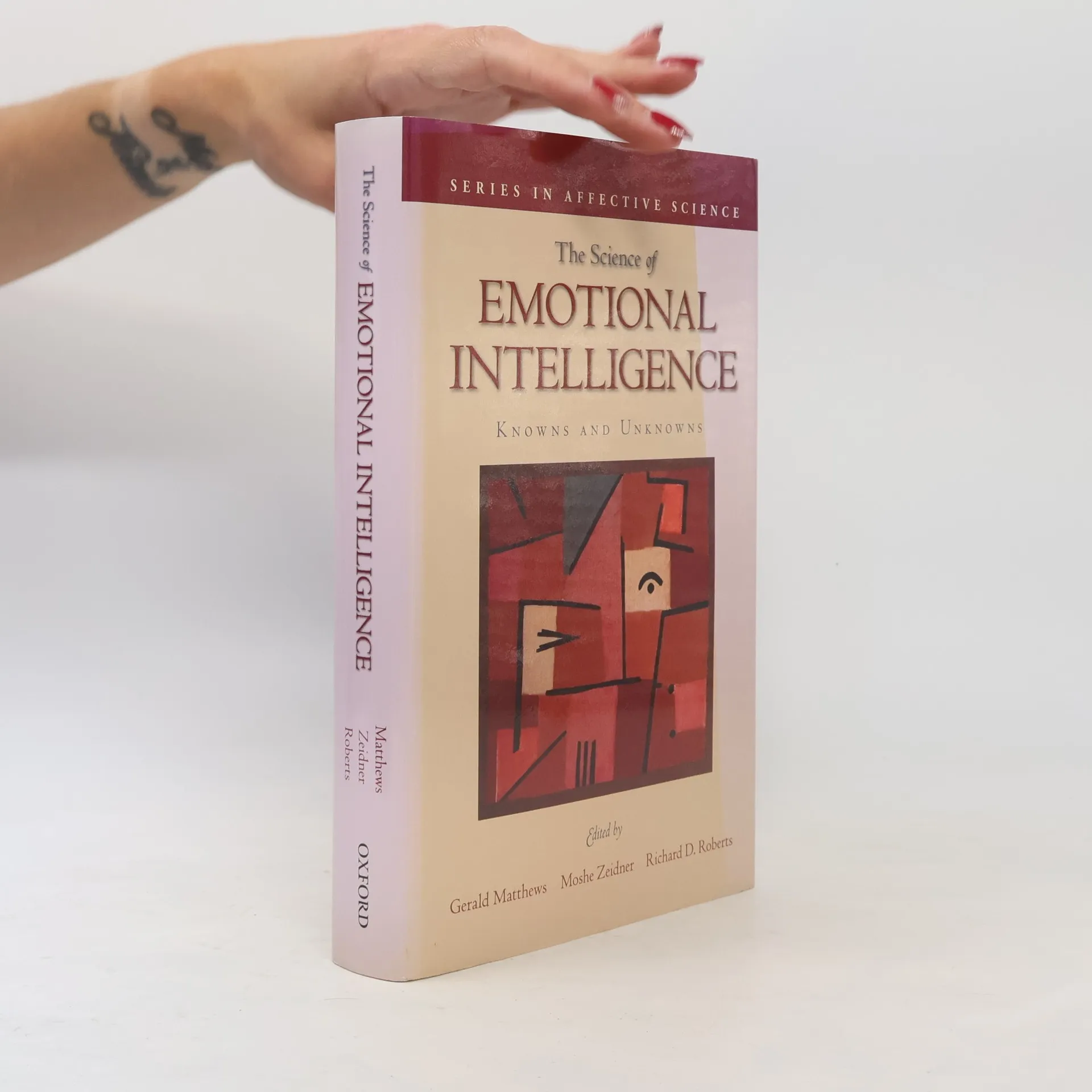
Series in Affective Science: The Science of Emotional Intelligence, Gerald Matthews, Moshe Zeidner, Richard D. Roberts
- Language

- Released
- 2007
- Binding
- (Hardcover),
- Book condition
- Good
- Price
- €6.49
Payment methods
No one has rated yet.
- Title
- Series in Affective Science: The Science of Emotional Intelligence
- Subtitle
- Knowns and Unknowns
- Language
- English
- Publisher
- Oxford University Press
- Released
- 2007
- Format
- Hardcover
- Pages
- 528
- ISBN10
- 0195181891
- ISBN13
- 9780195181890
- Series
- Description
- During the past decade, emotional intelligence has been subjected to both scientific and public scrutiny. Numerous articles have been published on the topic in both academic journals and the popular press, testifying to the potential usefulness of emotional intelligence in psychology, business, education, the home, and the workplace. However, until now, there has been no systematic synthesis that grounds emotional intelligence in contemporary theory, while simultaneously sorting scientific approaches from popular fads and pseudoscience.Bringing together leading international experts from a variety of sub-disciplines, this volume aims to integrate recent research on emotional intelligence. The contributors address a set of focused questions concerning theory, measures, and How does emotional intelligence relate to personality? What is the optimal approach to testing emotional intelligence? How can emotional intelligence be trained? In the final section of the book, the volume editors distill and synthesize the main points made by these experts and set forth an agenda for building a science of emotional intelligence in the future.Science of Emotional Intelligence will be an invaluable resource for researchers and professionals in psychology, education, the health sciences, and business.