

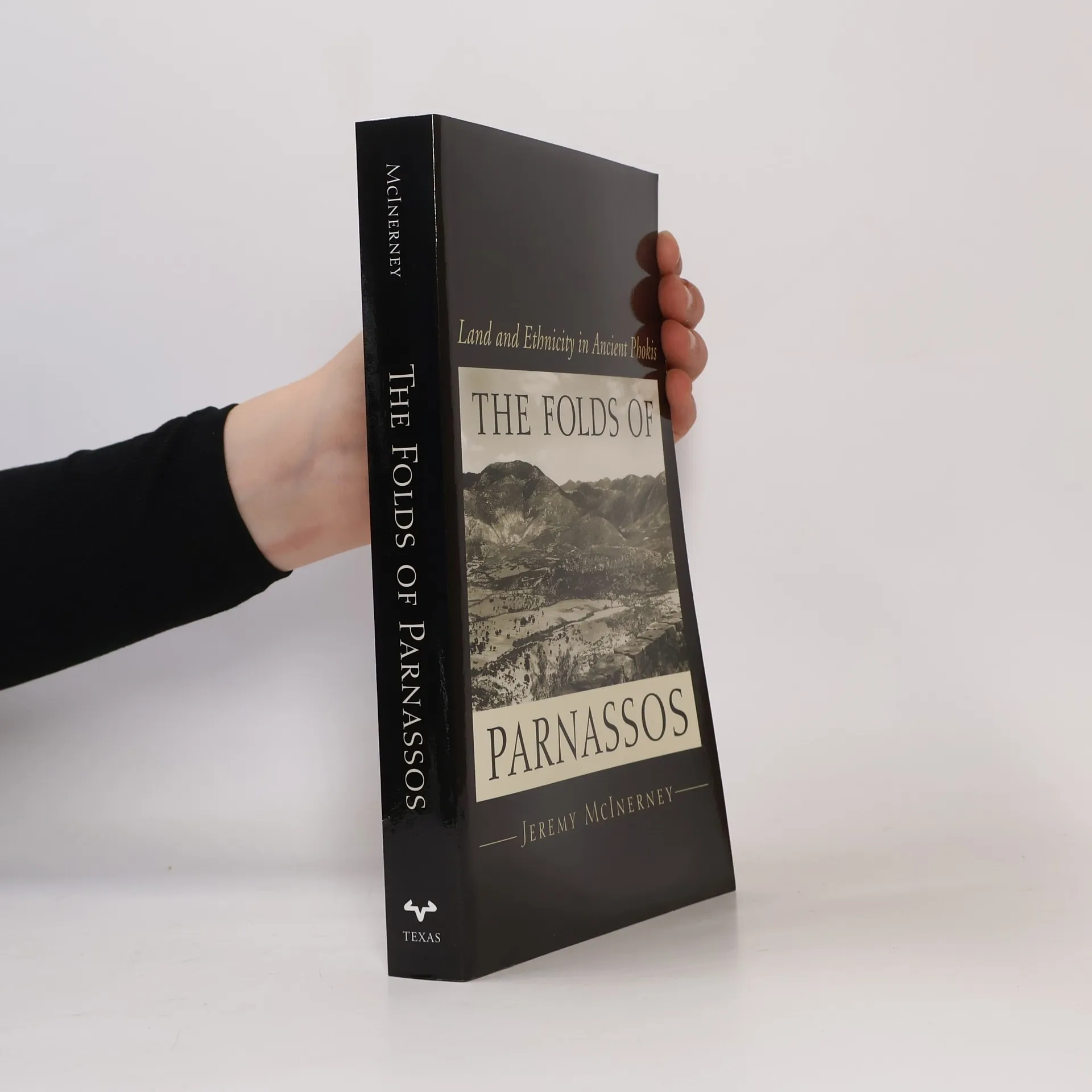
The Folds of Parnassos
Land and Ethnicity in Ancient Phokis
Authors
Parameters
- 407 pages
- 15 hours of reading
More about the book
Independent city-states ( poleis ) such as Athens have been viewed traditionally as the most advanced stage of state formation in ancient Greece. By contrast, this pioneering book argues that for some Greeks the ethnos , a regionally based ethnic group, and the koinon , or regional confederation, were equally valid units of social and political life and that these ethnic identities were astonishingly durable. Jeremy McInerney sets his study in Phokis, a region in central Greece dominated by Mount Parnassos that shared a border with the panhellenic sanctuary at Delphi. He explores how ecological conditions, land use, and external factors such as invasion contributed to the formation of a Phokian territory. Then, drawing on numerous interdisciplinary sources, he traces the history of the region from the Archaic age down to the Roman period. McInerney shows how shared myths, hero cults, and military alliances created an ethnic identity that held the region together over centuries, despite repeated invasions. He concludes that the Phokian koinon survived because it was founded ultimately on the tenacity of the smaller communities of Greece.
Book purchase
The Folds of Parnassos, Jeremy McInerney
- Language

- Released
- 1999
- Binding
- (Paperback)
Payment methods
No one has rated yet.
- Title
- The Folds of Parnassos
- Subtitle
- Land and Ethnicity in Ancient Phokis
- Language
- English
- Authors
- Jeremy McInerney
- Publisher
- University of Texas Press
- Released
- 1999
- Format
- Paperback
- Pages
- 407
- ISBN10
- 029275230X
- ISBN13
- 9780292752306
- Series
- Categories
- Tags
- Historical Themes, Europe, Ancient History, History of Europe, Political Theories, Archaeology, Prehistoric and ancient times, Greece, Ancient Greece, Social Groups
- Description
- Independent city-states ( poleis ) such as Athens have been viewed traditionally as the most advanced stage of state formation in ancient Greece. By contrast, this pioneering book argues that for some Greeks the ethnos , a regionally based ethnic group, and the koinon , or regional confederation, were equally valid units of social and political life and that these ethnic identities were astonishingly durable. Jeremy McInerney sets his study in Phokis, a region in central Greece dominated by Mount Parnassos that shared a border with the panhellenic sanctuary at Delphi. He explores how ecological conditions, land use, and external factors such as invasion contributed to the formation of a Phokian territory. Then, drawing on numerous interdisciplinary sources, he traces the history of the region from the Archaic age down to the Roman period. McInerney shows how shared myths, hero cults, and military alliances created an ethnic identity that held the region together over centuries, despite repeated invasions. He concludes that the Phokian koinon survived because it was founded ultimately on the tenacity of the smaller communities of Greece.