



More about the book
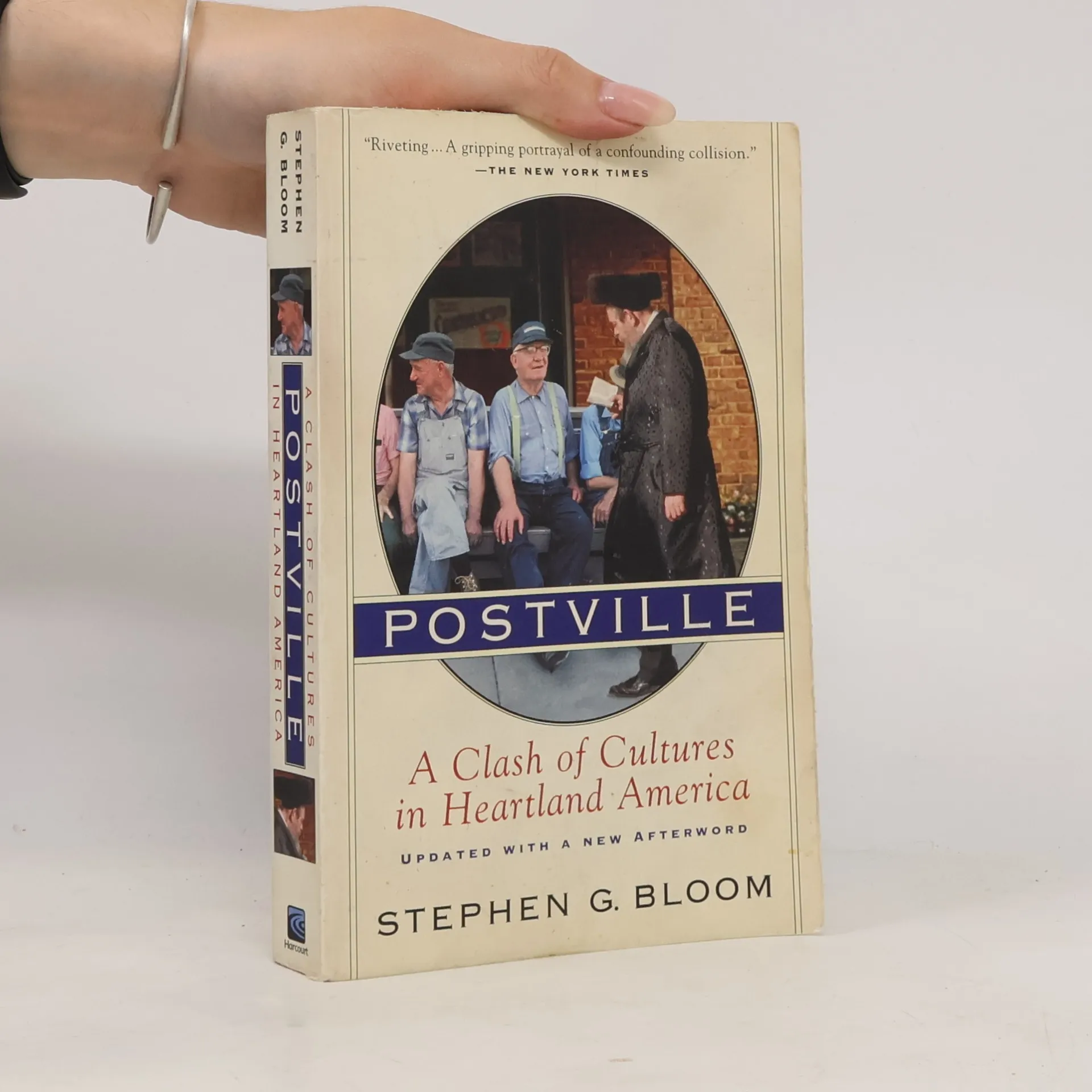
In 1987, a group of Lubavitchers, one of the most orthodox and zealous of the Jewish sects, opened a kosher slaughterhouse just outside tiny Postville, Iowa (pop. 1,465). When the business became a worldwide success, Postville found itself both revived and divided. The town's initial welcome of the Jews turned into confusion, dismay, and even disgust. By 1997, the town had engineered a vote on what everyone agreed was actually a whether or not these Jews should stay.The quiet, restrained Iowans were astonished at these brash, assertive Hasidic Jews, who ignored the unwritten laws of Iowa behavior in almost every respect. The Lubavitchers, on the other hand, could not compromise with the world of Postville; their religion and their tradition quite literally forbade it. Were the Iowans prejudiced, or were the Lubavitchers simply unbearable?Award-winning journalist Stephen G. Bloom found himself with a bird's-eye view of this battle and gained a new perspective on questions that haunt America nationwide. What makes a community? How does one accept new and powerfully different traditions? Is money more important than history? In the dramatic and often poignant stories of the people of Postville - Jew and gentile, puzzled and puzzling, unyielding and unstoppable - lies a great swath of America today.
Book purchase
Postville, Stephen G. Bloom
- Language

- Released
- 2000
- Binding
- (Paperback),
- Book condition
- Good
- Price
- €2.79
Payment methods
No one has rated yet.
- Title
- Postville
- Subtitle
- A Clash of Cultures in Heartland America - Updated With a New Afterword
- Language
- English
- Authors
- Stephen G. Bloom
- Publisher
- Mariner Books
- Released
- 2000
- Format
- Paperback
- Pages
- 384
- ISBN10
- 0156013363
- ISBN13
- 9780156013369
- Series
- Categories
- Tags
- Historical Themes, Legal Topics, Politics, USA, Wars, American Literature, Feminism, Local History, Journalism, Jews, Political Theories, Culture, American History, America, Race, Racism, Police, Jewish Literature, Social Justice, Father, Teachers, Social History, Civil War, Studies, Poisons, Poisoning, Justice, Criminal Law, Battles, Army, Immigration, Discrimination, State, Criminal Judiciary, Ethnic Relations
- Description
- In 1987, a group of Lubavitchers, one of the most orthodox and zealous of the Jewish sects, opened a kosher slaughterhouse just outside tiny Postville, Iowa (pop. 1,465). When the business became a worldwide success, Postville found itself both revived and divided. The town's initial welcome of the Jews turned into confusion, dismay, and even disgust. By 1997, the town had engineered a vote on what everyone agreed was actually a whether or not these Jews should stay.The quiet, restrained Iowans were astonished at these brash, assertive Hasidic Jews, who ignored the unwritten laws of Iowa behavior in almost every respect. The Lubavitchers, on the other hand, could not compromise with the world of Postville; their religion and their tradition quite literally forbade it. Were the Iowans prejudiced, or were the Lubavitchers simply unbearable?Award-winning journalist Stephen G. Bloom found himself with a bird's-eye view of this battle and gained a new perspective on questions that haunt America nationwide. What makes a community? How does one accept new and powerfully different traditions? Is money more important than history? In the dramatic and often poignant stories of the people of Postville - Jew and gentile, puzzled and puzzling, unyielding and unstoppable - lies a great swath of America today.